The Poly-Puff Blog

Practical English guides for learners and classroom ideas for ESL teachers.

Looking for reading practice? Explore News in English for real-world stories, surveys and interesting history, with estimated CEFR levels and learning activities.

Fresh from the blog

Latest blog posts

Start with our four newest guides.

IELTS Academic Writing Task 1: Write a Clear Overview
Choose the main features for an IELTS Academic Task 1 overview. See an original library table, a short model and advice for charts, maps and processes.
IELTS Reading: True, False and Not Given Explained
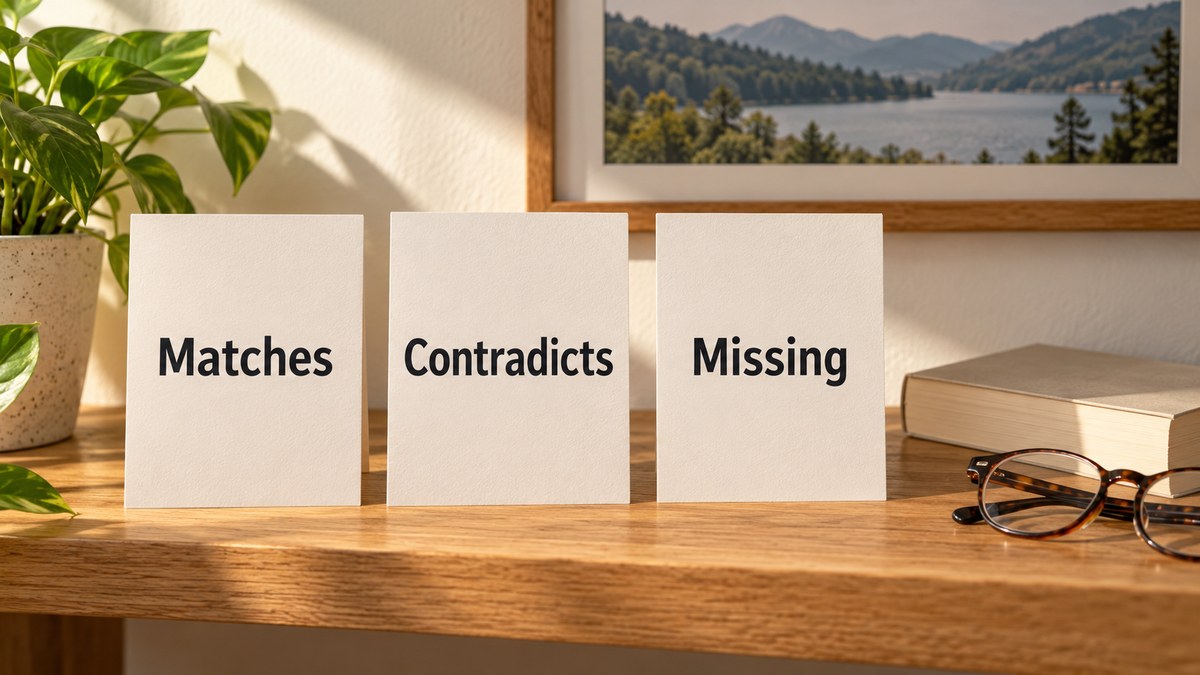
Separate contradiction from missing information in IELTS Reading. Follow a short original passage, three explained comparisons and a practical evidence check.
IELTS Listening: Word Limits, Spelling and Small Details
Handle word limits, spelling, plurals and corrected details in IELTS Listening. Use original examples and a short review log to understand avoidable mistakes.
IELTS Speaking Part 3: Develop an Answer without a Script
Move from a short opinion to a developed IELTS Speaking Part 3 response. See an original example with a reason, an illustration and a useful qualification.

Browse categories

Showing 50 recent blog posts

Fluency

Build confidence in everyday English conversations.

8 blog posts
How to Pronounce -ed Endings: Listen to the Last Sound
Understand the /t/, /d/ and /ɪd/ endings in worked, played and wanted, without adding an extra syllable to every regular past-tense verb.
How to Ask for Clarification in English and Keep Talking
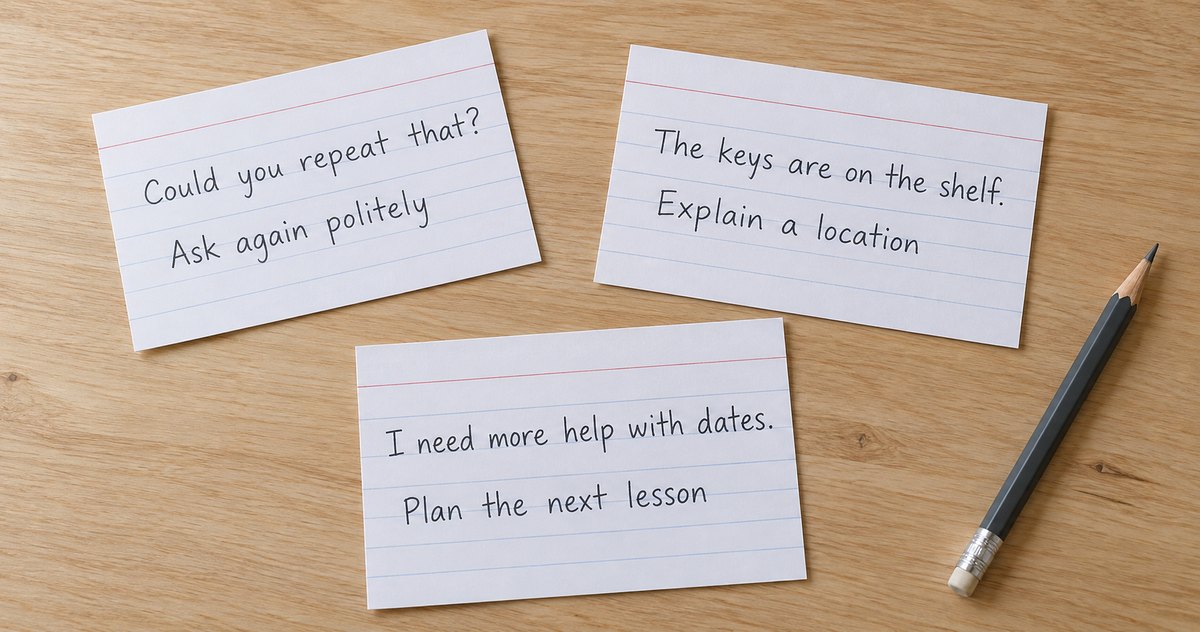
Ask for clarification in English with focused phrases for missed words, unfamiliar meanings and uncertain details, plus an explained everyday conversation.
How to Make Polite Requests in English: Phrases and Examples
Make polite English requests with useful phrases, clear details, short dialogues and advice for responding naturally.
How to Tell a Story in English: Past Tenses and Useful Phrases
Tell a clear story in English with past tenses, a simple structure, linking phrases, complete examples and practical storytelling tips.
English Word Stress: A Practical Guide to Clearer Pronunciation
Notice English word stress, use dictionary audio and understand stress changes in related words through a practical listening routine.
How to Keep an English Conversation Going: Useful Habits and Phrases
Keep an English conversation going with natural follow-ups, useful phrases, realistic examples and a manageable speaking routine.
How to Stop Translating in Your Head: 7 Practical Exercises
Learn how to think in English with seven practical exercises for building direct connections between English words, ideas and everyday situations.
How to Improve Your English Speaking in 15 Minutes a Day
Improve your English speaking with a practical 15-minute daily routine: shadow, answer, repair and repeat at any CEFR level.

Learning strategies

Practical guides to vocabulary, listening and study habits.

7 blog posts
Shadowing English: Start with One Line You Understand
Build a manageable English shadowing routine: choose a short clip, understand it, repeat or speak along, and compare one pronunciation feature.
Graded Readers for Adults: Choose a Book You Can Enjoy
Find a graded reader that suits your English and interests, use a sample to judge difficulty, and build a manageable reading habit.
How Long Does It Take to Learn English?
How many hours does it really take to go from A1 to C2? A realistic, CEFR-based timeline for English learners, plus what actually speeds up your progress.
Everyday English Phrasal Verbs: 12 Useful Expressions in Context
Understand twelve everyday phrasal verbs in context, including object placement, useful phrases and a manageable review routine.
English Collocations: Learn Words That Go Together
Learn everyday English collocations, check combinations in a dictionary and save phrases you can reuse in real situations.
How to Understand Fast English: 8 Listening Strategies That Work
Understand fast spoken English with eight practical listening strategies for connected speech, prediction, transcripts, replay and real conversations.
How to Remember English Vocabulary: A 7-Day Review Plan
Remember English vocabulary with a practical seven-day review plan built around useful phrases, active recall, speaking and spaced practice.

Grammar

Understand tenses, sentence patterns and common grammar questions with examples and practice.

9 of 29 blog posts
Since vs For: A Starting Point or a Length of Time?
Choose since or for with clear time expressions, present-perfect examples, finished past situations and a simple way to avoid since two years.
Bring vs Take: Choose the Viewpoint First
Understand bring and take through clear viewpoints, invitations and original examples. Learn brought, taken and how fetch adds a return journey.
Each vs Every: One at a Time or the Whole Group?
Choose each or every with clear examples, singular verb patterns, each of, and everyday expressions such as every two weeks.
Affect vs Effect: Find the Change, Then the Result
Understand affect and effect through original everyday examples, useful sentence patterns, affected and effects, plus the less common verb effect.
Do or Make? Learn the Phrase You Actually Need
Choose do or make in everyday English: do homework, make a decision, do someone a favour and other useful phrases explained in context.
Say vs Tell: Follow the Words and the Listener
Learn say and tell with clear sentence patterns, said and told, everyday expressions and original examples you can use straight away.
Prepositions of Place: How to Choose In, On and At
Not sure whether to use in, on or at? Make sense of places, surfaces, meeting points and transport with everyday English examples.
Borrow vs Lend: Same Object, Different Point of View
Borrow or lend? Follow who receives the object, learn from and to, and see how borrowed and lent work in friendly everyday requests.
Countable and Uncountable Nouns: Meaning, Examples and Common Mistakes
Understand countable and uncountable nouns through everyday examples, advice and information, useful units, and words whose grammar changes with meaning.

Business English

Communicate clearly in interviews, presentations, workplace meetings and professional emails.

9 of 10 blog posts
How to Write a Polite Follow-Up Email When There Is No Reply
Write a clear follow-up email with context, one specific request and a useful deadline. Includes original professional examples you can adapt.
How to Disagree Politely in English at Work
Say what concerns you without making it personal. Use practical English phrases for disagreeing in meetings, suggesting alternatives and writing a clear reply.
13 Common and Tough Interview Questions: Answers in English
Prepare for common and tough interview questions with honest sample responses, real examples, useful English phrases and practical preparation tips.
How to Prepare a Presentation and Speak Confidently in English
Prepare an English presentation with audience planning, a rehearsal checklist, useful phrases and practical speaking techniques for clear delivery.
How to Answer Job Interview Questions in English: Examples and Useful Phrases
Prepare clear English interview responses with an introduction, STAR examples, useful phrases and advice for explaining your experience honestly.
How to Handle Customer Complaints in English: Phrases and Examples
Handle customer complaints in English with useful phrases, a clear response structure, conversation and email examples, and practical wording tips.
How to Negotiate a Deadline in English: Polite Phrases and Examples
Negotiate deadlines in English with polite phrases, realistic alternatives, meeting and email examples, and clear confirmation of dependencies.
How to Give a Project Update in English: Examples and Useful Phrases
Give clear English project updates with a four-part structure, useful phrases, meeting and email examples, and practical advice for delays.
Business English for Meetings: 20 Useful Phrases
Use practical English phrases to share ideas, clarify details, disagree constructively and confirm actions in workplace meetings.

Teaching English

Practical lesson ideas, speaking tasks and classroom guidance for ESL teachers.

9 of 18 blog posts
Adult ESL Role-Play: Give the Conversation a Job
Run adult ESL role-play with three original role-card pairs, clear outcomes, feedback, A2-B2 adaptations and a practical 30-minute lesson plan.
Vocabulary Retrieval Practice: Recall, Check and Use It Again
Plan vocabulary retrieval for adult ESL classes with six useful chunks, three recall activities, visible teacher models, feedback and a 30-minute plan.
Dictogloss for Adults: Rebuild the Message Together
Teach adult ESL dictogloss with an original repair-group story, visible teacher reference notes, A2-B2 adaptations and a complete 30-minute lesson.
Adult ESL Needs Analysis: Turn Goals into a Useful Lesson
Find out what adult English learners need to do, gather a small language sample, and turn the result into a practical teaching priority.
ESL Warm-Ups for Adults: Three Starts with a Clear Purpose
Start an adult English lesson with three adaptable warm-ups, clear language aims, low-pressure participation and a practical 30-minute sequence.
ESL Exit Tickets for Adults: Make the Last Two Minutes Useful
Get useful individual evidence before an adult ESL lesson ends. Try three original exit-ticket prompts, visible teacher notes and practical follow-up ideas.
ESL Pair Work for Adults: Give Both Learners a Reason to Speak
Run useful pair work with adult ESL learners using an original split timetable, shared decisions, role changes, level adaptations and a practical 30-minute plan.
Concept Checking Questions for ESL: Find Out What Learners Mean
Design useful ESL meaning checks with original examples, individual responses, level adaptations and practical classroom guidance.
ESL Writing Activities for Adults: Short Messages, Useful Revisions
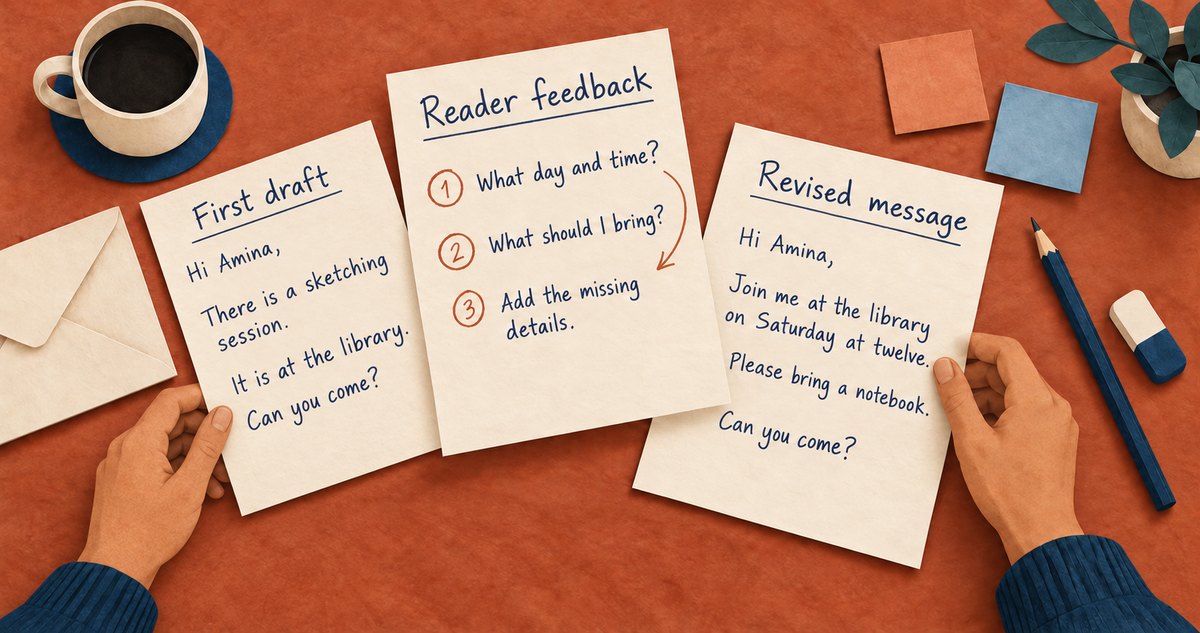
Plan adult ESL writing activities with practical outcomes, useful peer feedback, level adaptations and a complete lesson plan.

Exam preparation

Choose the right exam and prepare with a clear goal.

8 blog posts
IELTS Academic Writing Task 1: Write a Clear Overview
Choose the main features for an IELTS Academic Task 1 overview. See an original library table, a short model and advice for charts, maps and processes.
IELTS Reading: True, False and Not Given Explained
Separate contradiction from missing information in IELTS Reading. Follow a short original passage, three explained comparisons and a practical evidence check.
IELTS Listening: Word Limits, Spelling and Small Details
Handle word limits, spelling, plurals and corrected details in IELTS Listening. Use original examples and a short review log to understand avoidable mistakes.
IELTS Speaking Part 3: Develop an Answer without a Script
Move from a short opinion to a developed IELTS Speaking Part 3 response. See an original example with a reason, an illustration and a useful qualification.
IELTS Speaking Part 1: Give Natural Answers with Useful Detail
Prepare for IELTS Speaking Part 1 with direct answers, relevant details and original examples, without memorised scripts or fixed sentence counts.
IELTS Writing Task 2: Plan an Essay That Answers the Question
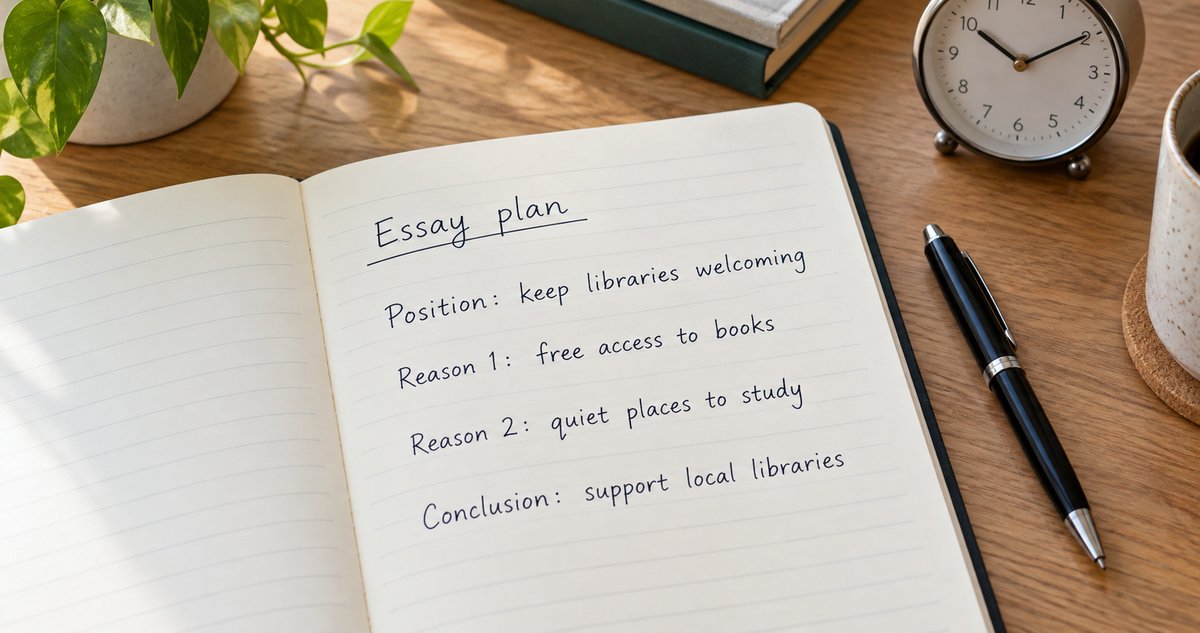
Plan IELTS Writing Task 2 around the exact question, a clear position and developed paragraphs. See an original library example and a flexible time budget.
IELTS Speaking Part 2: Use Your Minute and Keep Talking
Prepare for IELTS Speaking Part 2 with a one-minute note method, practical ways to develop details and a focused recording routine.
IELTS Academic vs General Training: Which Test Should You Take?
Compare IELTS Academic and General Training by purpose, Reading, Writing, scoring and preparation so you can choose the right test.