Prepositions of Place: How to Choose In, On and At
Not sure whether to use in, on or at? Make sense of places, surfaces, meeting points and transport with everyday English examples.
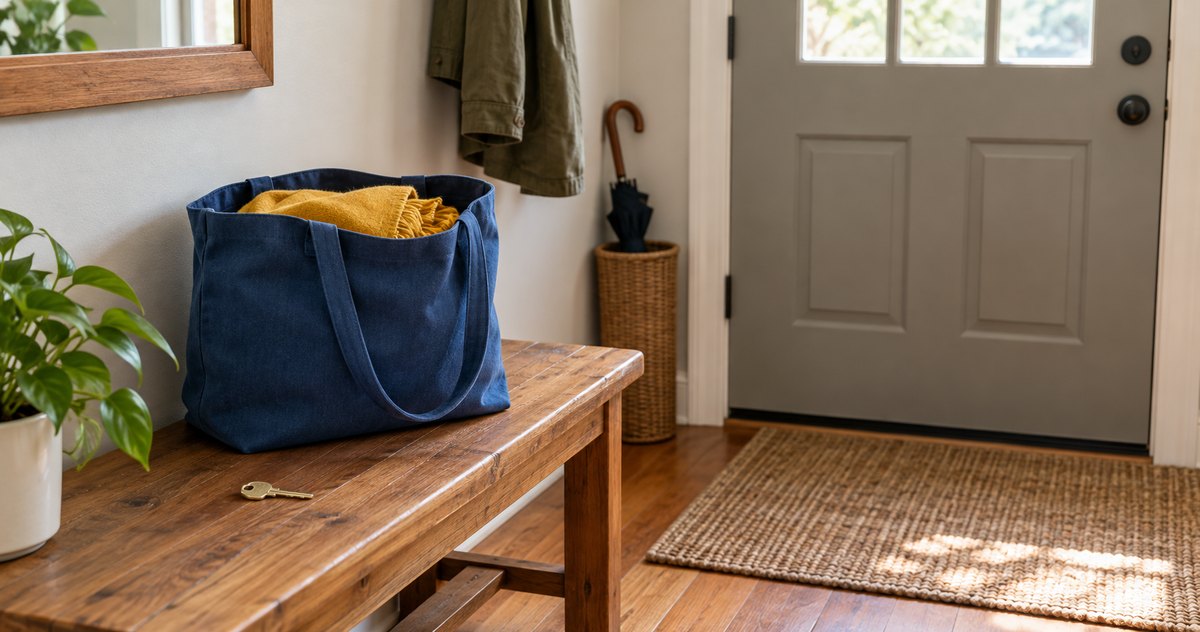
Where did you leave your keys? Small words do a lot of work here. In often places something inside a space, on puts it on a surface, and at identifies a location or meeting point. Those ideas give you a starting point, but English also has familiar phrases worth learning together.
In: think about the surrounding space
The scarf is in my bag. The bag surrounds it. The same idea works for larger areas: We live in Durban and She's walking in the park. A place doesn't need walls for in to work. You're describing something within an area.
On: look for a surface
The key is on the bench. Now the bench supports the key. A surface can be vertical too: There's a notice on the door. We also use on for floors in buildings: The meeting room is on the second floor.
At: name the point that matters
I'll meet you at the entrance. You're naming the meeting point. Common phrases include at home, at work and at the station. Saying at the station doesn't tell us exactly where inside or nearby you are; add detail when your listener needs it.
One place, two useful meanings
I'm at the library tells someone your location. I'm in the library, beside the stairs makes clear that you're inside. Both can be correct; the focus changes.
Transport has its own familiar phrases
Say in a car or in a taxi, but normally on a bus, on a train or on a plane when you're a passenger. I'd save these as whole phrases. The surface idea alone won't explain every conventional use.
Keep location separate from the way you travel: I'm on the bus describes where you are; I travel by bus describes your means of transport. With by in this meaning, there is no article before bus.
Make the message precise enough
Meet me at the cafe may be enough if there's only one nearby. Otherwise, try Meet me at the cafe in the shopping centre. I'll be at the entrance. Choose the detail your listener needs, rather than looking for one preposition that must always follow a particular place.
My recommendation: keep a few useful location phrases beside a real situation. In my bag, on the shelf and at the entrance are easier to reuse than a long list of isolated rules.
For times, use a different set of patterns
These are place meanings. For at noon, on Tuesday and in October, see prepositions of time. Our clarification phrases can help when a meeting location is still unclear.
Sources and editorial notes
Patterns checked against British Council: prepositions of place and Cambridge Grammar: at, on and in for place on 13 October 2026. Examples and recommendations are original. These are common patterns, not rules covering every idiomatic use.
Put useful English into practice
Explore Grammar Practice and keep useful language in your learning routine.