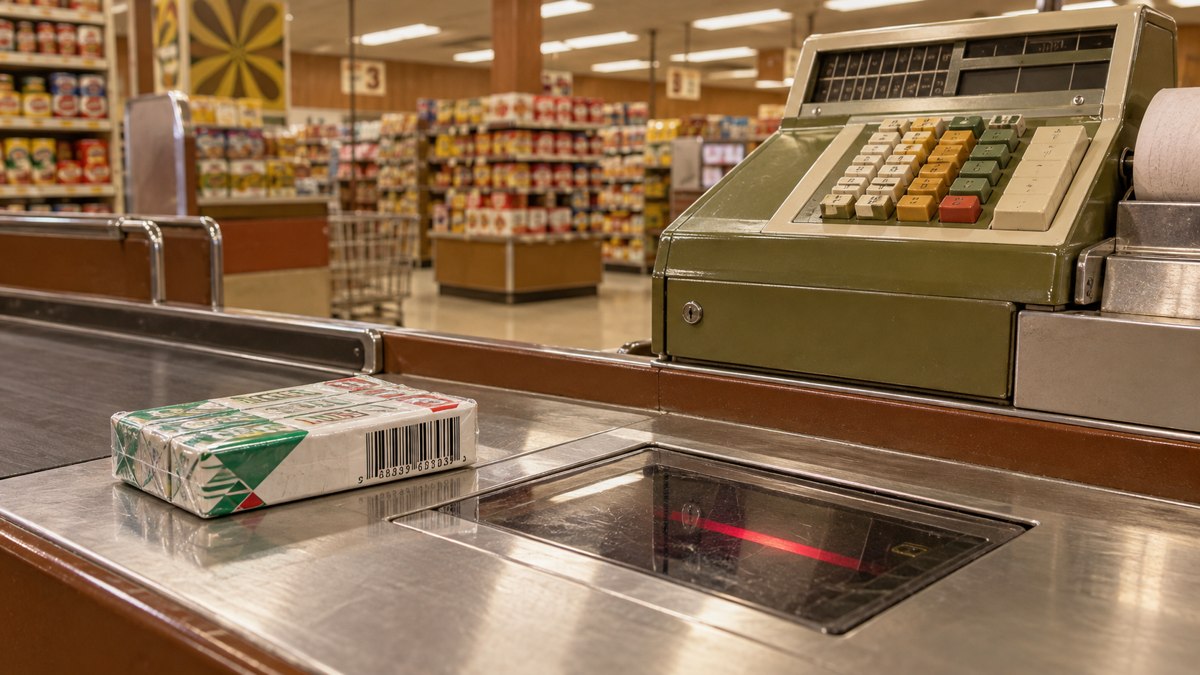
1930: King Kullen Helps Change Food Shopping
A large New York food shop brought low prices and a wide range of goods into one place.
Estimated CEFR reading level: A2. Simple explanations describe a shop, its business idea and the difference between a supermarket and earlier self-service stores. This is an editorial estimate, not an official certification.
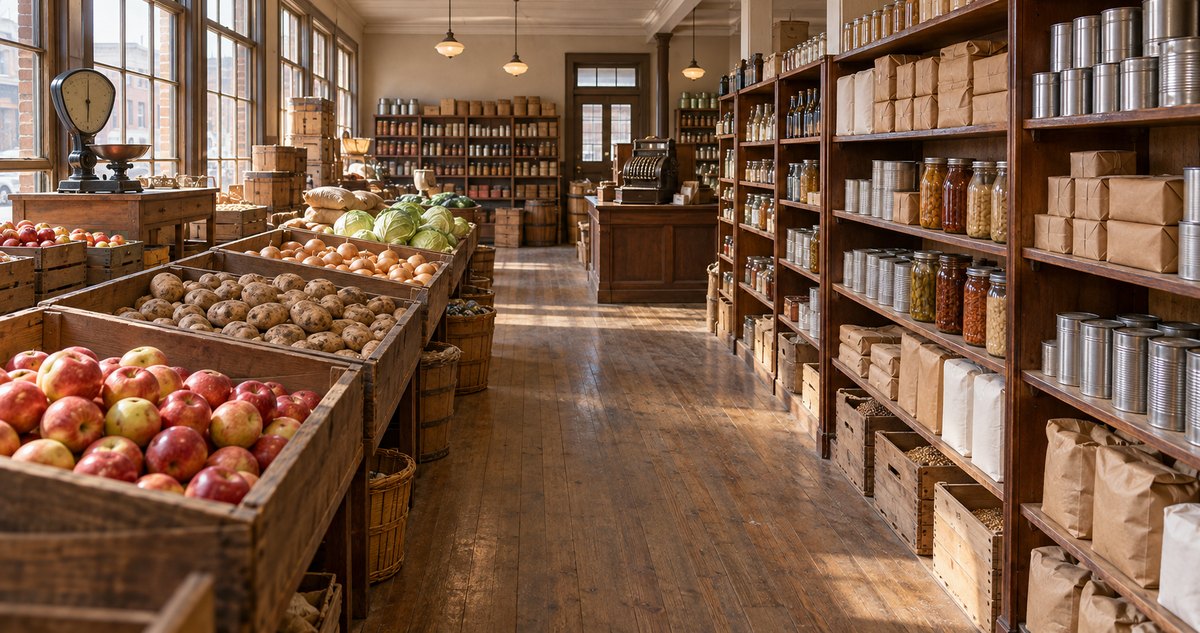
Five useful words
British English pronunciation (IPA). Audio uses an available English voice on your device.
grocery shop /ˈɡrəʊsəri ʃɒp/
noun phraseA shop that sells food and other everyday goods.
The grocery shop sells rice and fruit.
customer /ˈkʌstəmə/
nounA person who buys goods or services.
A customer chooses a bag of apples.
warehouse /ˈweəhaʊs/
nounA large building used to store goods.
The shop had a warehouse-style space.
self-service /ˌselfˈsɜːvɪs/
adjectiveAllowing customers to choose goods themselves.
The self-service shop had open shelves.
section /ˈsekʃən/
nounA separate part of a place.
The fruit section was near the entrance.
The story
A different kind of shop
On 4 August 1930, Michael Cullen opened a King Kullen food shop in Queens, New York. It was much larger than many small grocery shops. Customers could choose many goods themselves and buy different kinds of food in one place.
Cullen wanted to sell a large amount of food at low prices. The store used a simple, warehouse-style space. This idea helped make the supermarket an important part of food shopping.
Building on earlier ideas
King Kullen is widely recognised as an early modern supermarket. Its story is not the beginning of every part of shopping. Self-service shops already existed before 1930.
King Kullen brought several ideas together: a large shop, separate food sections, customer choice and low prices. Customers could buy different foods in one visit. Other businesses developed similar large stores, helping this way of shopping spread beyond Cullen's first shop.
Three questions
Try answering before you open the answer. You can use your own words.
- Where did Cullen open the store?
Show answer
In Queens, New York.
- What did Cullen want to combine?
Show answer
Selling a large amount of food with low prices.
- Did self-service shopping begin in 1930?
Show answer
No. Self-service shops already existed.
Let's talk about it
Here are some ideas for a chat. Choose any you like.
- Which foods do you like to buy in a small shop?
- What do you enjoy, or find difficult, about a large supermarket?
- Would you rather do one big food shop or several small ones?
- Would you enjoy visiting a food shop from your grandparents' time?
- What would make a supermarket easier for people without a car to use?
Practise a useful pattern
Describe a purpose with to: "Cullen wanted to sell food at low prices." Write two sentences about why people use a shop, using to buy or to find.
Frequently asked questions
When did the first King Kullen store open?
4 August 1930.
Did King Kullen invent all self-service shopping?
No. Earlier self-service stores existed; King Kullen combined several features associated with modern supermarkets.
Sources and editorial notes
Original learning article by Poly-Puff, written from the factual sources below. Sources checked on 13 October 2026. The artwork and learning activities were created for this article.
The company source is checked against Smithsonian historical context. "Early modern supermarket" avoids claiming that all customer-selected retail began in 1930. No precise price saving or claim about today's company is made.