1914: The Panama Canal Opens a Route Between Oceans
A ship crossed Panama at the official opening of a waterway designed to shorten journeys between two oceans.
Estimated CEFR reading level: B1. A clear past-tense sequence and a short explanation of how lock chambers raise and lower ships. This is an editorial estimate, not an official certification.
Five useful words
British English pronunciation (IPA). Audio uses an available English voice on your device.
transit /ˈtrænzɪt/
nounA journey through a place.
The ship completed its transit through the canal.
waterway /ˈwɔːtəweɪ/
nounA river or channel used by boats.
The waterway connects two oceans.
chamber /ˈtʃeɪmbə/
nounAn enclosed space.
Water entered the lock chamber.
recruit /rɪˈkruːt/
verbTo find people to join a group or do a job.
Workers were recruited from several islands.
trade /treɪd/
nounThe buying and selling of goods.
The new route changed international trade.
The story
A shorter journey
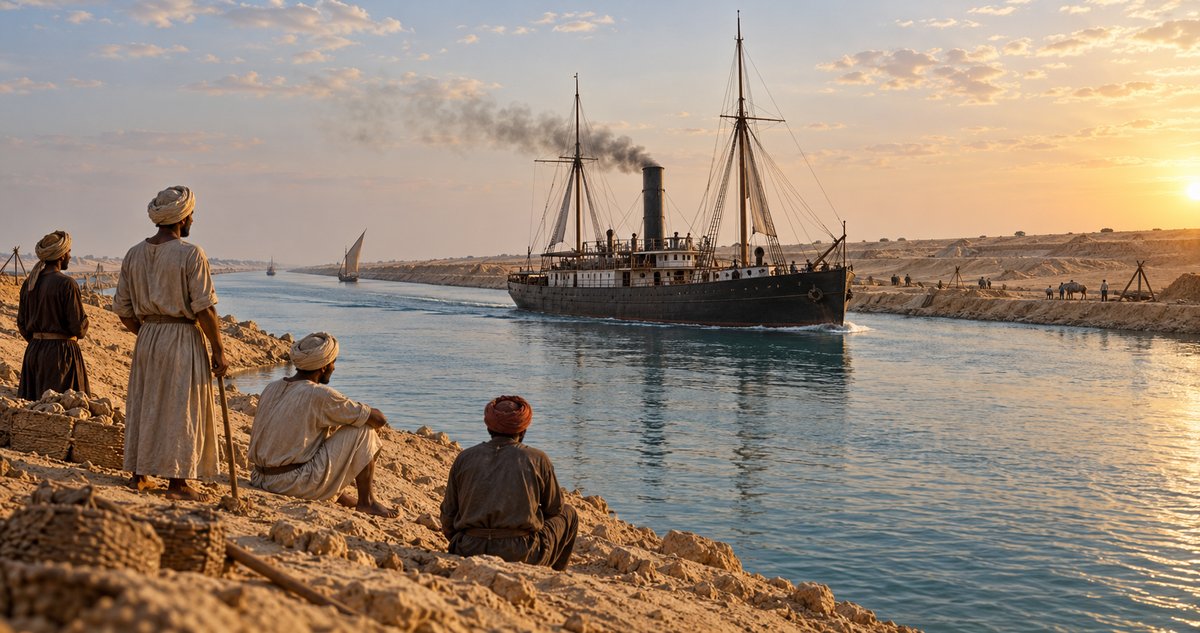
On 15 August 1914, the steamship Ancon made the first official transit of the Panama Canal. It travelled from the Atlantic side to the Pacific side. The waterway created a shorter route for ships that would otherwise need to travel around South America.
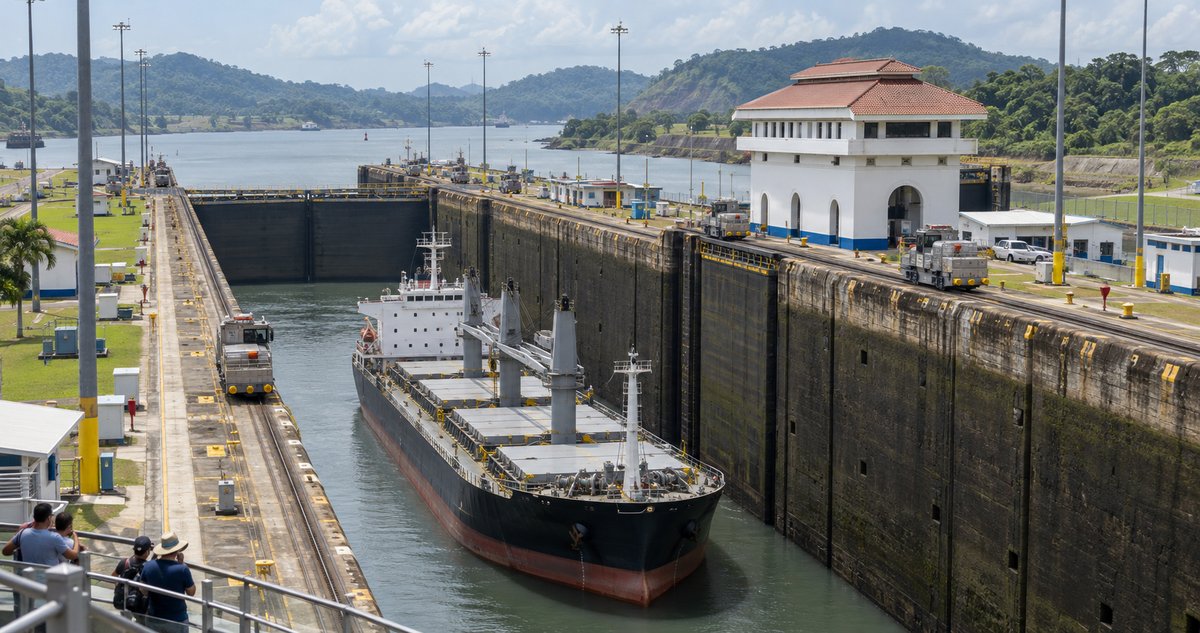
Ships cross the canal by moving between different water levels. First, they enter large chambers called locks, where rising water lifts them to Gatun Lake. They cross the lake and the canal's channels, then enter more locks. There, the water level falls and lowers the ships towards the other ocean.
People behind the route
Thousands of workers helped build the canal, including many recruited from Caribbean islands. Construction involved difficult work, disease and loss of life. The opening marked an engineering achievement, but it also depended on these workers' efforts.
The canal shows how transport can change trade. A shorter route can save time, while the locks make the journey across higher land possible.
Three questions
Try answering before you open the answer. You can use your own words.
- When did Ancon make the first official transit?
Show answer
On 15 August 1914.
- How do ships reach Gatun Lake?
Show answer
Water in lock chambers raises them to the lake's level.
- Why does the article mention workers?
Show answer
The engineering achievement depended on their efforts, and construction involved disease and loss of life.
Let's talk about it
A few ideas to chat about - pick any that interest you.
- What shorter journey would make your daily life easier?
- Whose experiences would you like to hear about when learning how a canal was built?
- Have transport changes affected what you can buy where you live?
- Would you enjoy watching a ship move through a canal lock?
- What would you be curious to ask someone whose job is to help ships through a canal?
Practise a useful pattern
Use would otherwise to explain an alternative: "Ships would otherwise need to travel around South America." Write a sentence explaining what a bridge, tunnel or canal helps people avoid.
Frequently asked questions
When did the Panama Canal officially open?
It officially opened on 15 August 1914, with the transit of Ancon.
Why does the Panama Canal need locks?
Locks raise ships to Gatun Lake and lower them towards the ocean on the other side.
Sources and editorial notes
Original learning article by Poly-Puff, written from the factual sources below. Sources checked on 13 October 2026. The artwork and learning activities were created for this article.
First official transit refers to the opening voyage, not earlier construction or test passages. The reading describes the original lock route and uses representative modern scenery, not an image of the opening ship.