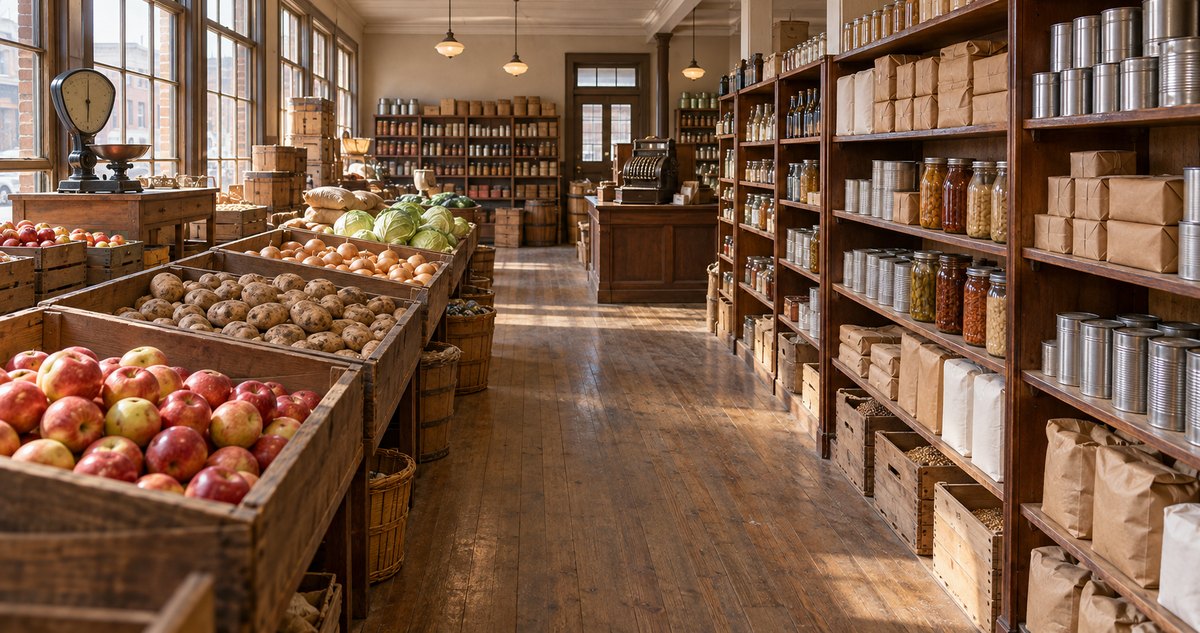
1974: A Packet of Gum Changes the Checkout
An ordinary shopping item became part of a new way to identify products.
Estimated CEFR reading level: A2. Short past-tense sentences describe a concrete event; a simple explanation distinguishes a product code from its price. This is an editorial estimate, not an official certification.
Five useful words
British English pronunciation (IPA). Audio uses an available English voice on your device.
packet /ˈpækɪt/
nounA small container or wrapping for something.
She bought a packet of gum.
checkout /ˈtʃekaʊt/
nounThe place where you pay in a shop.
The customer went to the checkout.
barcode /ˈbɑːkəʊd/
nounA pattern that a machine reads to identify something.
The scanner read the barcode.
identify /aɪˈdentɪfaɪ/
verbTo recognise which thing something is.
The code helps identify the product.
purchase /ˈpɜːtʃəs/
nounSomething bought, or the act of buying it.
A small purchase became famous.
The story
A small packet, a big change
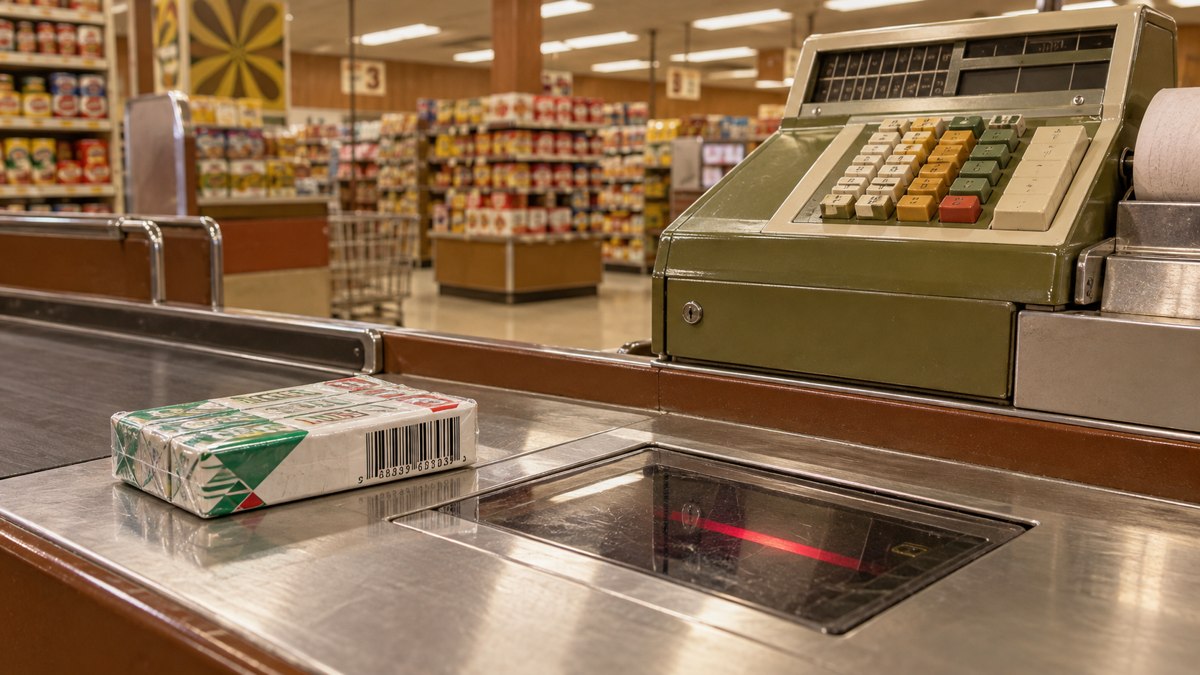
On 26 June 1974, a packet of Wrigley's chewing gum went through a new checkout at a Marsh supermarket in Troy, Ohio. A machine read the packet's barcode. This became the first supermarket checkout scan of a product with a Universal Product Code, or UPC.
The barcode used black lines and white spaces to identify the product. The shop's computer could then find information about it. The lines were not simply a picture of the price.
A shared system
A useful barcode system needed more than a clever machine. Shops and product makers had to use the same rules. These shared rules helped different businesses work together.
The gum was an everyday item. That is what makes the story interesting: a small purchase showed a new way to handle ordinary shopping.
Three questions
Try answering before you open the answer. You can use your own words.
- What product was scanned?
Show answer
A packet of Wrigley's chewing gum.
- Where was the supermarket?
Show answer
In Troy, Ohio, in the United States.
- Did the lines simply show the price?
Show answer
No. The code identified the product so the computer could find information about it.
Let's talk about it
Here are some ideas for a chat. Choose any you like.
- Do you use self-service checkouts?
- What small invention makes shopping easier for you?
- Would you enjoy seeing an old supermarket checkout?
- Which would you like to see at a museum: an old till or the first packet that was scanned?
- What do you like to do while you wait to pay in a shop?
Practise a useful pattern
Use the past simple for finished events: The machine read the code. Write two sentences about a shopping trip, using bought and paid.
Frequently asked questions
When was the first UPC supermarket scan?
26 June 1974.
Was the scanned product chewing gum?
Yes. It was Wrigley's chewing gum.
Sources and editorial notes
Original learning article by Poly-Puff, written from the factual sources below. Sources checked on 16 October 2026. The artwork and learning activities were created for this article.
The milestone is the first UPC product scan at a supermarket checkout, not the invention of every kind of barcode. GS1 indexed timeline/history extracts were available; direct GS1 UK extraction was empty. Conflicting price details in anniversary material are omitted.