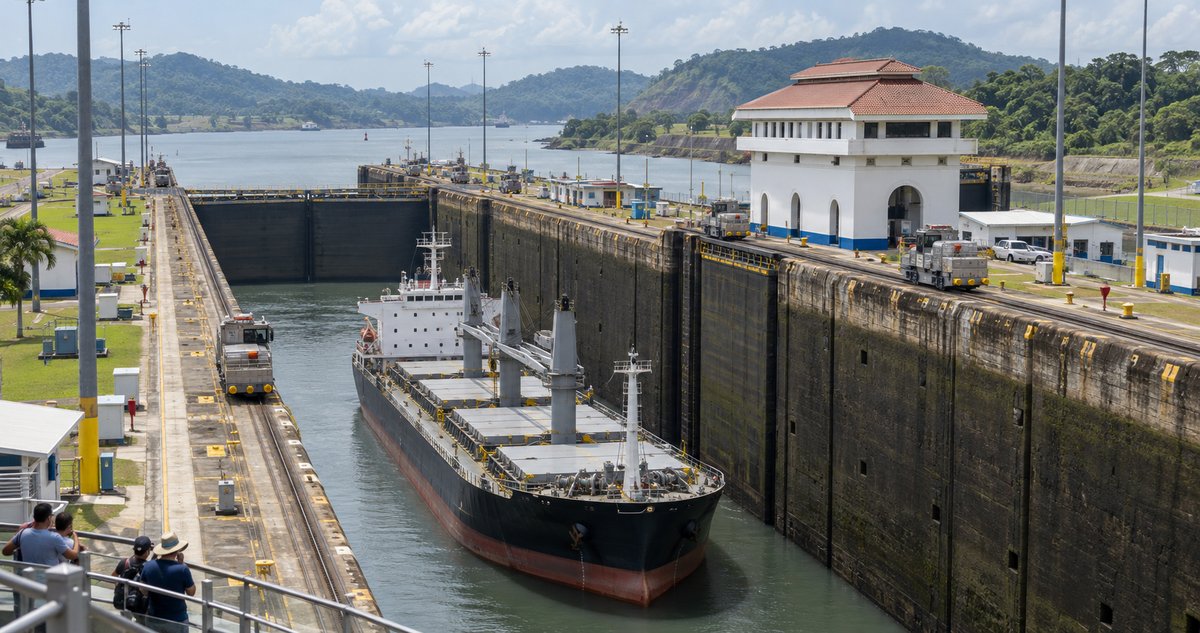
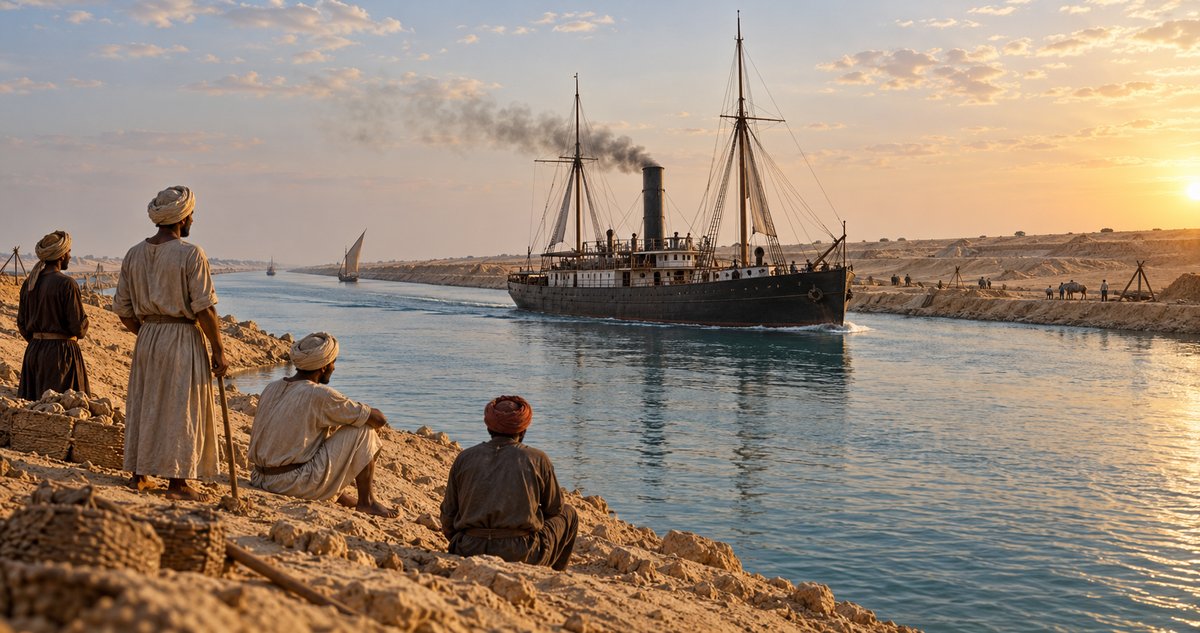
1869: The Suez Canal Opens a Shorter Sea Route
The Suez Canal opened in Egypt in 1869, linking the Mediterranean and Red Seas and shortening many journeys between Europe and Asia.
Estimated CEFR reading level: B1. A short historical explanation using past tenses, geographical vocabulary and a comparison between routes. This is an editorial estimate, not an official certification.
Five useful words
British English pronunciation (IPA). Audio uses an available English voice on your device.
waterway /ˈwɔːtəweɪ/
nounA route on water used by boats or ships.
The canal is an important waterway.
port /pɔːt/
nounA place where ships load and unload.
The ship travelled between two ports.
construction /kənˈstrʌkʃən/
nounThe work of building something.
Construction began in 1859.
lock /lɒk/
nounA chamber that raises or lowers boats between water levels.
This sea-level canal does not need locks.
shortcut /ˈʃɔːtkʌt/
nounA route that makes a journey shorter.
The canal provided a shortcut.
The story
A new connection
The Suez Canal officially opened on 17 November 1869. This waterway crossed Egypt and connected the Mediterranean Sea with the Red Sea. Ships gained a shorter route between many European and Asian ports, instead of sailing around southern Africa.
Construction had begun in April 1859. Egyptian workers played an essential role, often under harsh conditions. The opening ceremony celebrated a major engineering achievement, but the work behind it should also be remembered.
How did the canal work?
The canal was built at sea level, so ships did not need locks to move between different water heights. Its route passed through lakes as well as newly dug sections.
The shortcut saved ships different amounts of time, depending on their starting points and destinations. It did not shorten every sea journey equally. The canal was later enlarged, but those changes came after its original opening in 1869.
Three questions
Try answering before you open the answer. You can use your own words.
- Which two seas does the canal connect?
Show answer
The Mediterranean Sea and the Red Sea.
- When did the canal officially open?
Show answer
On 17 November 1869.
- Why does the canal not need locks?
Show answer
It is a sea-level canal; ships do not need to be raised or lowered between different water heights.
Let's talk about it
A few ideas to chat about - pick any that interest you.
- What shortcut do you use in daily life?
- Is there a major building project near you whose history interests you?
- How might you feel if a new transport route changed your town?
- Would you enjoy watching large ships pass through a narrow canal?
- What would you like a canal museum to show about the people who built and use the route?
Practise a useful pattern
Use "instead of + -ing": "Ships used the canal instead of sailing around southern Africa." Write a sentence about choosing a shorter route.
Frequently asked questions
When did the Suez Canal open?
Its official opening was on 17 November 1869.
Does the Suez Canal use locks?
No. It is a sea-level waterway.
Sources and editorial notes
Original learning article by Poly-Puff, written from the factual sources below. Sources checked on 10 October 2026. The artwork and learning activities were created for this article.
This reading describes the 1869 opening. It does not estimate current traffic, savings for every route or the canal's full political history.