SPHEREx Finds Clues in the Light of Brown Dwarfs
NASA's SPHEREx telescope is helping scientists study dim objects called brown dwarfs. Their light carries clues about the gases around them.
Estimated CEFR reading level: B1. A short scientific explanation with new terms defined and simple cause-and-effect links. This is an editorial estimate, not an official certification.
Five useful words
British English pronunciation (IPA). Audio uses an available English voice on your device.
dim /dɪm/
adjectiveGiving off only a little light.
The object is too dim to see easily.
mass /mæs/
nounThe amount of matter in an object.
A brown dwarf has less mass than an ordinary star.
infrared /ˌɪnfrəˈred/
adjectiveDescribing light with wavelengths longer than visible red light.
The telescope measures infrared light.
spectrum /ˈspektrəm/
nounLight separated into its different wavelengths.
A spectrum can reveal clues about gases.
atmosphere /ˈætməsfɪə/
nounThe layer of gases around an object in space.
Scientists study the brown dwarf's atmosphere.
The story
Between familiar categories
On 8 October 2026, NASA reported new findings about brown dwarfs from its SPHEREx space telescope. Brown dwarfs form from clouds of gas, like stars. However, they do not have enough mass to keep producing energy through hydrogen fusion, the process that powers ordinary stars.
These objects are dim, so they can be difficult to study. SPHEREx measures infrared light, which our eyes cannot see, as well as deep red light.
Light with a chemical story
Scientists separate that light into different wavelengths to make a spectrum. Different molecules absorb particular parts of the light. This pattern can help researchers identify gases in a brown dwarf's atmosphere.
The observations reveal signs of molecules including methane and carbon dioxide. They also show that brown dwarfs can have different atmospheric conditions, even at similar temperatures.
A spectrum shows measurements of light at different wavelengths. Scientists compare these measurements with models to investigate a brown dwarf's gases and conditions. They can therefore learn about its atmosphere even though they cannot travel there to examine it.
Three questions
Try answering before you open the answer. You can use your own words.
- Why can a brown dwarf not keep producing energy like an ordinary star?
Show answer
It does not have enough mass to sustain hydrogen fusion.
- What can patterns in a spectrum help scientists identify?
Show answer
Molecules or gases in the atmosphere.
- Are brown dwarfs at similar temperatures always alike?
Show answer
No. Their atmospheric conditions can differ.
Let's talk about it
A few ideas to chat about - pick any that interest you.
- What interests you about learning from light we cannot see?
- Have you ever noticed something in a measurement that a photo did not show?
- Which object in space would you most like to learn more about?
- Would you rather see a space image in natural colours or colours that reveal information our eyes cannot see?
- What would you ask a scientist who studies objects that are difficult to see directly?
Practise a useful pattern
Use because to explain a cause and however to introduce a contrast. Write three sentences explaining why brown dwarfs are difficult to study and how SPHEREx helps.
Frequently asked questions
Is a brown dwarf an ordinary star?
No. It lacks enough mass to sustain the hydrogen fusion that powers ordinary stars.
Is the article's image a telescope photograph?
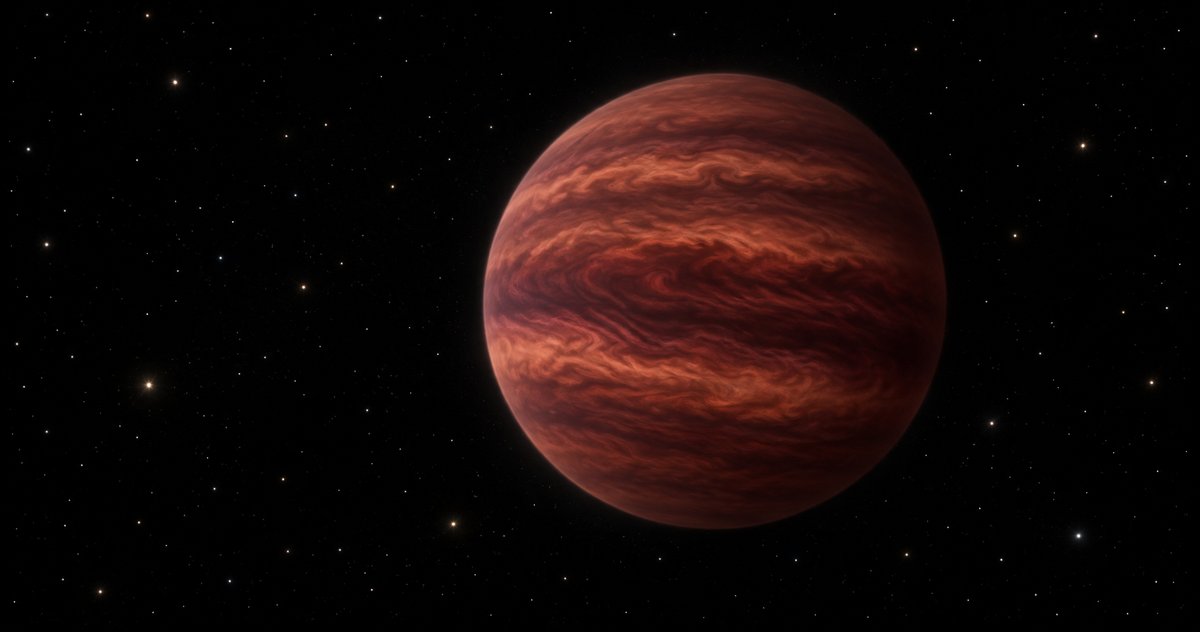
No. It is a generated illustration. Scientists use measured light spectra to investigate the real objects.
Sources and editorial notes
Original learning article by Poly-Puff, written from the factual sources below. Sources checked on 11 October 2026. The artwork and learning activities were created for this article.
The source date is NASA's 8 October report, not the date every observation was made. The article explains the role of spectra without presenting an invented graph or claiming to know the exact appearance of a particular object.