Webb Finds the Home of a Distant Radio Burst
A radio signal detected in 2024 gains new context when Webb identifies the distant galaxy it came from.
Estimated CEFR reading level: B2. Scientific vocabulary, contrasting instrument roles and qualified explanations of evidence. This is an editorial estimate, not an official certification.
Five useful words
British English pronunciation (IPA). Audio uses an available English voice on your device.
burst /bɜːst/
nounA short, sudden release of energy.
The instrument detected a brief burst.
host galaxy /ˌhəʊst ˈɡæləksi/
noun phraseThe galaxy containing the source of an astronomical event.
Researchers studied the host galaxy.
infrared /ˌɪnfrəˈred/
adjectiveRelating to light with wavelengths longer than visible red light.
The camera records infrared light.
redshift /ˈredʃɪft/
nounThe stretching of light towards longer wavelengths.
The spectrum allowed a redshift measurement.
plausible /ˈplɔːzəbəl/
adjectiveReasonable or possible on the available evidence.
The team compared two plausible explanations.
The story
Two telescopes, different jobs
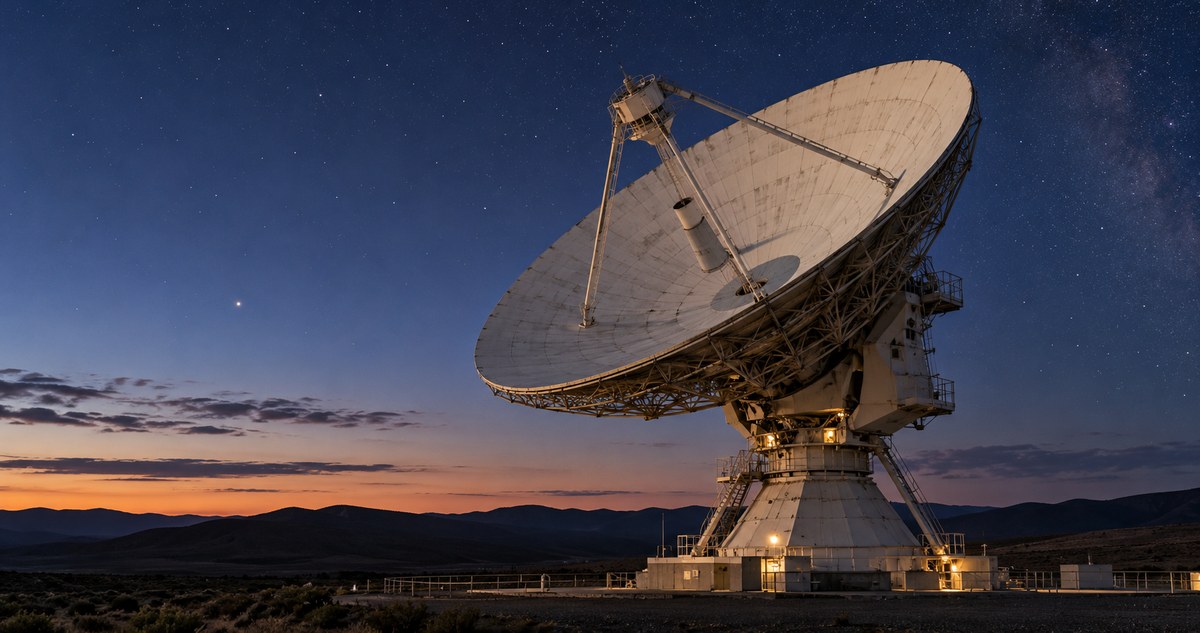
On 8 October 2026, NASA described research into the most distant known fast radio burst. These bursts are flashes of radio emission lasting milliseconds. The MeerKAT telescope detected this one on 4 March 2024; researchers named it FRB 20240304B.
Webb later identified its host galaxy using infrared observations. Measuring the galaxy's redshift, the stretching of light as the Universe expands, placed the event just three billion years after the Big Bang. Webb studied the galaxy, rather than detecting the original radio flash.
An unexpected clue
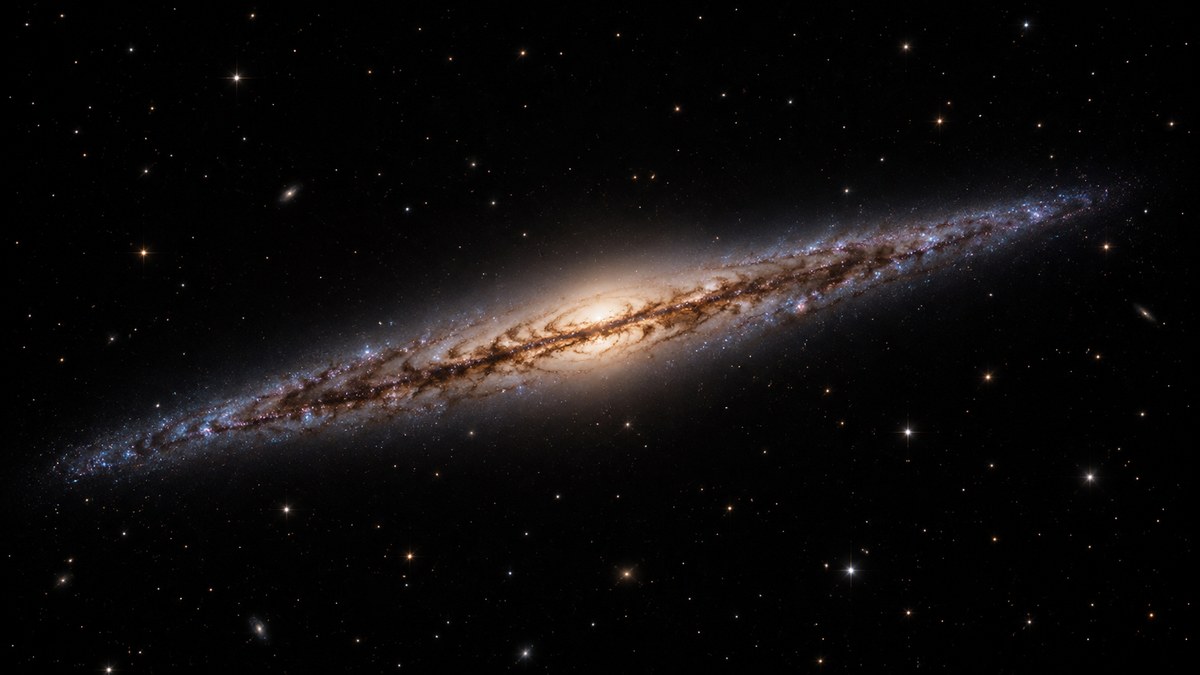
The host is a small galaxy actively forming stars. Its young stellar population makes some explanations more plausible than others. A highly magnetic neutron star, called a magnetar, is one candidate source. However, the observation does not conclusively explain every fast radio burst.
Finding the galaxy is like finding the address on an old message. The address tells you where the message came from, but not exactly how someone wrote it. Similarly, Webb's observations help researchers compare explanations for the burst, while the process that produced it still requires investigation.
Three questions
Try answering before you open the answer. You can use your own words.
- Which telescope detected the original radio burst, and when?
Show answer
MeerKAT detected it on 4 March 2024.
- What did Webb contribute?
Show answer
It identified the host galaxy and helped measure its redshift, placing the event in early cosmic history.
- Does identifying the host prove the cause of every burst?
Show answer
No. The galaxy provides clues that help compare possible mechanisms, not a conclusive explanation of every burst.
Let's talk about it
A few ideas to chat about - pick any that interest you.
- What do you find most intriguing about receiving a signal from so far away?
- How would you describe a millisecond in an everyday conversation?
- Has checking where a message came from ever changed your view of it?
- Would you rather follow the search for one mysterious signal or compare many similar signals?
- What would you be curious to ask the team connecting a brief radio signal with a distant galaxy?
Practise a useful pattern
Use rather than to separate two claims: "Webb studied the galaxy rather than detecting the original radio flash." Write two contrasts about evidence and interpretation.
Frequently asked questions
Did Webb detect the original radio signal?
No. MeerKAT detected it in 2024. Webb later studied the host galaxy in infrared light.
Is the burst's mechanism fully settled?
No. The young host supplies evidence for comparing explanations, but the article does not claim a conclusive mechanism.
Sources and editorial notes
Original learning article by Poly-Puff, written from the factual sources below. Sources checked on 12 October 2026. The artwork and learning activities were created for this article.
Detection on 4 March 2024 and the October 2026 research announcement are different events. The message/address analogy is editorial. The representative dish in the hero is not Webb or an image of the host galaxy.