SpaceX CRS-35: Small Experiments, Big Health Questions
A new NASA report describes experiments designed to compare life in space with life on Earth.
Estimated CEFR reading level: B1. Short explanations of planned research, comparisons and the difference between an aim and a finding. This is an editorial estimate, not an official certification.
Five useful words
British English pronunciation (IPA). Audio uses an available English voice on your device.
supply /səˈplaɪ/
nounThings delivered for people to use.
The supply mission carries research equipment.
microgravity /ˌmaɪkrəʊˈɡrævəti/
nounA condition in which things seem almost weightless.
Scientists study plants in microgravity.
tissue /ˈtɪʃuː/
nounA group of cells forming part of a living thing.
The team made a small tissue model.
fungus /ˈfʌŋɡəs/
nounAn organism that includes molds and mushrooms.
A fungus can cause plant disease.
resist /rɪˈzɪst/
verbTo withstand something that tries to harm or change it.
Some bacteria resist antibiotics.
The story
Preparing a comparison
NASA described new health research for SpaceX's CRS-35 supply mission on 12 October 2026. The experiments are planned for the International Space Station, where researchers can study living things in microgravity.
One investigation will send small, laboratory-grown brain tissue models into space for five weeks. Scientists will compare them with matching models kept on Earth. The models are research tools, not whole human brains.
Questions about life in space
Another experiment will compare plants infected with a fungus on Earth and aboard the station. Researchers want to learn whether plant disease changes in microgravity. Two other investigations will test equipment for checking health samples and study bacteria that resist antibiotics.
These studies could help scientists protect astronauts and learn more about health on Earth. However, the experiments have not yet produced the results described here. NASA's report explains what researchers plan to investigate and what they hope to learn. Comparing the space samples with Earth samples will help them test those ideas.
Three questions
Try answering before you open the answer. You can use your own words.
- What will scientists compare with the brain tissue models sent into space?
Show answer
Matching models kept on Earth.
- What question does the plant experiment investigate?
Show answer
Whether plant disease changes in microgravity.
- Does the NASA report announce these experiments' results?
Show answer
No. It describes planned research and possible benefits.
Let's talk about it
A few ideas to chat about - pick any that interest you.
- Which of these space experiments would you most like to hear more about?
- What everyday problem would you like scientists to investigate?
- How do you feel when a headline promises a benefit that researchers are still testing?
- Would you rather watch an experiment being prepared on Earth or follow it while it is in space?
- What would make a later update interesting if an experiment did not find what the team hoped for?
Practise a useful pattern
Use could for a possible benefit: "The research could help astronauts." Write two sentences about possible benefits of a new experiment without presenting them as certain.
Frequently asked questions
Are the brain models whole human brains?
No. They are small, laboratory-grown tissue models used for research.
Have the CRS-35 experiments already proved their expected benefits?
The NASA report describes planned experiments and possible benefits, not their results.
Sources and editorial notes
Original learning article by Poly-Puff, written from the factual sources below. Sources checked on 13 October 2026. The artwork and learning activities were created for this article.
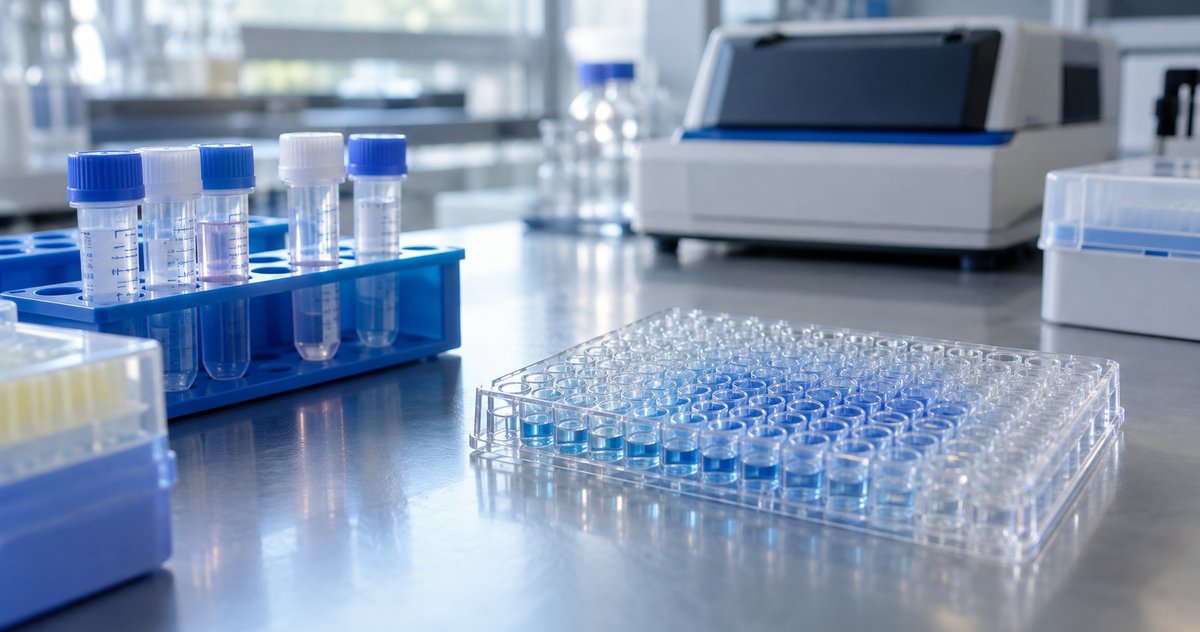
This reading reports the 12 October research announcement. It makes no claim about launch completion or experiment outcomes. The laboratory image is representative and does not identify mission equipment.