Rural Women in 2026: Recognition Must Reach the Working Day
An approaching international day and the Year of the Woman Farmer raise a practical question: what would recognition change?
Estimated CEFR reading level: C2. A qualified argument distinguishes recognition, resource access and measurable change, and interprets the scope of economic evidence. This is an editorial estimate, not an official certification.
Five useful words
British English pronunciation (IPA). Audio uses an available English voice on your device.
livelihood /ˈlaɪvlihʊd/
nounThe means through which a person supports their life.
Reliable transport can affect a rural livelihood.
productive asset /prəˌdʌktɪv ˈæset/
noun phraseA resource used to produce goods or income.
Land and equipment are productive assets.
tenure /ˈtenjə/
nounThe conditions under which land is held or used.
Secure tenure can influence investment decisions.
conditional estimate /kənˌdɪʃənəl ˈestɪmət/
noun phraseA calculated possible result that depends on stated changes.
The projection is a conditional estimate, not an observed outcome.
recognition /ˌrekəɡˈnɪʃən/
nounAcknowledgement of someone's contribution or position.
Recognition should lead to practical questions about resources.
The story
A day and a wider campaign
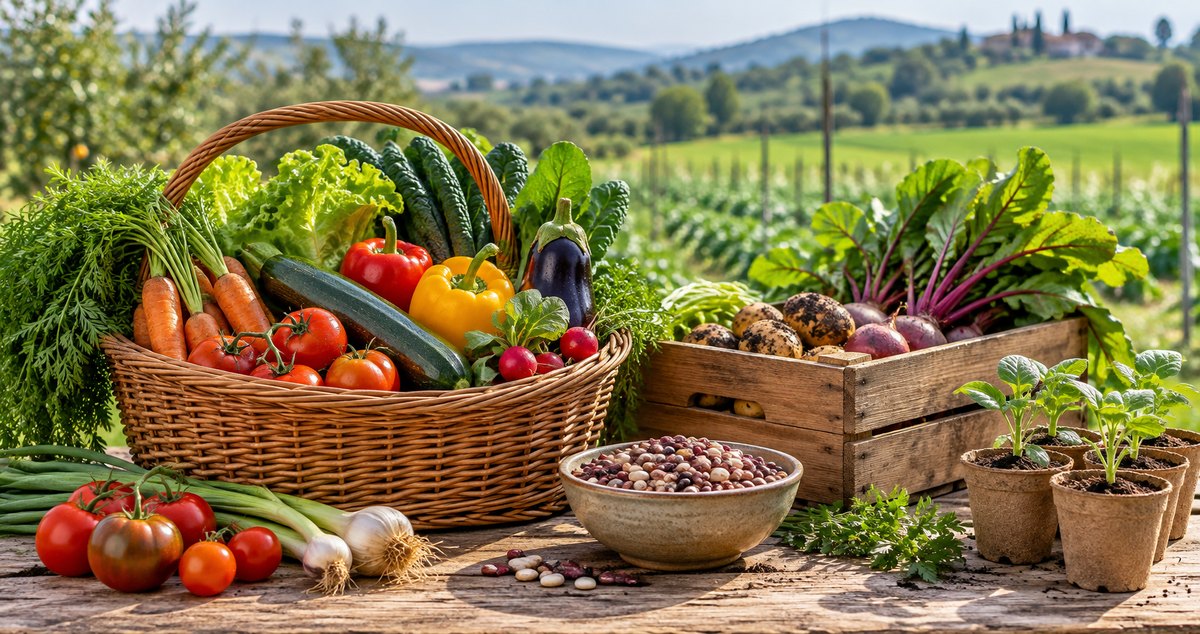
The International Day of Rural Women is observed on 15 October. In 2026, it falls within the United Nations' International Year of the Woman Farmer, whose FAO campaign highlights women's contributions to food production and trade. Recognition can draw attention to that work, but it does not necessarily give women control over the resources needed to earn a livelihood.
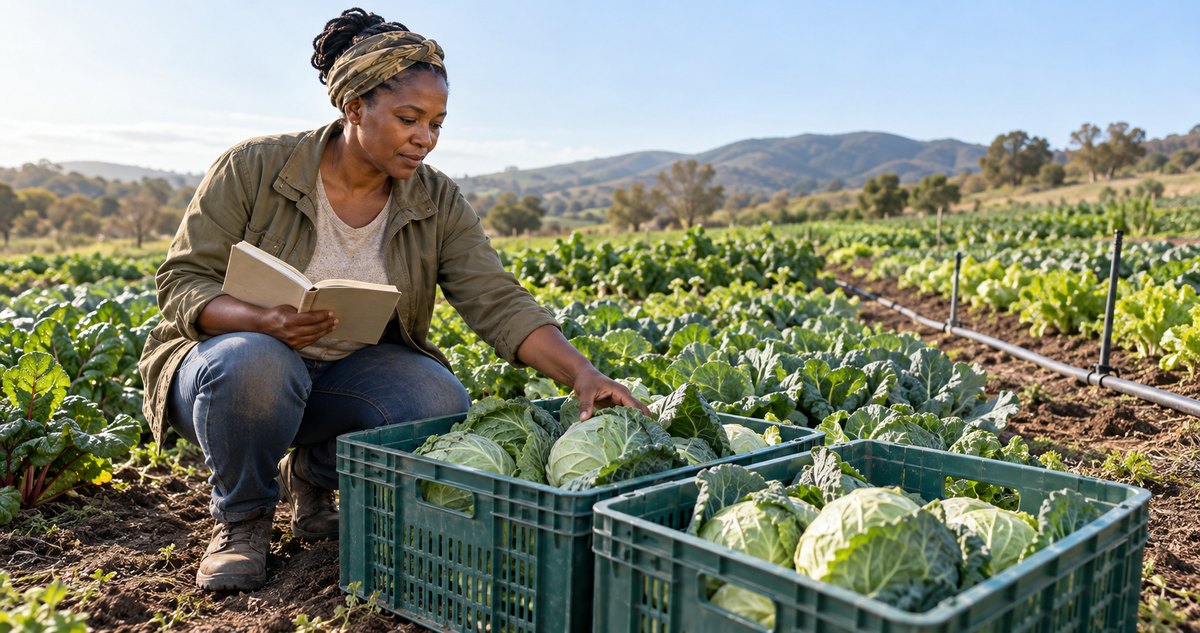
The campaign uses an inclusive definition of women farmers. It covers growers, fishers, processors, traders and others working across food systems, including informal workers and people who do not own land. This matters because a narrow picture of farming can obscure the labour that connects a harvest to a meal. Not every rural woman, however, works in agriculture.
Resources behind the recognition
FAO's 2023 report on women in agrifood systems found that these systems employed 36 per cent of working women globally. The figure concerns employed women, rather than all women, and covers the wider food sector rather than farming alone. It comes from the 2023 report; the campaign has not presented it as a new measurement for 2026.
The UN's account of rural women identifies unequal access to productive assets and public services, alongside work that remains unpaid or overlooked. Access, ownership and decision-making are related but distinct. A woman may contribute to a farm without controlling its income, and permission to use an asset need not provide the security associated with ownership. These distinctions affect what a policy must address.
FAO's campaign also highlights how care responsibilities can restrict access to education, employment and training. Even an available course may be difficult to attend if its timing, travel requirements or care arrangements do not suit participants. Organisers could consider those obstacles when planning opportunities. This is an illustrative policy question, rather than a report about a particular programme.
Promises that can be checked
The 2023 report estimated that closing farm-productivity and agricultural-wage gaps could raise global economic output by nearly one trillion dollars and reduce food insecurity by 45 million people. These are conditional estimates of possible benefits, not money already earned or a count of people already helped by the 2026 campaign. Treating the projection as an observed outcome would exaggerate the evidence.
The campaign instead provides a framework for discussing investments, land rights, finance, technology and leadership. Their relevance is not identical everywhere. FAO recognises women across different ages, abilities, communities and forms of work. An intervention designed around one imagined "typical farmer" risks overlooking people whose needs, legal position or working conditions differ.
To assess whether recognition leads to progress, we can look at whose work becomes visible, who gains access to resources and who takes part in decisions. The international day draws attention to these questions but cannot resolve them on its own. Lasting improvement would require observable changes beyond the ceremony, with those affected helping to decide what counts as progress.
Three questions
Try answering before you open the answer. You can use your own words.
- What does the 36 per cent figure measure?
Show answer
The share of working women globally employed in agrifood systems, as reported in 2023; it is not the share of all women who farm.
- Why might a training invitation fail to create a real opportunity?
Show answer
Timing, travel or care responsibilities may prevent the intended participants from attending.
- Are the projected economic benefits reported as achieved results?
Show answer
No. They are conditional estimates, not results already achieved by the 2026 campaign.
Let's talk about it
A few ideas to chat about - pick any that interest you.
- When you hear the word 'farmer', whose work first comes to mind?
- Have you seen an opportunity that was available on paper but difficult for people to take up?
- What change would make you feel that a campaign like this was having a lasting effect?
- What would you like a report on rural work to notice that a conventional job title might miss?
- How could a community celebration give rural women a say in decisions as well as public recognition?
Practise a useful pattern
Use qualified claims: "Closing the gap could improve livelihoods, provided that the necessary changes are implemented." Write a claim using could and a condition using provided that. Explain why it is weaker than a guarantee.
Frequently asked questions
Are the economic estimates new measurements from 2026?
No. They come from FAO's 2023 report and describe conditional possible benefits.
Does the 2026 campaign include only women who own farms?
No. Its definition includes diverse roles across food systems and does not require land ownership.
Sources and editorial notes
Original learning article by Poly-Puff, written from the factual sources below. Sources checked on 13 October 2026. The artwork and learning activities were created for this article.
The 15 October observance was still upcoming when this lesson was written. No year-specific day theme is asserted. FAO's 2023 figures remain dated background, not a 2026 survey. Policy illustrations and the closing assessment questions are editorial analysis, not measured programme outcomes.