1956: South African Women Take Their Protest to Pretoria
Thousands of women challenged pass laws through a coordinated, peaceful march.
Estimated CEFR reading level: B2. The explanation links discriminatory rules with organised opposition and distinguishes immediate outcomes from later commemoration. This is an editorial estimate, not an official certification.
Five useful words
British English pronunciation (IPA). Audio uses an available English voice on your device.
petition /pəˈtɪʃən/
nounA formal request supported by people's signatures.
The petition opposed the pass laws.
oppose /əˈpəʊz/
verbTo act or speak against something.
The women opposed the restrictions.
commemorate /kəˈmeməreɪt/
verbTo remember an important event publicly.
The holiday commemorates the march.
collective /kəˈlektɪv/
adjectiveShared or carried out by a group.
Their silence was a collective action.
restriction /rɪˈstrɪkʃən/
nounA rule that limits what people can do.
The restrictions controlled movement.
The story
A protest against control
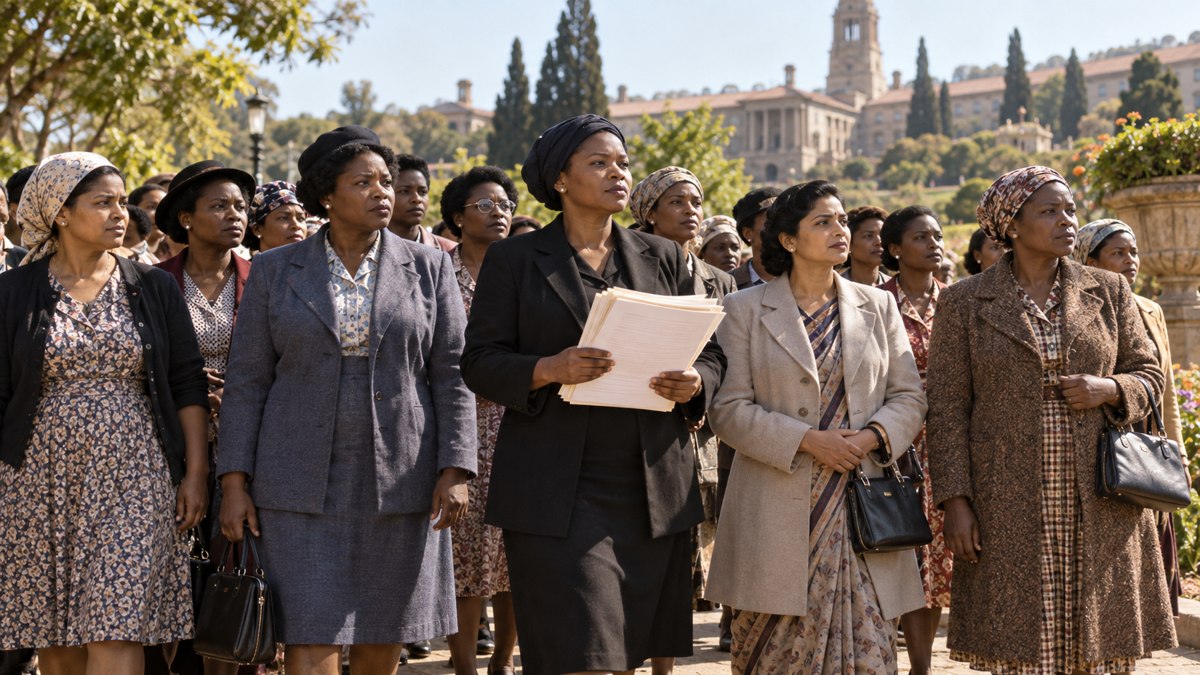
On 9 August 1956, thousands of women gathered at the Union Buildings in Pretoria. They opposed the extension of pass laws to African women. Under apartheid, these documents were tools for controlling where people could live and work, rather than ordinary identity papers.
The South African government commemorates the march as involving about 20,000 women. South African History Online notes that estimates ranged from 10,000 to 20,000. Participants travelled from different parts of the country, and the gathering brought women from different backgrounds together.
Organisation behind the moment
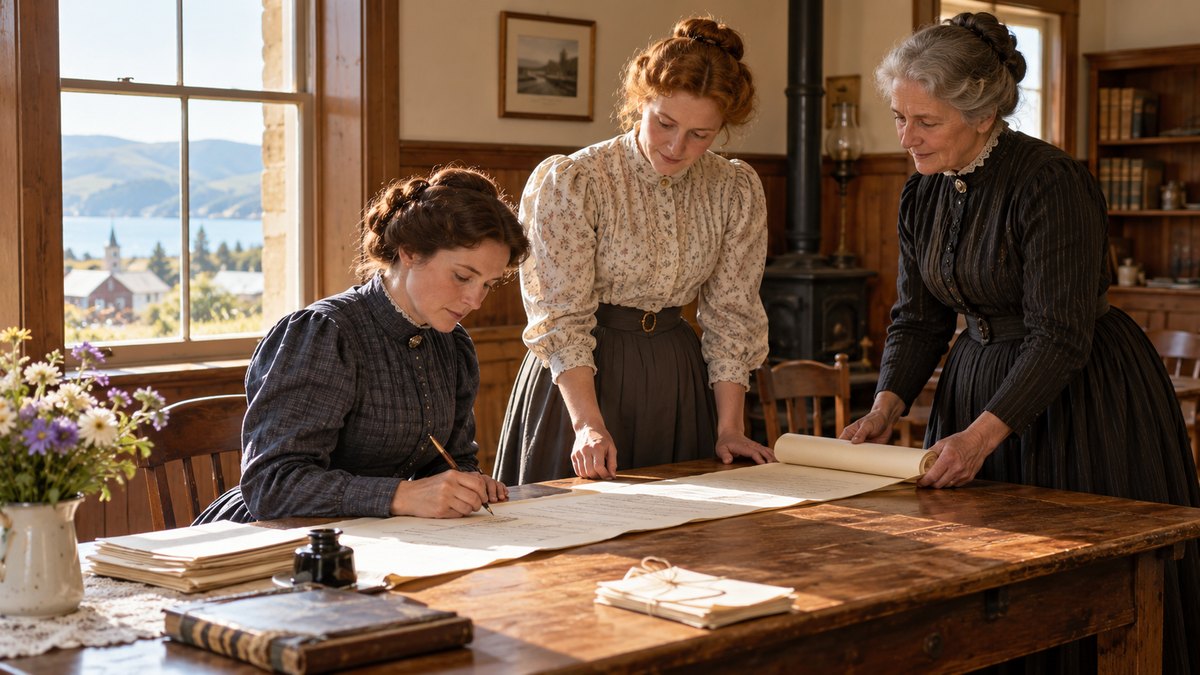
The march depended on planning, local organisers and signed petitions. When the prime minister did not meet the women, their leaders left the petitions at his office. The crowd also stood in silence for half an hour, a striking expression of collective discipline.
The protest did not immediately end apartheid or remove pass laws. Its importance lies in the organised opposition it made visible. South Africa now marks National Women's Day on 9 August, connecting the annual holiday with that earlier struggle.
Three questions
Try answering before you open the answer. You can use your own words.
- What did the women oppose?
Show answer
The extension of apartheid pass laws to African women.
- What happened to the petitions?
Show answer
Leaders left them at the prime minister's office when he did not meet the women.
- Did the march immediately end apartheid?
Show answer
No. It made organised opposition visible, but the system continued.
Let's talk about it
A few ideas to chat about - pick any that interest you.
- What makes a quiet public gesture powerful?
- How do public holidays help people remember history?
- What interests you about the planning behind a large peaceful event?
- What would you like a history display to show about the women's journeys to Pretoria?
- Would hearing a participant's voice change how you experienced a photograph of the march?
Practise a useful pattern
Use rather than to clarify a distinction: The documents controlled movement rather than simply identifying people. Write a sentence contrasting commemoration with immediate legal change.
Frequently asked questions
Where did the march take place?
At the Union Buildings in Pretoria, South Africa.
Why is 9 August National Women's Day?
It commemorates the 1956 women's march against pass laws.
Sources and editorial notes
Original learning article by Poly-Puff, written from the factual sources below. Sources checked on 16 October 2026. The artwork and learning activities were created for this article.
The government's approximately 20,000 figure is distinguished from SAHO's wider estimate range. Government indexed extracts and the SAHO full account were checked. The reading avoids implying immediate repeal or presenting any generated figure as a named historical leader.