Paris Riots: What Changed After the 17 October Protests?
New clashes, damaged shops and a presidential response followed Saturday's demonstrations. Here is a dated follow-up to our earlier France protests reading.
Estimated CEFR reading level: B2. Reported speech, attributed figures and distinctions between protest, violence and arrest support the B2 estimate. This is an editorial estimate, not an official certification.
Five useful words
British English pronunciation (IPA). Audio uses an available English voice on your device.
looting /ˈluːtɪŋ/
nounStealing goods during disorder or an emergency.
The shop owner discovered looting after the crowd left.
ransack /ˈrænsæk/
verbTo search through a place violently, stealing or damaging things.
Someone had ransacked the shop.
aftermath /ˈɑːftəmæθ/
nounThe period and consequences following a serious event.
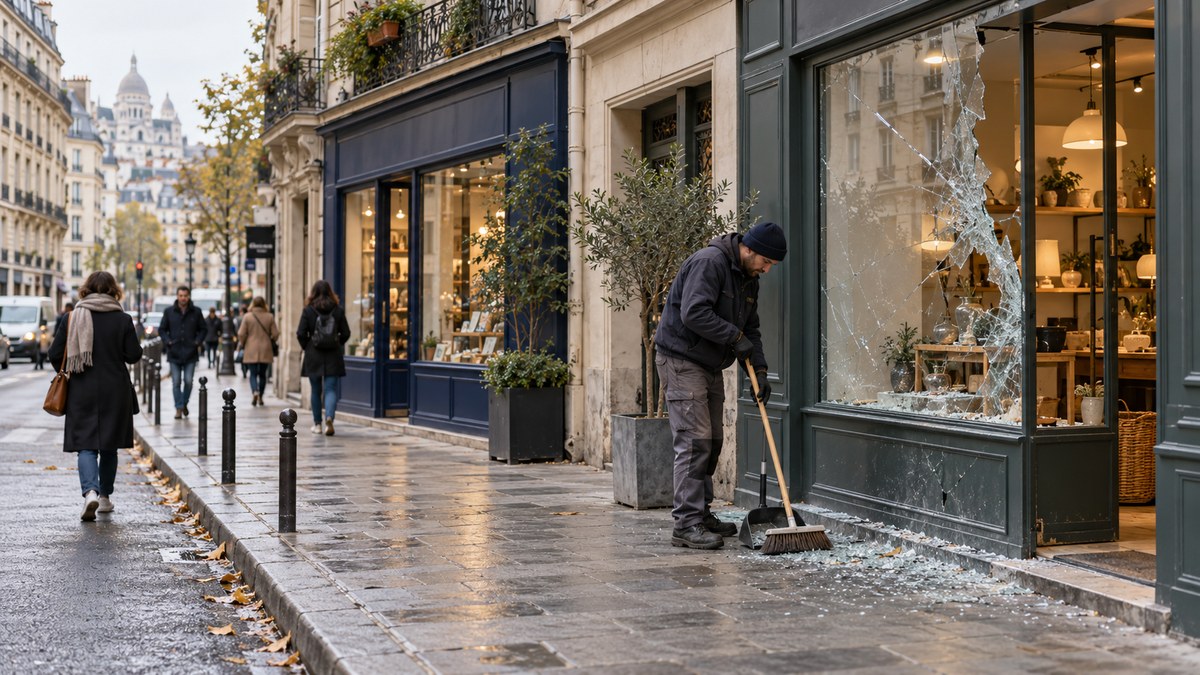
Residents cleared broken glass in the aftermath.
rally /ˈræli/
nounA public meeting where people show support for a cause.
The students joined a peaceful rally.
conviction /kənˈvɪkʃn/
nounA court decision that a person is guilty of a crime.
An arrest does not itself amount to a conviction.
The story
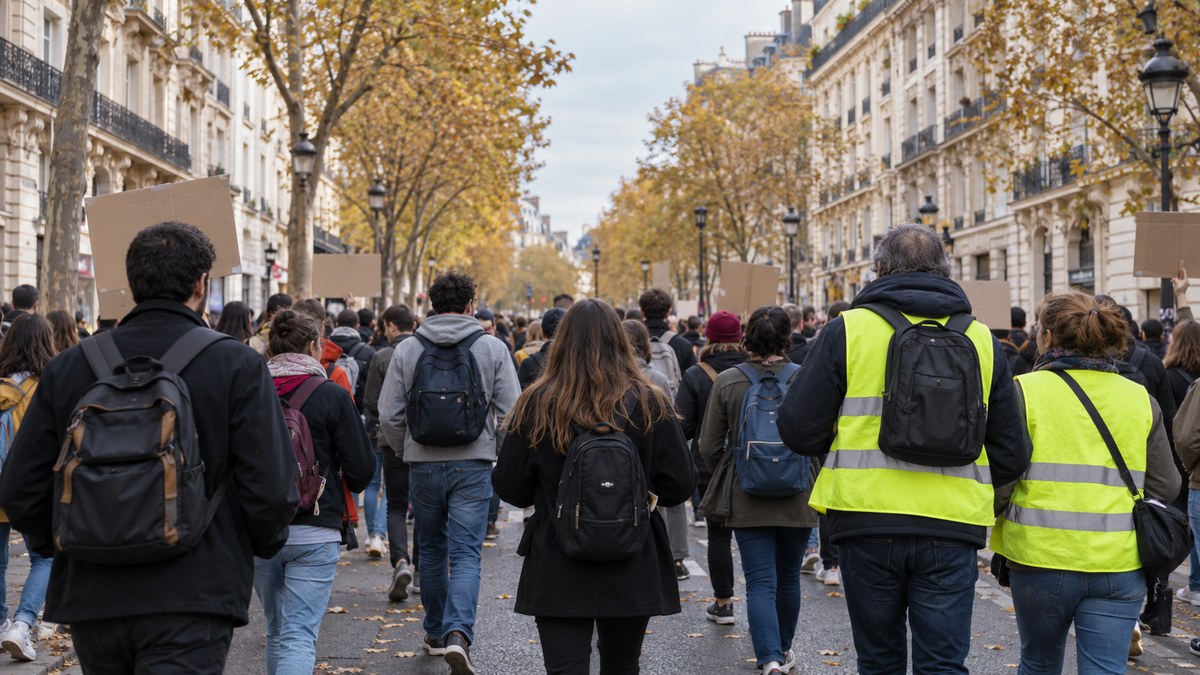
Riots and looting changed the story of France's demonstrations on 17 October. In Paris, shops were ransacked and vehicles burned. The marches had brought together students, unions and Yellow Vest supporters angry about living costs and school conditions.
The aftermath continued on Sunday, 18 October. AFP journalists reported fresh clashes near Place de la République, where police used tear gas and stun grenades. Some people threw bottles and rocks. Shops were looted again. These reports describe particular locations, not conditions everywhere in Paris.
In a national address on Sunday, President Emmanuel Macron condemned the destruction while distinguishing people with legitimate demands from those responsible for violence. He said local authorities could ban certain rallies if necessary. He did not announce a nationwide curfew or state of emergency in that address.
AFP's updated report, checked on 19 October, cited the interior ministry as saying nearly 2,400 people had been arrested across France on Saturday. That national figure is not a Paris total or a count of convictions. The challenge now is to address damage and public safety while the original concerns about schools and household budgets remain.
Three questions
Try answering before you open the answer. You can use your own words.
- Which concerns brought different groups into the demonstrations?
Show answer
Living costs and school conditions brought together students, unions and Yellow Vest supporters.
- What distinction did Macron make in his address?
Show answer
He distinguished people with legitimate demands from those responsible for destruction and violence.
- Why should the figure of nearly 2,400 arrests be read carefully?
Show answer
It was an attributed national figure for Saturday, not a Paris-only total or a count of convictions.
Let's talk about it
A few ideas to chat about - pick any that interest you.
- What stood out to you in this update compared with the earlier protests story?
- How do you feel about the distinction between a protest movement and people committing violence?
- What kinds of support might matter most to a small shop after damage?
- When dramatic images fill the news, what helps you understand the wider situation?
- What would a convincing response to the original school concerns look like to you?
Practise a useful pattern
Use according to to identify the source of a claim. Write one sentence reporting an attributed figure.
Example: According to the interior ministry, nearly 2,400 people were arrested across France on Saturday.
Frequently asked questions
What happened in Paris after the 17 October 2026 protests?
AFP reported renewed clashes and looting near Place de la République on 18 October. Its updated report was checked on 19 October.
Did Macron announce a national curfew in his 18 October address?
AFP reported that he did not announce a nationwide curfew or state of emergency in that address, while allowing for local bans on certain rallies.
Sources and editorial notes
Original learning article by Poly-Puff, written from the factual sources below. Sources checked on 19 October 2026. The artwork and learning activities were created for this article.
This follow-up covers events on 17-18 October and was checked on 19 October 2026. AFP's updated page displays 19 October at 01:08 without a labelled time zone; search extracts showed an earlier 18 October version. Arrest figures are provisional, attributed and national. The reading makes no claim that every demonstrator took part in violence or that every district was affected. Political accusations about responsibility are not presented as established findings.