NASA Asks Students to Design Better Moon Communications
A student challenge focuses on keeping future lunar explorers connected, with an early notice deadline approaching.
Estimated CEFR reading level: B2. An explanation of a technical challenge, eligibility and future plans, with contrasts between proposals and working systems. This is an editorial estimate, not an official certification.
Five useful words
British English pronunciation (IPA). Audio uses an available English voice on your device.
dependable /dɪˈpendəbəl/
adjectiveAble to be trusted to work well.
The team needs a dependable connection.
proposal /prəˈpəʊzəl/
nounA written plan offered for consideration.
Students explain their idea in a proposal.
faculty adviser /ˌfækəlti ədˈvaɪzə/
noun phraseA university teacher who guides a student team.
A faculty adviser helps the team plan its work.
non-binding /ˌnɒnˈbaɪndɪŋ/
adjectiveNot creating a firm obligation.
The early notice is non-binding.
implement /ˈɪmplɪment/
verbTo put a plan or system into use.
Engineers need time to implement a new design.
The story
Connections beyond Earth
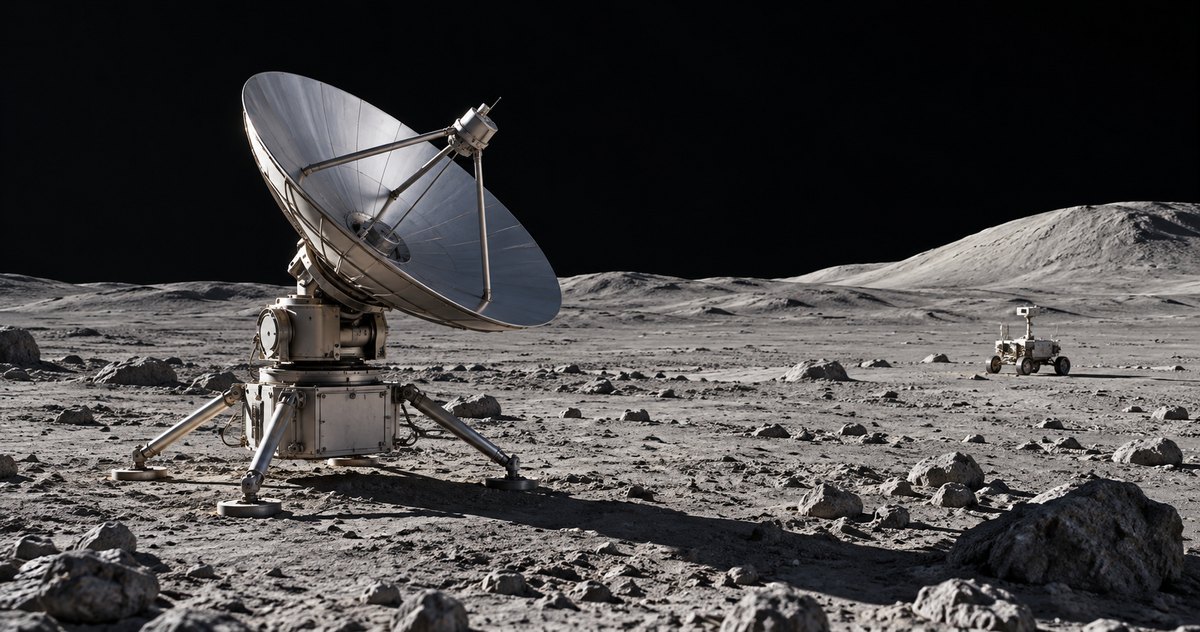
A future Moon mission needs more than a spacecraft that lands safely. Astronauts, vehicles and teams on Earth must also exchange information. NASA's 2027 Human Lander Challenge asks university teams to propose ways of making those connections more dependable.
Announced on 29 September 2026, the competition is open to United States-based college and university teams with faculty advisers. Teams interested in participating are asked to send a non-binding notice of intent by 15 October. Their full proposals are due on 4 March 2027.
Ideas before installations
Proposals can address equipment, software or the arrangement of a communications network. For example, a team might study antennas or ways to give urgent messages priority. The challenge seeks solutions that could be implemented within three to five years.
Up to twelve finalist teams will receive funding and move to a design review in June 2027. That funding would help teams develop their proposals further. It would not demonstrate that their networks already work on the Moon: the announcement invites designs, rather than reporting a completed lunar installation.
Three questions
Try answering before you open the answer. You can use your own words.
- Who can enter the competition?
Show answer
United States-based college and university teams with faculty advisers.
- When are the full proposals due?
Show answer
4 March 2027.
- Does selection mean a network is already working on the Moon?
Show answer
No. It supports further design development, not a completed installation.
Let's talk about it
A few ideas to chat about - pick any that interest you.
- What sort of message would you most want to get through during a Moon mission?
- When has an unreliable connection made your day difficult?
- Would you enjoy designing something for space? What part sounds interesting?
- Would you rather test a design in a realistic Moon landscape or build a small working model?
- What could make a space-design challenge welcoming to a student who was unsure about their technical skills?
Practise a useful pattern
Distinguish plans from results: "A team could develop a new network" does not mean "The team has installed the network." Write one sentence about a possible design and one about a completed action.
Frequently asked questions
Is the early notice the full proposal?
No. The non-binding notice is separate from the full proposal, which is due on 4 March 2027.
Does this report describe equipment already on the Moon?
No. It describes a student design challenge for possible future communications systems.
Sources and editorial notes
Original learning article by Poly-Puff, written from the factual sources below. Sources checked on 13 October 2026. The artwork and learning activities were created for this article.
Competition details describe plans checked on 13 October 2026. No selected team, tested lunar system or future mission outcome is asserted. The examples of possible work are explanatory, not descriptions of submitted entries.