1987: The Montreal Protocol Makes Ozone Protection a Shared Task
An environmental agreement linked scientific evidence to binding commitments, practical assistance and continuing review.
Estimated CEFR reading level: C2. A nuanced historical explanation connects institutions, scientific evidence and implementation while distinguishing agreement from environmental recovery. This is an editorial estimate, not an official certification.
Five useful words
British English pronunciation (IPA). Audio uses an available English voice on your device.
stratospheric /ˌstrætəˈsferɪk/
adjectiveRelating to the atmospheric layer above the lowest layer.
Stratospheric ozone helps absorb ultraviolet radiation.
binding commitment /ˌbaɪndɪŋ kəˈmɪtmənt/
noun phraseAn obligation a party has formally agreed to meet.
The treaty created binding commitments.
differentiate /ˌdɪfəˈrenʃieɪt/
verbTo recognise or establish distinctions.
The framework differentiates between countries' schedules.
implementation /ˌɪmplɪmenˈteɪʃən/
nounThe work of putting an agreed plan into effect.
Implementation requires resources and institutions.
amendment /əˈmendmənt/
nounA formal change or addition to an agreement.
An amendment can address a new concern.
The story
An agreement, not an instant repair
Adopted on 16 September 1987, the Montreal Protocol addressed a problem whose consequences crossed national borders: chemicals released by human activity could damage the stratospheric ozone layer. That layer absorbs harmful ultraviolet radiation. Protecting it required more than discovering the danger; governments needed a way to reduce the substances responsible while maintaining cooperation over time.
The protocol entered into force in 1989. Adoption in 1987 meant that governments had agreed on the text; implementation meant putting its commitments into practice. That required laws, reporting, technical changes and institutions capable of checking progress. Neither milestone meant the atmosphere had already recovered. The agreement established a process whose environmental results needed to be measured over time.
Different routes to a common goal
Rather than imposing an identical timetable on every economy, the framework recognised differences between developed and developing countries. Its phased controls made responsibilities specific and measurable, while allowing different schedules. The arrangement combined a common environmental purpose with differentiated obligations: cooperation did not require pretending that all countries had the same resources or industrial starting point.
In 1991, the Multilateral Fund began providing financial and technical assistance for eligible developing countries. Meeting a commitment to replace a controlled chemical could require new equipment, training and production methods. The fund helped countries acquire the capacity to make those changes. Assistance therefore supported implementation, rather than simply adding another statement of environmental intent.
Evidence that can change the rules
The treaty also established a continuing relationship between evidence and regulation. Governments receive scientific, environmental, technological and economic assessments; the framework can be adjusted or amended as knowledge and available alternatives develop. Reporting obligations and controls on trade help make commitments traceable. An agreement designed to evolve can respond to difficulties that its original negotiators could not fully resolve.
Its later development illustrates the need to distinguish connected problems. The 2016 Kigali Amendment addresses hydrofluorocarbons, or HFCs, which do not deplete ozone but are powerful greenhouse gases. Replacements for older substances could therefore solve one problem while contributing to another. Ozone protection and climate protection overlap here, but they are not interchangeable descriptions of the atmosphere.
What the milestone teaches
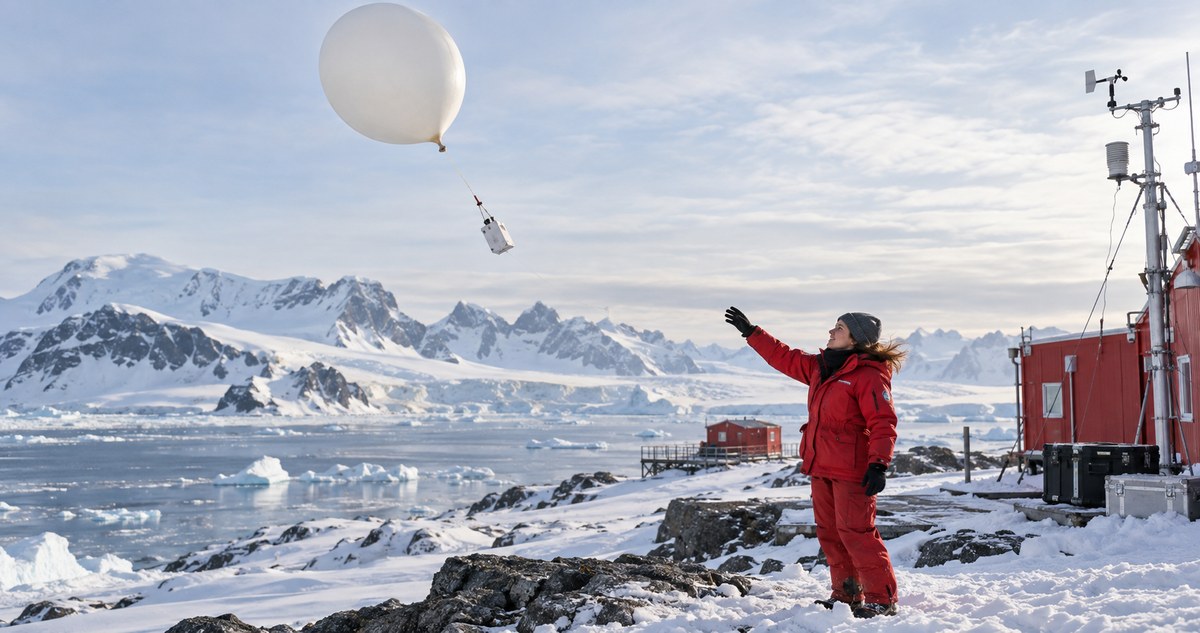
Ozone recovery is consequently assessed through measurements and scientific evaluation, rather than inferred from a treaty's signature. Chemicals already released can remain relevant long after production changes. A photograph of Antarctic ice cannot show whether the protective layer has recovered, and a single unusually large or small ozone hole cannot, by itself, summarise the entire policy's effectiveness.
The protocol's historical importance lies in how it organised cooperation: differentiated schedules, financial assistance, monitoring and rules that could be revised as knowledge developed. Calling it a model is meaningful only if we examine those mechanisms. Celebrating an agreement does not reproduce the work that sustains it. In this interpretation, the treaty shows how a shared commitment can be organised and tested, rather than guaranteeing that international agreements automatically succeed.
Three questions
Try answering before you open the answer. You can use your own words.
- Why is adoption different from implementation?
Show answer
Adoption is the agreement on a text; implementation requires practical laws, reporting, technical changes and institutions.
- What does the Multilateral Fund contribute?
Show answer
Financial and technical assistance for eligible developing countries to meet their commitments.
- Why does the reading distinguish HFCs from ozone-depleting chemicals?
Show answer
HFCs do not deplete ozone but are powerful greenhouse gases, so related climate concerns are not identical to ozone depletion.
Let's talk about it
A few ideas to chat about - pick any that interest you.
- How would you feel about countries sharing a goal but following different timetables?
- What change would convince you that an environmental promise was being put into practice?
- Have you seen a replacement technology solve one problem while creating another?
- What would make it easier for a community to support a rule whose benefits may take decades to become visible?
- How would you like a successful environmental agreement to be remembered without making its work seem finished?
Practise a useful pattern
Use a concessive clause: "Although countries share a goal, their schedules may differ." Write a sentence that acknowledges a common purpose while explaining a practical difference.
Frequently asked questions
Did the protocol repair the ozone layer immediately in 1987?
No. Adoption began a continuing process of controls, implementation and scientific assessment.
Do HFCs addressed by the Kigali Amendment deplete ozone?
No. They do not deplete ozone, but they are powerful greenhouse gases.
Sources and editorial notes
Original learning article by Poly-Puff, written from the factual sources below. Sources checked on 13 October 2026. The artwork and learning activities were created for this article.
The central event is adoption in 1987. Later fund and amendment dates are identified as later developments. No current ozone-recovery percentage or forecast year is asserted. The discussion of what counts as evidence is editorial synthesis, not a new scientific finding.