International E-Waste Day 2026: Small Gadgets, Real Waste
A broken cable or an old pair of earphones can seem unimportant. The 2026 e-waste campaign asks us to notice these small things.
Estimated CEFR reading level: A2. Short sentences, everyday objects and simple explanations of a practical environmental topic. This is an editorial estimate, not an official certification.
Five useful words
British English pronunciation (IPA). Audio uses an available English voice on your device.
device /dɪˈvaɪs/
nounA thing made for a particular job.
This small device plays music.
drawer /drɔː/
nounA sliding box inside a desk or cupboard.
My old cables are in a drawer.
repair /rɪˈpeə/
verbTo make a broken thing work again.
Can someone repair this fan?
collect /kəˈlekt/
verbTo bring things together.
The centre collects old electrical items.
waste /weɪst/
nounThings that people throw away or no longer use.
Electrical waste needs proper care.
The story
A day for small electronics
International E-Waste Day is on 14 October. In 2026, the WEEE Forum is focusing on fast tech: small, low-cost electrical products. These include earphones, charging cables and small fans.
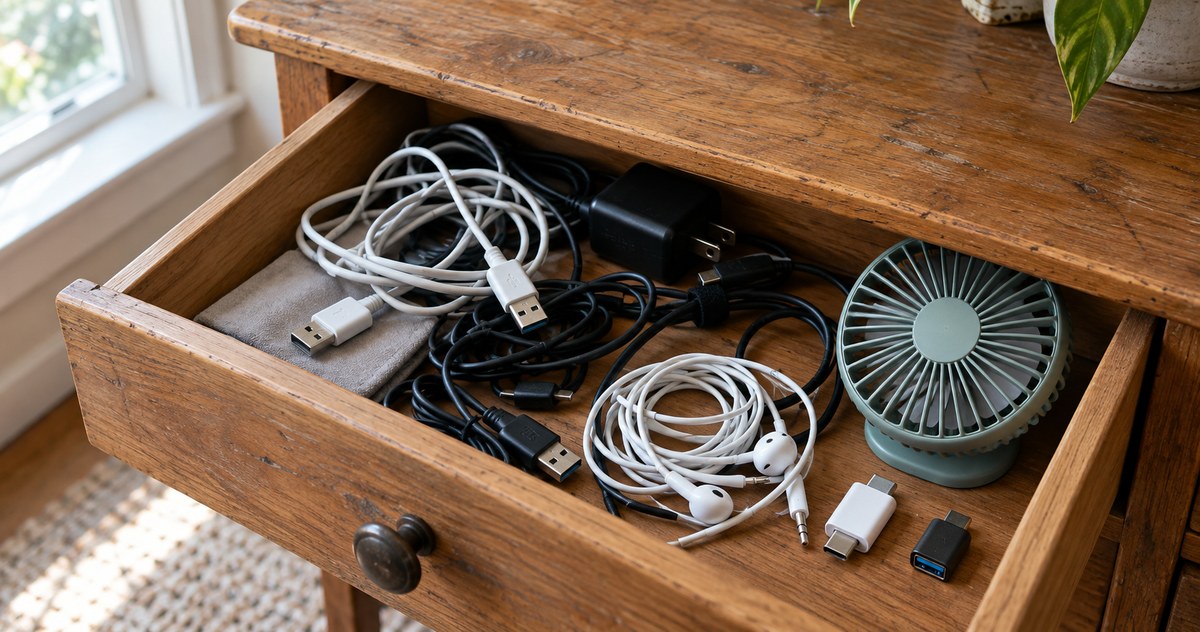
Many people keep unused gadgets in a drawer. Others put broken ones in the usual rubbish bin. But small electrical items need proper collection too.
What can we do?
Some unused devices may still work, while others could need repair. Thinking about those items before buying another one may help people avoid keeping more unwanted gadgets. The campaign focuses on these small everyday products, as well as larger electrical items.
When an electrical item is no longer useful, check local information about official collection points. The campaign asks people to return these items for proper treatment. A small object can still contain useful materials. Its size does not make it ordinary household waste.
Three questions
Try answering before you open the answer. You can use your own words.
- When is International E-Waste Day?
Show answer
It is on 14 October.
- What does fast tech mean in this article?
Show answer
Small, low-cost electrical products, such as cables or earphones.
- Does a small electrical item belong in the usual rubbish bin?
Show answer
No. The article says to check official local collection information and return it for proper treatment.
Let's talk about it
Here are some ideas for a chat. Choose any you like.
- Which small devices do you use most often?
- Do you have a drawer of old cables or gadgets too?
- Would you use a collection point if one were easy to find nearby?
- Would you enjoy learning to repair a small device?
- What would help you remember to take old gadgets to a collection point?
Practise a useful pattern
Use before followed by an -ing form: "Before buying another item, think about whether you need it." Write three sentences about useful choices before buying, travelling or studying.
Frequently asked questions
What is the focus of International E-Waste Day 2026?
The WEEE Forum is focusing on fast tech: small, low-cost electrical products that can easily be overlooked.
Has the 2026 campaign day happened yet?
This lesson was published on 12 October, before the campaign day on 14 October 2026.
Sources and editorial notes
Original learning article by Poly-Puff, written from the factual sources below. Sources checked on 12 October 2026. The artwork and learning activities were created for this article.
This is an upcoming campaign preview. Collection arrangements vary by location; the article does not describe a universal take-back service or an already completed campaign.