1492: Columbus Arrives in a World Already Inhabited
Columbus's arrival in the Caribbean changed Atlantic history. Understanding the event means including the Indigenous people who already lived there.
Estimated CEFR reading level: B2. Historical vocabulary, relative clauses and a comparison of different perspectives on one event. This is an editorial estimate, not an official certification.
Five useful words
British English pronunciation (IPA). Audio uses an available English voice on your device.
inhabited /ɪnˈhæbɪtɪd/
adjectiveHaving people living in a place.
The island was already inhabited.
Indigenous /ɪnˈdɪdʒənəs/
adjectiveConnected with the original peoples of a place and their descendants.
Indigenous communities have their own histories and cultures.
colonisation /ˌkɒlənaɪˈzeɪʃən/
nounThe process of taking control of another land and settling there.
Colonisation changed who controlled the land.
perspective /pəˈspektɪv/
nounA particular way of understanding an event or situation.
A second perspective changed how she read the account.
descendant /dɪˈsendənt/
nounA person related to someone who lived in an earlier generation.
Descendants can carry family knowledge into the present.
The story
An arrival, not an empty world
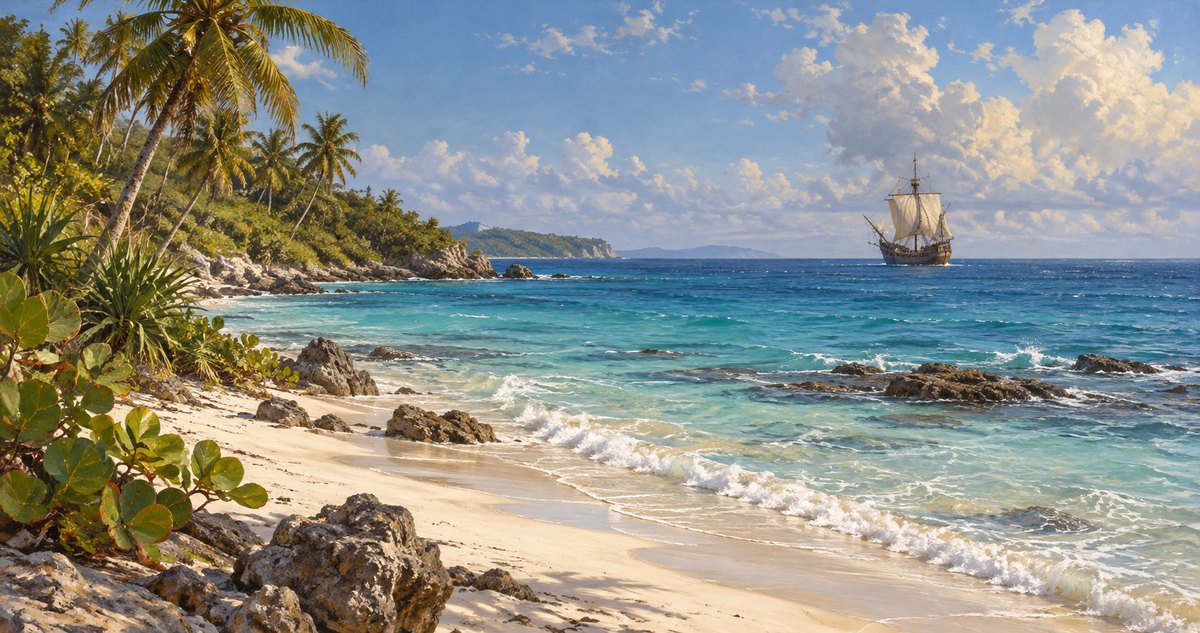
On 12 October 1492, Christopher Columbus's expedition reached an island in the Bahamas. The island was known as Guanahani; Columbus called it San Salvador. He encountered Taíno people who already had communities and knowledge of the region.
Describing the voyage as a discovery depends on whose perspective we take. The Americas had been inhabited for thousands of years, and Indigenous peoples already knew the places where they lived. The island was unfamiliar to Columbus's expedition, rather than unknown to everyone.
Whose history do we hear?
The arrival became part of a much larger history of European colonisation. Indigenous peoples suffered warfare, enslavement, loss of land and devastating disease. These consequences cannot be understood through an explorer's achievements alone.
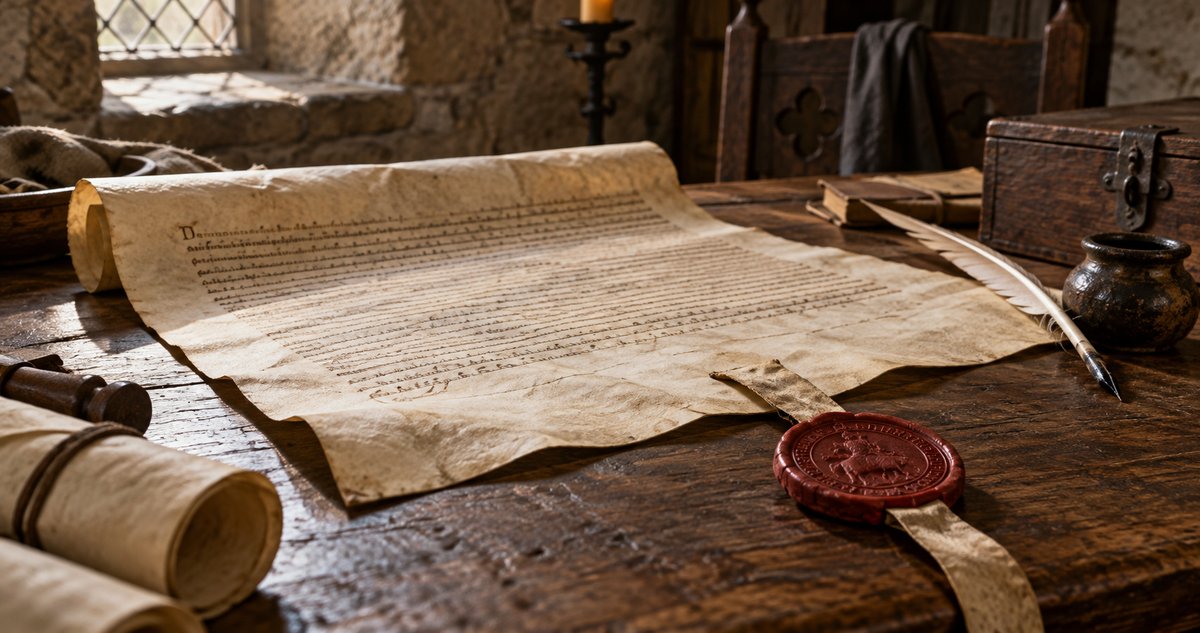
Written accounts by Europeans are useful evidence, but they reflect the writers' interests and assumptions. Including Indigenous perspectives gives readers a fuller account of what contact meant.
The story also continues beyond 1492. Indigenous communities and Taíno descendants are present today. Studying the voyage should therefore connect an important historical date with living people, rather than treating those people as figures who disappeared when the ships arrived.
Three questions
Try answering before you open the answer. You can use your own words.
- Why is the word discovery incomplete here?
Show answer
The land was already inhabited and known to Indigenous peoples, although it was unfamiliar to the European visitors.
- What limits can European written accounts have?
Show answer
They reflect their writers' interests and assumptions, so they do not supply every perspective.
- Why does the article mention people living today?
Show answer
It challenges the idea that Indigenous communities and Taíno descendants belong only to the past.
Let's talk about it
A few ideas to chat about - pick any that interest you.
- Have you ever heard two very different accounts of the same event?
- What helps you decide which voices to listen to in a historical account?
- What would you like a museum to show about the people connected to this history today?
- How would you feel about a familiar place being described as newly discovered by visitors?
- Would you prefer a history display built around one person's journey or several communities' experiences?
Practise a useful pattern
Notice the relative clause: "Taíno people who already had communities". Write two sentences using who or which to add information about people or objects in a historical account. Then explain whose perspective each sentence presents.
Frequently asked questions
Where did Columbus arrive in October 1492?
His expedition reached Guanahani in the Bahamas, which he called San Salvador.
Were the Americas uninhabited before his arrival?
No. Indigenous peoples had lived in the Americas for thousands of years.
Sources and editorial notes
Original learning article by Poly-Puff, written from the factual sources below. Sources checked on 12 October 2026. The artwork and learning activities were created for this article.
This lesson concerns the historical arrival, not current holiday opening hours. The discussion of discovery and perspective is editorial analysis. It does not attribute every later colonial action to this single voyage. The artwork is imagined and is not archival evidence.