1843: Ada Lovelace Imagines More Than a Calculating Machine
Ada Lovelace wrote about a proposed machine that could follow instructions. Her notes imagined possibilities beyond solving sums.
Estimated CEFR reading level: B1. A concise historical account using past tenses and a clear contrast between plans and a completed machine. This is an editorial estimate, not an official certification.
Five useful words
British English pronunciation (IPA). Audio uses an available English voice on your device.
translate /trænzˈleɪt/
verbTo change words from one language into another.
She translated an article from French.
instruction /ɪnˈstrʌkʃən/
nounA direction telling someone or something what to do.
The machine would follow instructions.
sequence /ˈsiːkwəns/
nounThings arranged in a particular order.
A calculation follows a sequence of steps.
symbol /ˈsɪmbəl/
nounA sign that represents something.
A musical symbol can represent a sound.
contribution /ˌkɒntrɪˈbjuːʃən/
nounSomething someone adds to a shared task.
Historians discuss each person's contribution.
The story
Instructions on paper
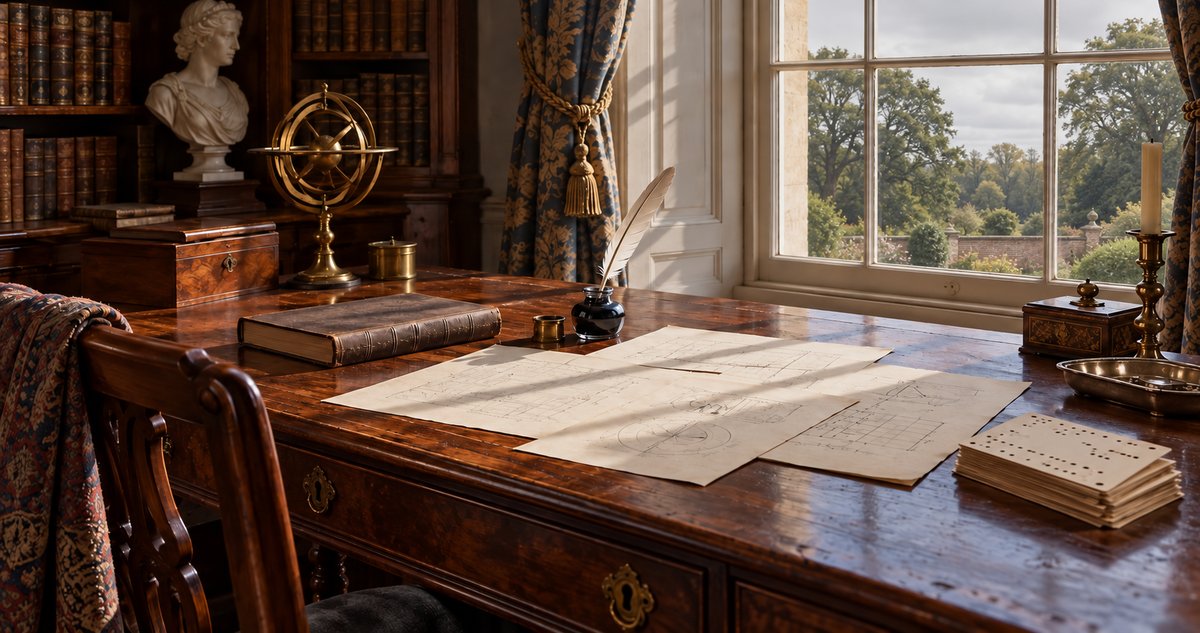
In 1843, Ada Lovelace translated a French article by the engineer Luigi Menabrea about Charles Babbage's proposed Analytical Engine. She added detailed notes that were much longer than the article itself.
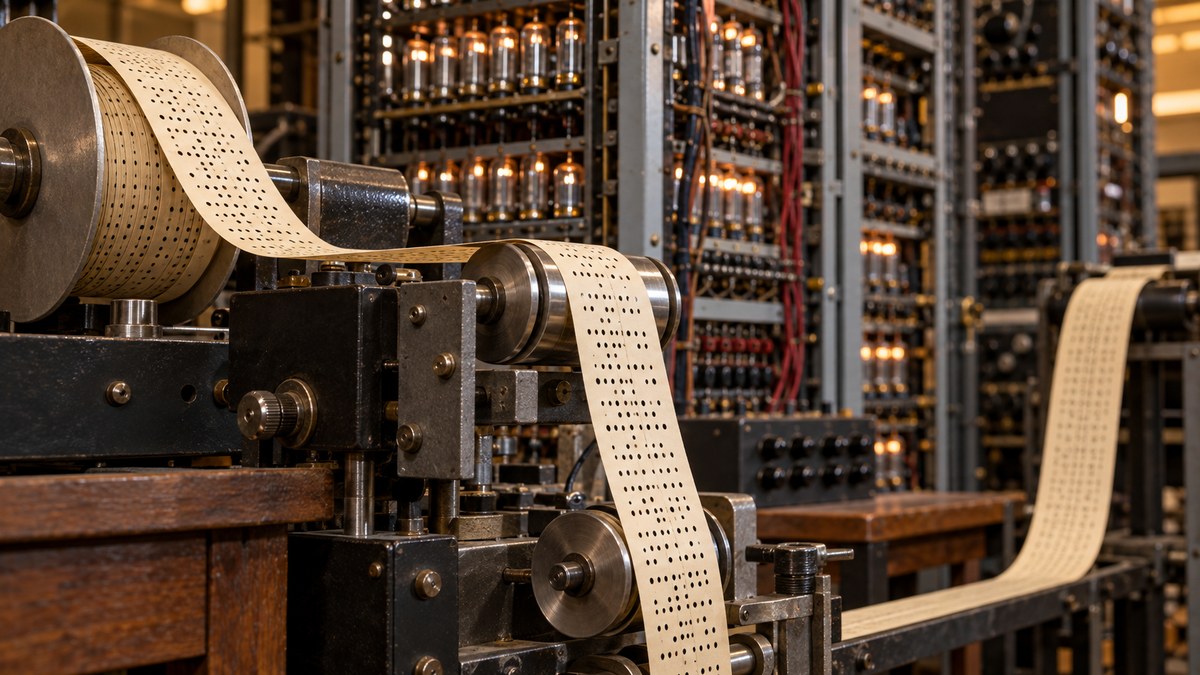
The Engine was designed to follow instructions using punched cards. Lovelace's notes described a sequence of operations for calculating Bernoulli numbers, a special group of numbers used in mathematics. This was a published plan for a machine, rather than software running on a modern computer.
Thinking beyond numbers
Lovelace also imagined that a machine could work with symbols and even music, if these could be represented by rules. She saw possibilities beyond ordinary calculation.
The Analytical Engine was not fully built during Babbage's lifetime. Lovelace and Babbage worked closely together, so historians debate each person's contribution. Lovelace is commonly called the first programmer, but understanding that description also means recognising their collaboration and the machine's unfinished design.
Three questions
Try answering before you open the answer. You can use your own words.
- What did Lovelace add to her translation?
Show answer
Detailed notes that were longer than the original article.
- What would guide the Analytical Engine's instructions?
Show answer
Punched cards.
- Why should we describe the story carefully?
Show answer
The machine was unfinished, Lovelace and Babbage collaborated, and historians debate their individual contributions.
Let's talk about it
A few ideas to chat about - pick any that interest you.
- Have you ever had an idea that was difficult to put into practice?
- Which use of computers would you most like to show someone from Lovelace's time?
- How do you like to recognise the people who help with a shared project?
- Would you enjoy planning a machine that could not yet be built?
- Which sounds more exciting to you: finding a new use for a machine or improving how it works?
Practise a useful pattern
Contrast plans with results: "The Engine was designed to follow instructions, but it was not fully built." Write two sentences about a plan that changed or remained unfinished.
Frequently asked questions
Did Lovelace build a modern computer?
No. Her notes concerned Babbage's proposed mechanical Analytical Engine.
Why is she often called the first programmer?
Her notes included a published sequence of mathematical operations for a machine. Historians also discuss Babbage's earlier work and their collaboration.
Sources and editorial notes
Original learning article by Poly-Puff, written from the factual sources below. Sources checked on 11 October 2026. The artwork and learning activities were created for this article.
The reading avoids treating a disputed historical label as proof that Lovelace worked alone. The French language of Menabrea's article is distinct from the engineer's Italian nationality. The date is a publication year, not a fabricated exact day.