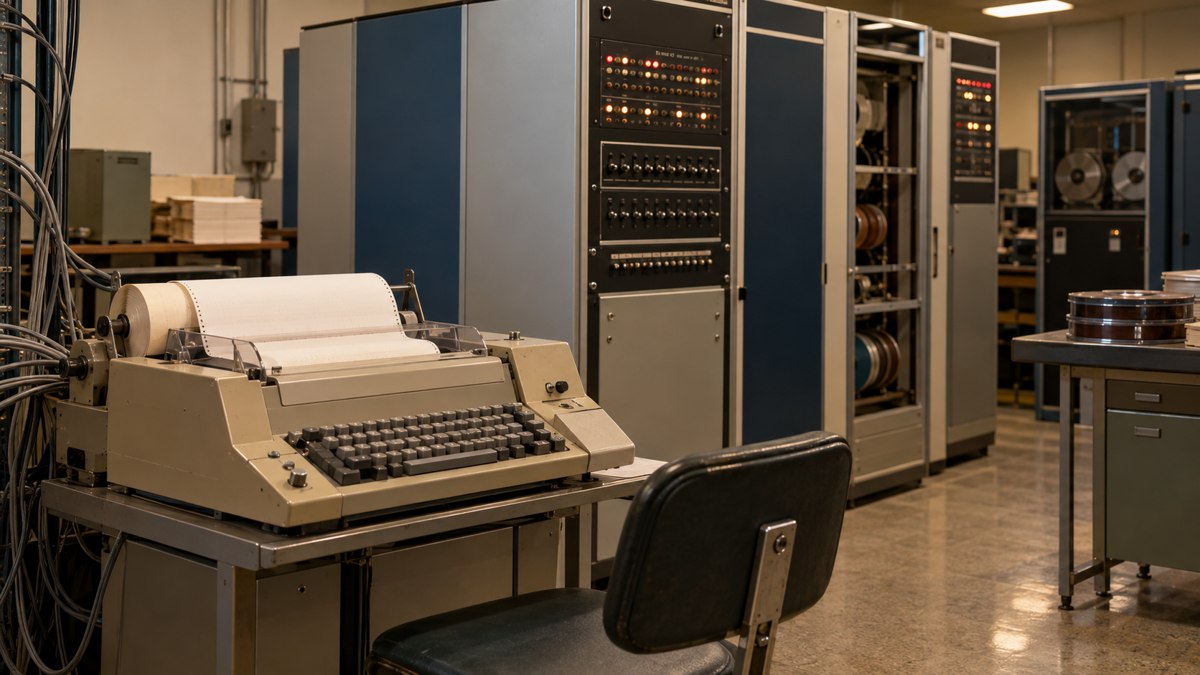
1944: Colossus and the Secret Work Behind a Computer
Paper tape, electronic valves and human judgement worked together at Bletchley Park. This pioneering computer had a very specific job.
Estimated CEFR reading level: B2. Technical vocabulary, contrasts between kinds of computers and an inference about teamwork support the B2 estimate. This is an editorial estimate, not an official certification.
Five useful words
British English pronunciation (IPA). Audio uses an available English voice on your device.
encrypted /ɪnˈkrɪptɪd/
adjectiveChanged into a coded form to prevent unauthorised reading.
The message was encrypted before transmission.
valve /vælv/
nounAn electronic tube used to control electrical signals in older equipment.
The machine used electronic valves.
programmable /ˈprəʊɡræməbl/
adjectiveAble to be set to carry out different instructions.
The machine was programmable within limits.
cipher /ˈsaɪfə/
nounA system for changing a message into a secret form.
The team studied a difficult cipher.
legacy /ˈleɡəsi/
nounThe lasting influence of a person, event or invention.
The invention has an important computing legacy.
The story
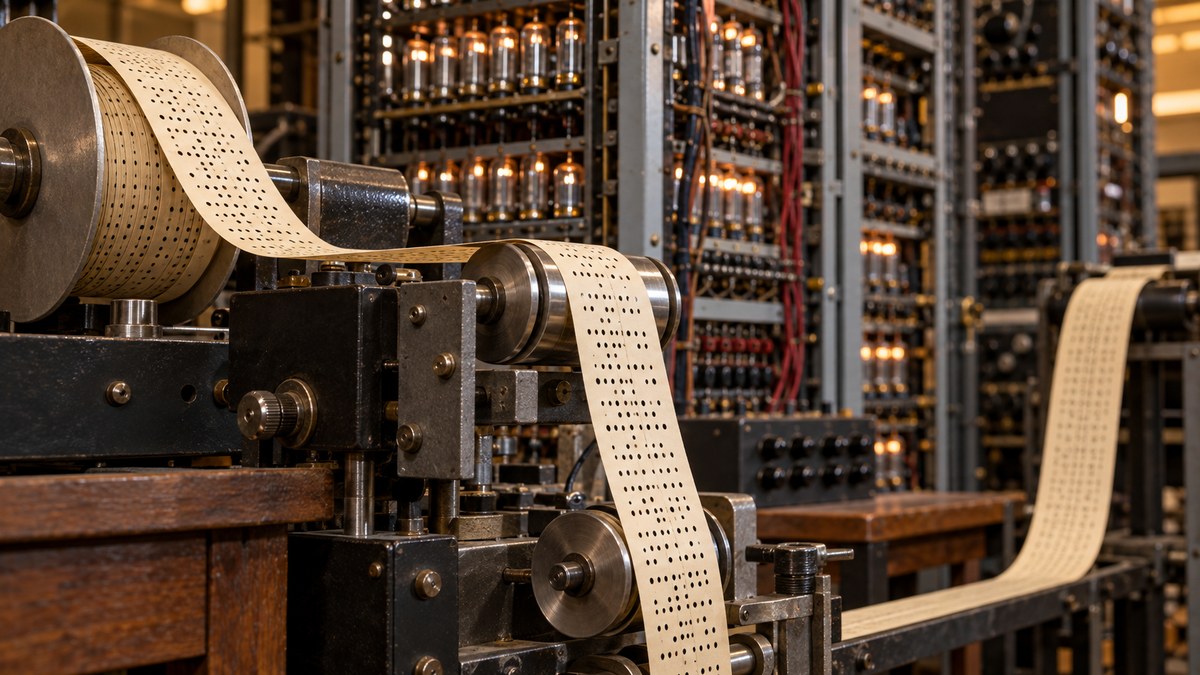
A loop of punched paper tape may seem an unlikely symbol of computing. At Bletchley Park in Britain, it carried information into Colossus, a pioneering electronic machine that was working by early February 1944. Its purpose was to help uncover settings used in encrypted German wartime messages.
Engineer Tommy Flowers and his team developed the machine. Colossus used electronic valves and read patterns from paper tape. It helped the people investigating the Lorenz cipher, a system different from the better-known Enigma. The machine accelerated part of a larger codebreaking process; it did not replace human judgement.
Calling it simply the first computer hides an important distinction. Earlier machines already existed. Colossus combined electronic operation, digital processing and limited programmability, but it was designed for a particular task. It was not a modern general-purpose computer storing its program in memory.
Secrecy also shaped its legacy. Information about Colossus began to become public in 1975, long after the war. A working reconstruction later helped people understand the engineering. Its story shows why a familiar invention may depend on teams whose contributions remain invisible for years.
A short timeline
- 1943
Flowers and his team develop Colossus.
- Early February 1944
Colossus is working at Bletchley Park.
- 1975
Information about the secret machine begins to become public.
- 1992
Tony Sale and his team begin the reconstruction project.
Three questions
Try answering before you open the answer. You can use your own words.
- What kind of messages did Colossus help investigate?
Show answer
German wartime messages encrypted using the Lorenz cipher.
- Why is the phrase first computer incomplete?
Show answer
Earlier machines existed, and Colossus had a specific combination of electronic, digital and limited programmable features rather than modern general-purpose abilities.
- What can we infer from the delay before the story became public?
Show answer
An invention can be important long before its creators receive public recognition.
Let's talk about it
A few ideas to chat about - pick any that interest you.
- Would you enjoy seeing a working reconstruction of an old computer?
- Which everyday machine would you like to look inside?
- What makes a team contribution easy to overlook?
- Do you prefer learning history through objects, photographs or personal stories?
- What older technology do you still find useful or interesting?
Practise a useful pattern
Use although to connect a fact with an unexpected contrast. Write a sentence about an invention.
Example: Although Colossus was programmable, it was designed for a specific task.
Frequently asked questions
Did Colossus break Enigma messages?
Colossus helped investigate the Lorenz cipher, which was different from Enigma.
When was Colossus working at Bletchley Park?
The National Museum of Computing dates its operation there to early February 1944.
Sources and editorial notes
Original learning article by Poly-Puff, written from the factual sources below. Sources checked on 18 October 2026. The artwork and learning activities were created for this article.
The National Museum of Computing supplies the early-February milestone and the limited-programmability qualification. Historic England corroborates the development setting. Arrival dates vary in accounts, so the reading gives no exact arrival day. The museum reconstruction is distinguished from original wartime equipment.