World Trade in 2026: Why AI Equipment Is Changing the Forecast
More computer equipment is crossing borders, but the WTO sees a different outlook for goods and services.
Estimated CEFR reading level: B1. Clear comparisons, reported forecasts and explanations of goods and services support an intermediate reading. This is an editorial estimate, not an official certification.
Five useful words
British English pronunciation (IPA). Audio uses an available English voice on your device.
forecast /ˈfɔːkɑːst/
nounA statement about what is expected to happen.
The forecast may change when new information arrives.
goods /ɡʊdz/
plural nounPhysical things that people buy and sell.
The ship carries goods to another country.
services /ˈsɜːvɪsɪz/
plural nounWork provided for customers rather than physical products.
Transport is one of the services a company can sell.
demand /dɪˈmɑːnd/
nounThe amount of something people want to buy.
Demand for computer equipment has increased.
supply chain /səˈplaɪ tʃeɪn/
nounThe connected steps that bring a product to a customer.
A delay can affect the whole supply chain.
The story
A stronger forecast
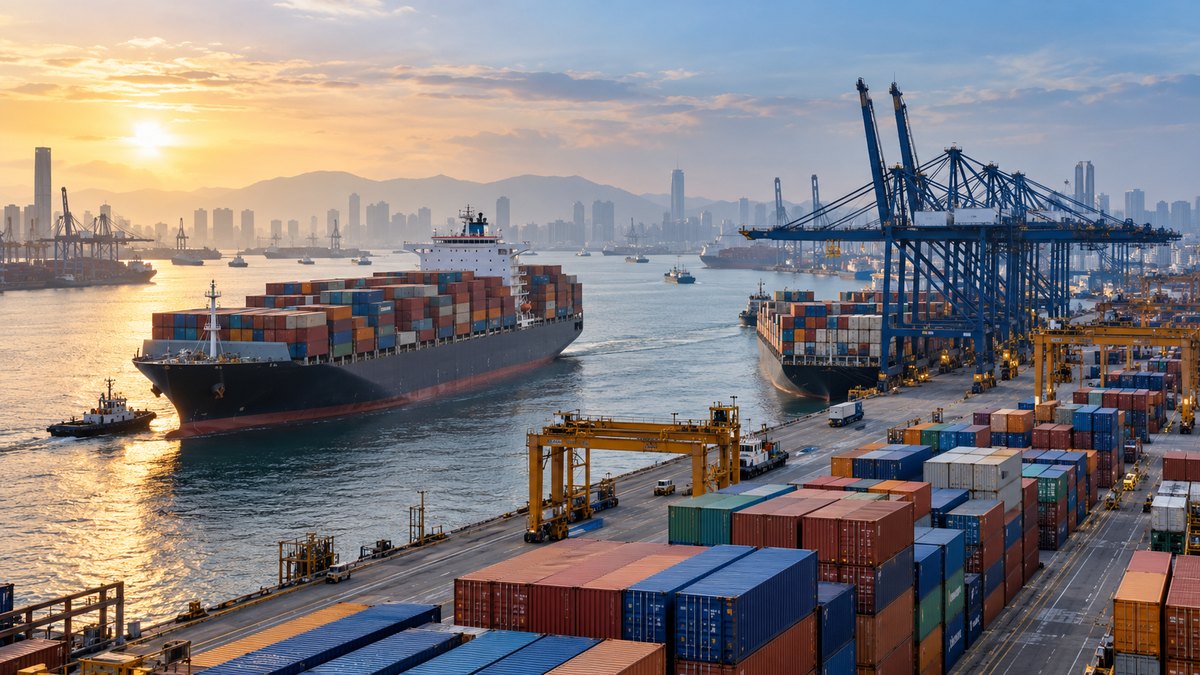
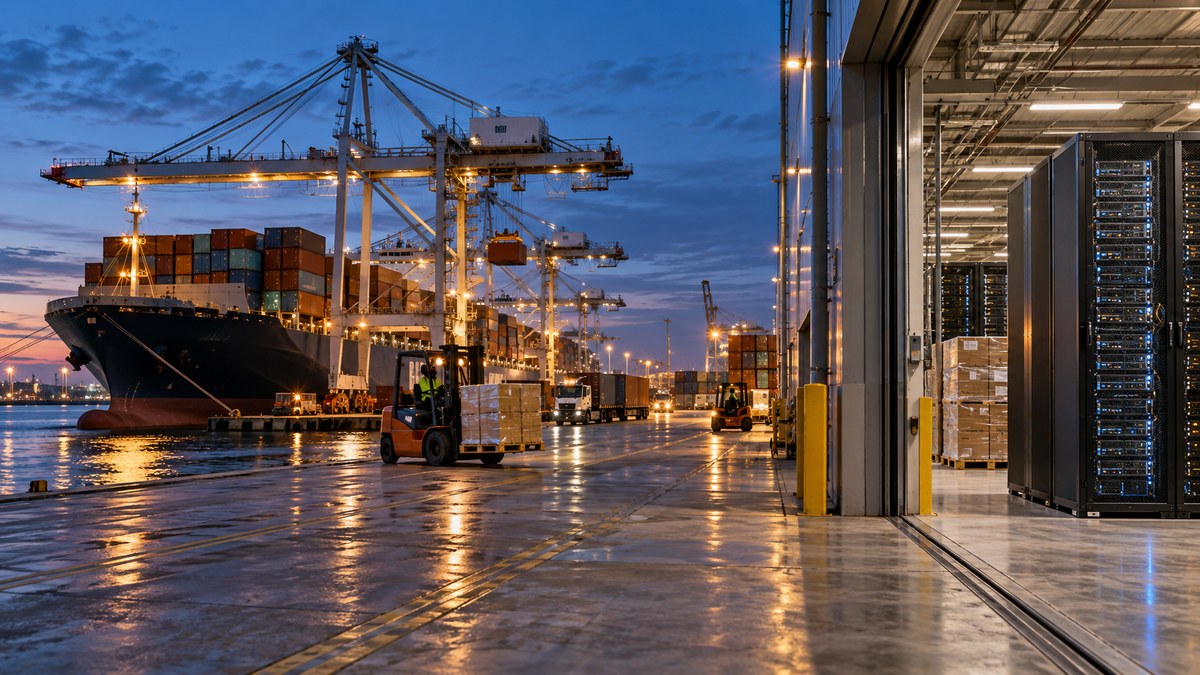
A computer server can travel a long way before anyone switches it on. Demand for equipment used in artificial intelligence is helping world trade grow, according to a World Trade Organization update published on 8 October 2026.
The WTO now expects the volume of goods traded across borders to rise by 3.9% in 2026. Its March forecast was 1.9%. These figures describe the amount of goods traded, rather than their total price.
Two different stories
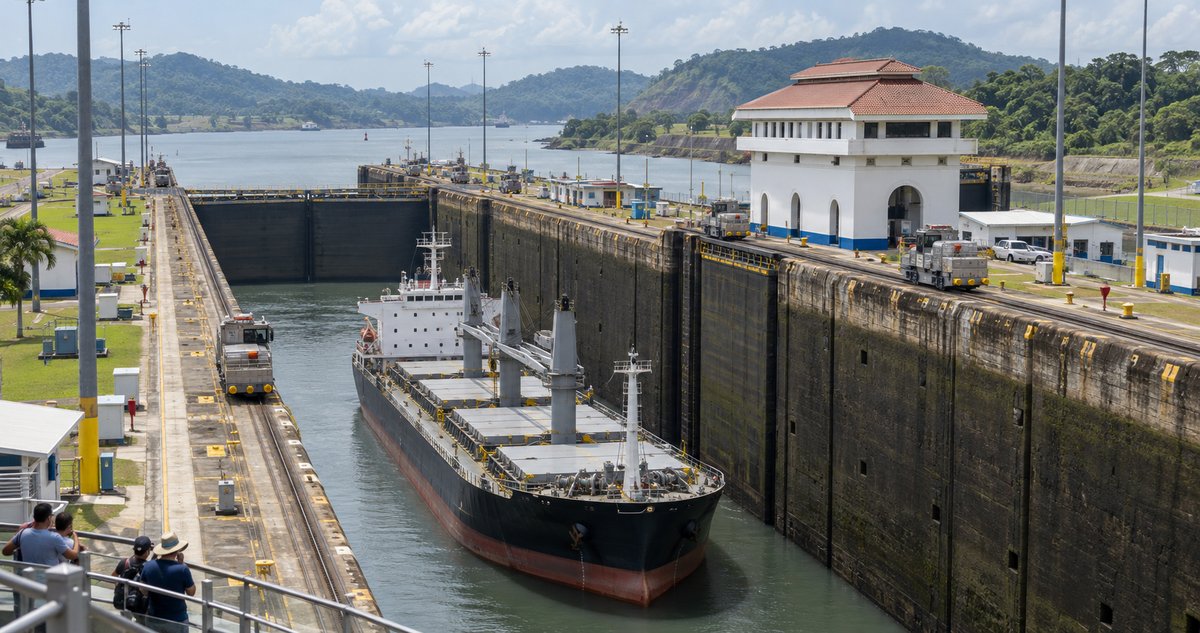
Services have a different outlook. The WTO lowered its forecast for growth in services trade volume to 3.3%, from 4.8%. It says conflict in the Middle East has disrupted transport and international travel.
The contrast matters: a busy market for computer equipment does not mean every business is doing well. Supply chains have adapted, but the benefits are uneven. These are forecasts for the year, so the final results may change.
Three questions
Try answering before you open the answer. You can use your own words.
- What is the new 2026 forecast for goods trade volume?
Show answer
Growth of 3.9%, compared with the earlier forecast of 1.9%.
- Which kind of equipment is helping goods trade?
Show answer
Equipment used in artificial intelligence.
- Does stronger goods trade mean all businesses benefit equally?
Show answer
No. Services face different pressures, and the benefits are uneven.
Let's talk about it
A few ideas to chat about - pick any that interest you.
- Which everyday product makes you curious about where it comes from?
- Does the difference between goods and services surprise you?
- What changes have you noticed in the way products reach shops?
- Would you rather visit a busy port or a warehouse to see how goods move?
- What would help you understand a trade forecast when different parts of the economy were changing in different ways?
Practise a useful pattern
Use is expected to + verb when reporting a forecast: Goods trade is expected to grow. Change The WTO expects services trade to grow into the same pattern.
Frequently asked questions
Is 3.9% a final result?
No. It is the WTO forecast published on 8 October 2026.
Does the goods forecast include services?
No. The WTO reports a separate services trade forecast.
Sources and editorial notes
Original learning article by Poly-Puff, written from the factual sources below. Sources checked on 16 October 2026. The artwork and learning activities were created for this article.
The official WTO announcement was available through its indexed text; direct page extraction failed. Growth figures refer to trade volume, not monetary value. Forecasts are attributed to the dated update, not presented as final outcomes.