Tanzania: A Growing Economy Needs Better Jobs Too
A World Bank update asks how economic growth can become steadier incomes and better opportunities for workers.
Estimated CEFR reading level: B2. An explicit distinction between employment and job quality, with conditional economic reasoning, supports upper-intermediate reading. This is an editorial estimate, not an official certification.
Five useful words
British English pronunciation (IPA). Audio uses an available English voice on your device.
productivity /ˌprɒdʌkˈtɪvəti/
nounHow much output is produced from a given amount of work or other resources.
Better tools can improve productivity.
informal /ɪnˈfɔːməl/
adjectiveOutside formal employment arrangements or protections in this context.
Informal work can leave a worker with less protection.
income /ˈɪnkʌm/
nounMoney received from work or another source.
A stable income helps a family plan.
investment /ɪnˈvestmənt/
nounMoney or resources used now in the hope of a future benefit.
The workshop needs investment in equipment.
vulnerable /ˈvʌlnərəbəl/
adjectiveEasily affected or harmed by a difficulty.
Unstable earnings can make a household vulnerable.
The story
Growth and daily life
A growing economy can produce more goods and services without giving every worker a better life. That is the challenge highlighted in a World Bank Group update on Tanzania, announced on 2 October 2026.
The report projects economic growth of 6.1% in 2026. It also says the country's central jobs problem concerns quality. Many people work in low-productivity farming or informal employment, where incomes can be insecure and workers are vulnerable to shocks.
Making work more productive
The report identifies two priorities: strengthening workers' skills and support systems, and helping productive firms grow. These approaches are connected. Training may improve a person's abilities, but expanding businesses are also needed to create opportunities to use them.
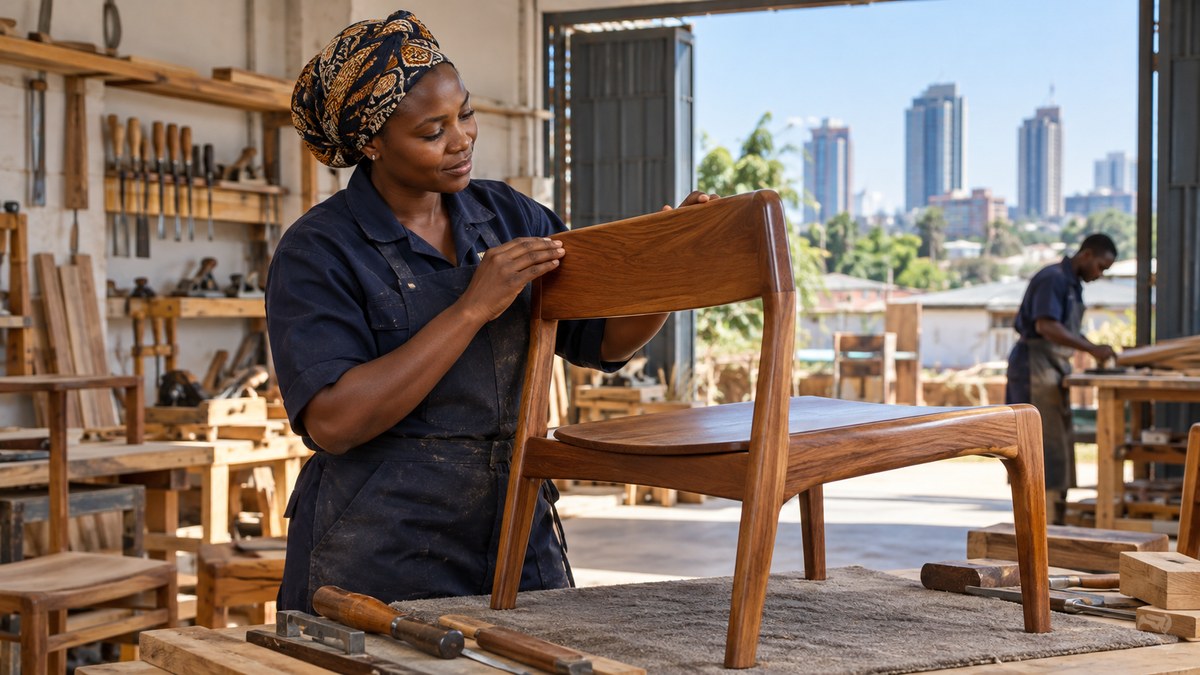
For example, a hypothetical workshop might make better furniture after investing in tools and training. That could support higher earnings, although sales and costs would still matter. The example explains productivity; it is not a measured result from the report. The growth forecast likewise remains a projection, not a promise of higher pay for every household.
Three questions
Try answering before you open the answer. You can use your own words.
- What growth does the report project for 2026?
Show answer
6.1%.
- Does the report focus only on the number of jobs?
Show answer
No. It highlights the need for more productive, better-quality jobs.
- Is the workshop an actual measured project?
Show answer
No. It is a hypothetical example explaining productivity.
Let's talk about it
A few ideas to chat about - pick any that interest you.
- What makes a job feel secure beyond the amount it pays?
- Which practical skill would you enjoy learning at work?
- What changes could make a small workshop a better place to work?
- What would help you tell whether new jobs were improving daily life in a town?
- Would you find it more encouraging to hear about a growing business or better conditions in an existing one?
Practise a useful pattern
Use can without suggesting certainty: Investment can improve productivity. Add a condition with if to make a possible outcome more precise.
Frequently asked questions
Does economic growth guarantee a pay rise for everyone?
No. The article distinguishes a national growth forecast from individual earnings.
When was the report announced?
The World Bank Group announced the update on 2 October 2026.
Sources and editorial notes
Original learning article by Poly-Puff, written from the factual sources below. Sources checked on 16 October 2026. The artwork and learning activities were created for this article.
The official report announcement was read directly. The article attributes its forecast and recommendations to the World Bank Group. The workshop is an original hypothetical illustration, not a case study or a claim that a programme has raised wages.