October Meteor Showers 2026: Small Lights in a Dark Sky
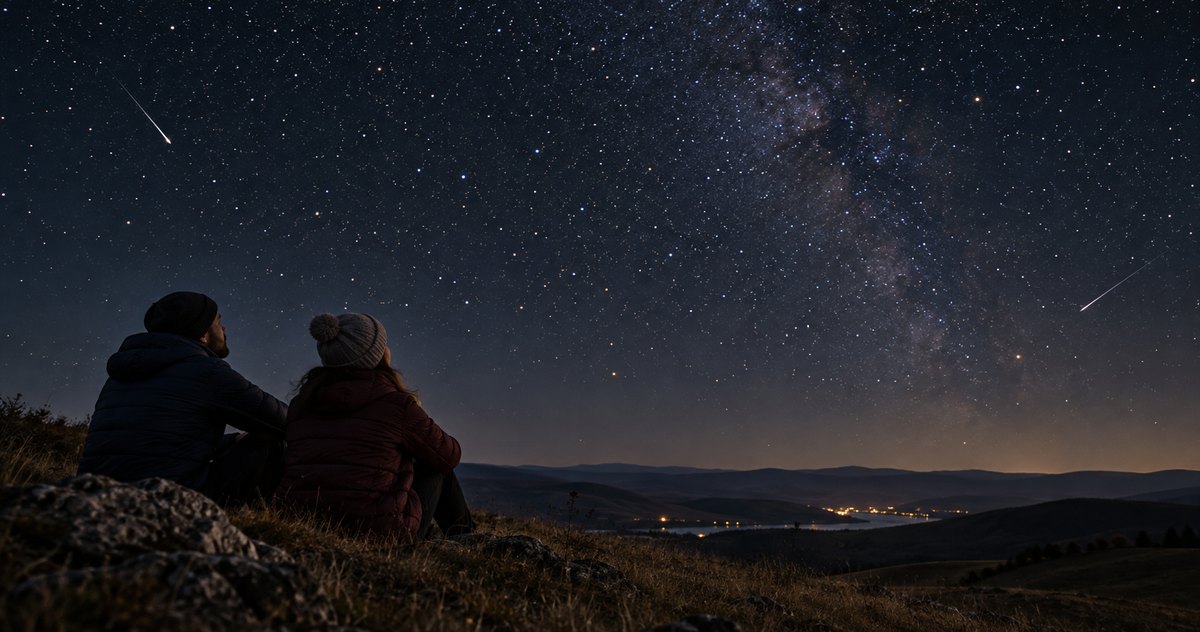
The Draconid meteor shower is active from 6-10 October 2026. A dark sky can help you see it, but a bright show is not certain.
Estimated CEFR reading level: A2. Short sentences, clear dates and simple explanations of new space words. This is an editorial estimate, not an official certification.
Five useful words
British English pronunciation (IPA). Audio uses an available English voice on your device.
meteor /ˈmiːtiə/
nounA short light made when space material enters our air.
We saw one meteor above the trees.
comet /ˈkɒmɪt/
nounAn object that moves around the Sun and can leave dust behind.
The comet left small pieces in space.
shower /ˈʃaʊə/
nounSeveral meteors seen during a period of time.
The shower is active this week.
peak /piːk/
nounThe time of greatest expected activity.
The peak comes later this month.
clear /klɪə/
adjectiveWithout clouds or something blocking your view.
We waited for a clear sky.
The story
A meteor is a flash of light when material from space enters Earth's air. People call it a "shooting star", but it is not a falling star. When Earth passes through pieces left by a comet, we can see a meteor shower.
The Draconids are active from 6 to 10 October. Their material comes from comet 21P/Giacobini-Zinner. They are usually easier to watch in the evening, north of the equator. They are harder to see from southern places.
The American Meteor Society expects nothing unusual this year. Clouds and city lights may hide meteors. You could wait and see only a few. Choose a dark place with a clear view and let your eyes get used to it. You do not need a telescope.
The Orionids peak around 21-22 October. A peak means a shower may be most active then. It is not a promise of a big show.
A reading guide
- 6-10 OctoberDraconid activity window.
- 21-22 OctoberExpected Orionid peak night.
- Local conditionsClouds, light and location affect what you see.
Original learning guide by Poly-Puff, based on the sources below.
Three questions
Try answering before you open the answer. You can use your own words.
- Is a shooting star a real falling star?
Show answer
No. The light comes from small space material entering our air.
- When is the Draconid shower active in 2026?
Show answer
From 6 to 10 October.
- Why might you see very few meteors?
Show answer
The shower may be quiet, or clouds and bright lights may block your view.
Let's talk about it
Here are some ideas for a chat. Choose any you like.
- Can you see many stars near your home?
- Would you enjoy spending an evening outside watching for meteors?
- Have you ever seen a shooting star? What was it like?
- Who would you like to invite to watch the night sky?
- Would you rather look at the sky from a quiet beach or a hill?
May and can
Use may for a possibility: "We may see a meteor." Use can for an ability or opportunity: "Your eyes can see a wide area." Write one sentence with each word about an evening outside.
Frequently asked questions
Do I need a telescope for the Draconids?
No. Looking with your eyes gives you a wider view of the sky.
Is the October 2026 meteor shower a guaranteed big show?
No. Forecast dates do not guarantee many visible meteors, and local conditions matter.
Sources and context
An original learning article by Poly-Puff, written from the factual sources below. Sources checked on 9 October 2026. The artwork and learning activities were created for this article.
The dates describe predicted activity, not a recorded display. Greenwich lists a 9 October Draconid peak; the AMS outlook recommends the evening of 8 October and expects no unusual outburst. This reading therefore gives the shared 6-10 October activity window. Viewing guidance is strongest for the Northern Hemisphere. No local weather or actual meteor count is claimed.