Millions of Galaxies, Many Helping Hands
A space telescope gives scientists, volunteers and AI a huge collection of galaxy images to study.
Estimated CEFR reading level: B1. Connected science reporting with large numbers, comparisons and an explanation of teamwork. Astronomy and computing terms are explained below. This is an editorial estimate, not an official certification.
Five useful words
British English pronunciation (IPA). Audio uses an available English voice on your device.
galaxy /ˈɡæləksi/
nounA very large group of stars, gas and dust held together by gravity.
Our Sun is part of the Milky Way galaxy.
telescope /ˈtelɪskəʊp/
nounAn instrument that helps people observe distant objects.
We used a telescope to look at the Moon.
classify /ˈklæsɪfaɪ/
verbTo put things into groups according to their features.
The students classify leaves by their shapes.
volunteer /ˌvɒlənˈtɪə/
nounSomeone who chooses to help without being paid for the work.
A volunteer helps visitors find the right room.
artificial intelligence /ˌɑːtɪfɪʃəl ɪnˈtelɪdʒəns/
noun phraseComputer systems designed to perform tasks such as recognising patterns.
Artificial intelligence can help sort a large collection of images.
The story
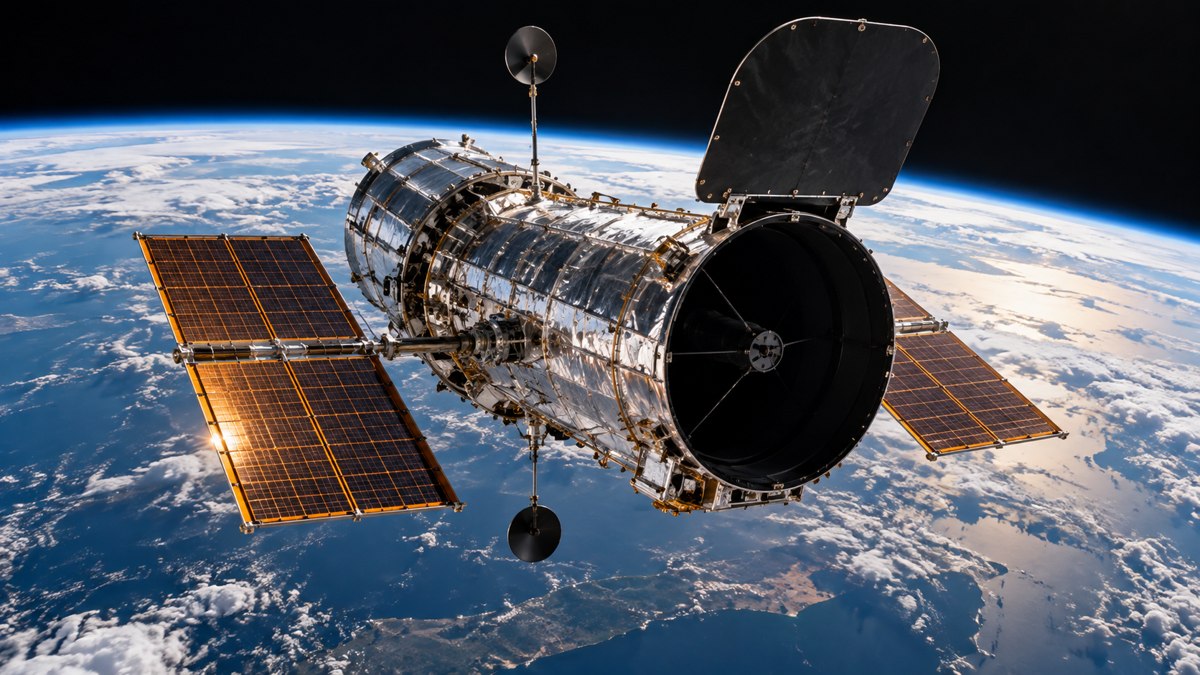
On 19 March 2025, the European Space Agency released the first survey data from its Euclid telescope. A preview of three sky areas contained about 26 million galaxies: huge groups of stars, gas and dust.
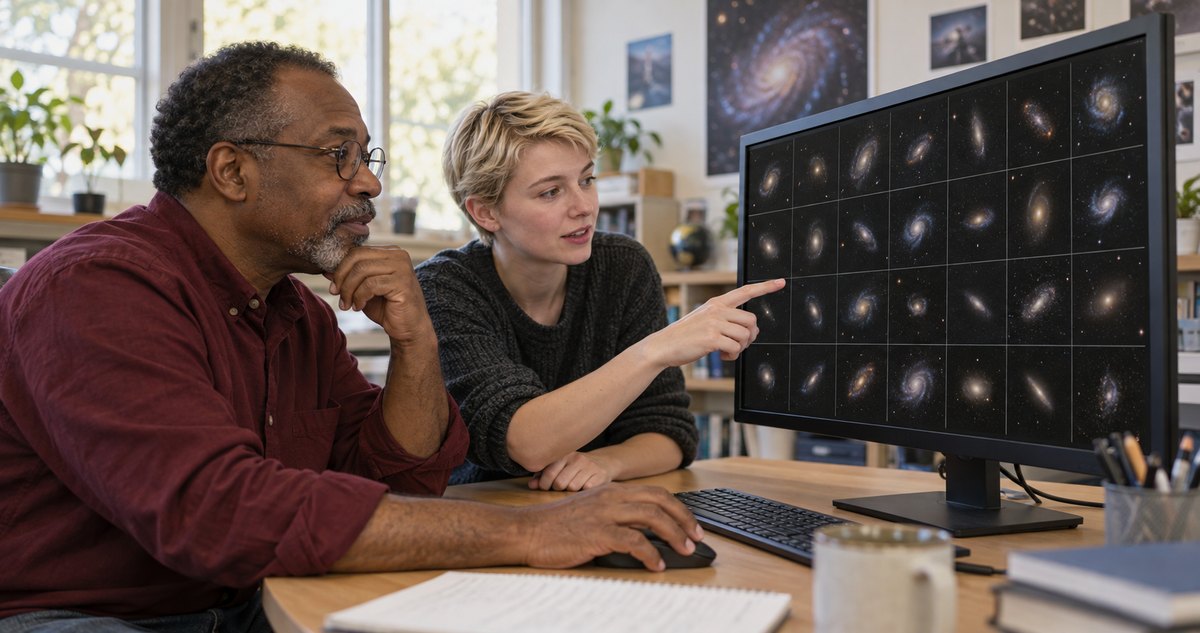
Scientists study galaxy shapes and positions to investigate how galaxies change. Some galaxies have spiral arms; others look smoother. With millions of images to examine, researchers use computers alongside human observation to recognise and compare these features.
The release included a catalogue of more than 380,000 classified galaxies. Human volunteers helped an artificial intelligence system learn to recognise their features. Experts also checked and interpreted the data.
This was an early release covering selected areas, not a complete map of the Universe. The telescope collects images, computers manage large amounts of information, and people bring observation and judgement. Together, they can investigate questions that would be difficult for one person to answer.
Different tools, shared questions
- Collect imagesEuclid observes selected areas of the sky.
- Identify featuresVolunteers and AI help classify galaxy shapes.
- Ask scientific questionsResearchers use the measurements to investigate the Universe.
An original simplified process diagram. It does not show the size, distance or positions of real galaxies.
Three questions
Try answering before you open the answer. You can use your own words.
- About how many galaxies appeared in the three-area preview?
Show answer
About 26 million galaxies.
- How did volunteers help the artificial intelligence system?
Show answer
They helped it learn to recognise galaxy features by classifying images.
- Was the release a complete map of the whole Universe?
Show answer
No. It was an early survey-data release covering selected areas of the sky.
Let's talk about it
A few ideas to chat about - pick any that interest you.
- Would you enjoy helping scientists sort images of galaxies?
- What do you enjoy doing with a computer, and what would you rather do yourself?
- What would you like a space telescope to help us understand?
- Would you rather help with a science project for ten minutes a day or spend a whole day on it?
- What would make you want to keep helping after the first few images?
Explaining purpose
Use to followed by a verb to explain a purpose: "Researchers compare images to understand galaxy shapes." Write a sentence explaining why you would join a volunteer project.
Sources and context
An original learning article by Poly-Puff, written from the factual sources below. Sources checked on 4 October 2026. The artwork and learning activities were created for this article.