MMX: Japan Plans to Bring a Piece of a Mars Moon Home
A small sample from Phobos could help answer a big question: where did the two moons of Mars come from?
Estimated CEFR reading level: B1. Clear explanations of technical words, future plans and two competing possibilities support the B1 estimate. This is an editorial estimate, not an official certification.
Five useful words
British English pronunciation (IPA). Audio uses an available English voice on your device.
moon /muːn/
nounA natural object that travels around a planet.
Phobos is a moon of Mars.
sample /ˈsɑːmpəl/
nounA small amount collected so it can be studied.
Scientists hope to examine a sample of dust.
launch /lɔːntʃ/
nounThe sending of a rocket or spacecraft into space.
The launch is planned for October.
capture /ˈkæptʃə/
verbTo catch and keep something; here, through gravity.
A planet may capture an asteroid.
impact /ˈɪmpækt/
nounA powerful collision between objects.
A large impact can throw rock into space.
The story
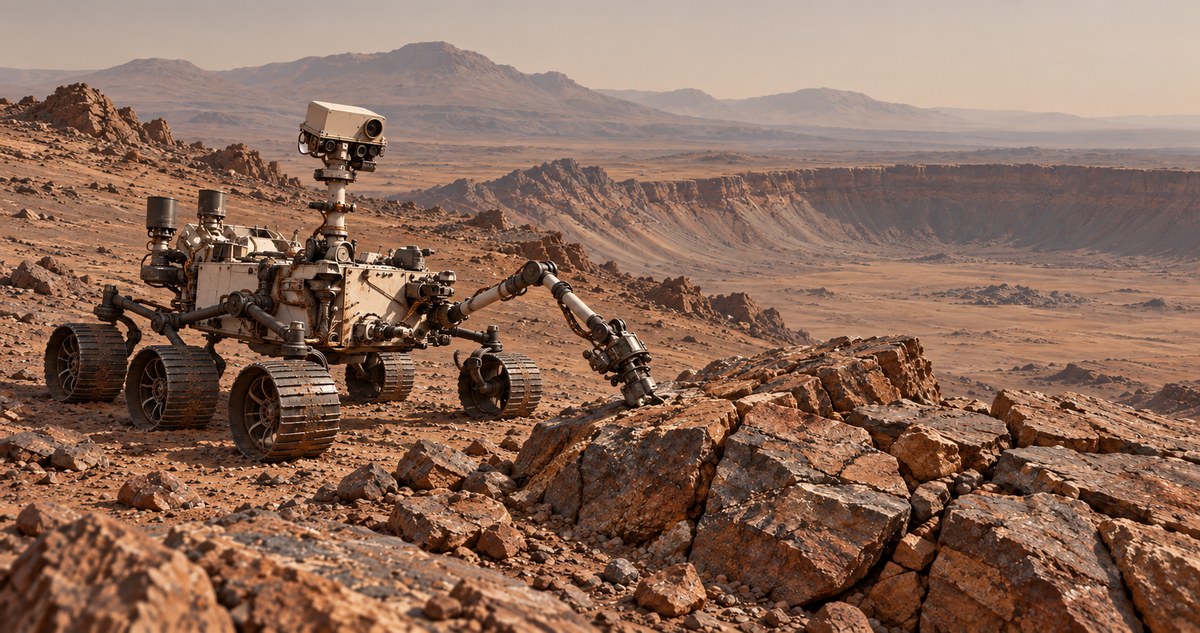
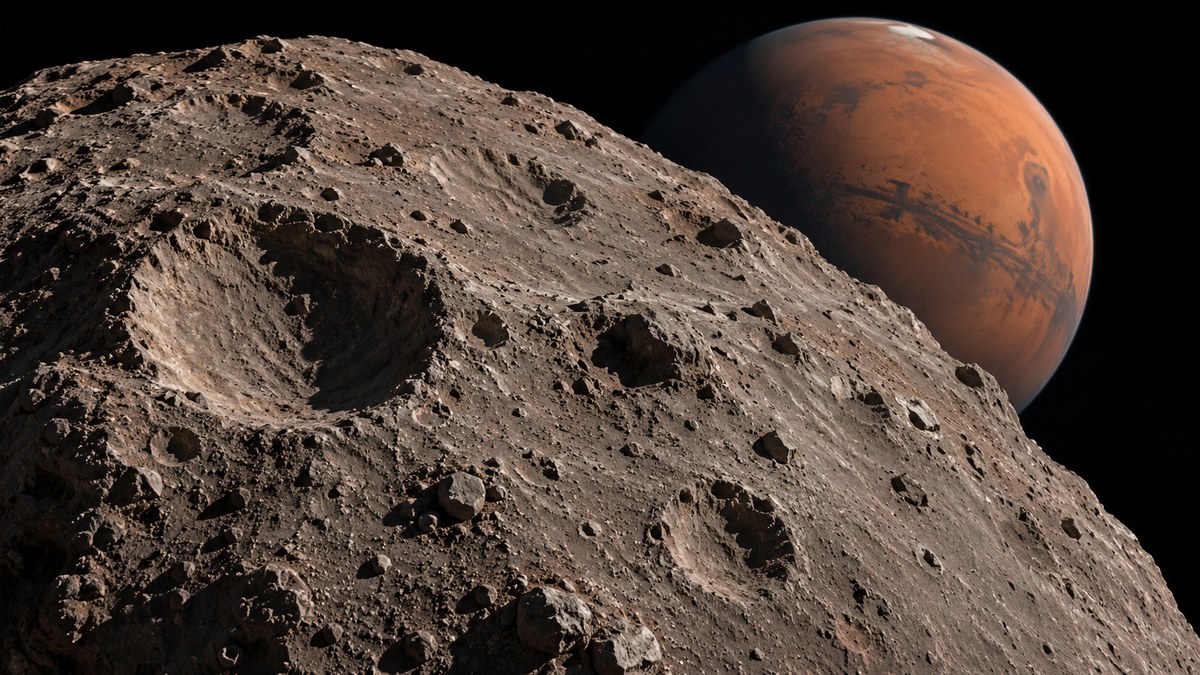
Mars has two small moons, Phobos and Deimos. Scientists still debate how they formed. Japan's MMX mission plans to investigate both moons and bring material from Phobos back to Earth.
NASA's 15 October announcement says the spacecraft is targeting launch on 19 October in the United States, which is 20 October in Japan. This reading describes that plan; it does not confirm a successful launch.
One possibility is that Mars captured ancient asteroids. Another is that a huge impact threw material from Mars into space, where the moons formed. A sample could help scientists compare these explanations.
The mission is led by Japan's space agency, JAXA, with international partners. NASA is providing instruments and communications support. The planned return to Earth is in 2031. Studying the material in laboratories could reveal details that distant pictures cannot show. Even a small amount of dust may hold clues to a much bigger history.
Three questions
Try answering before you open the answer. You can use your own words.
- Which moon would MMX collect a sample from?
Show answer
The mission plans to collect material from Phobos.
- What two explanations for the moons does the reading describe?
Show answer
They may be captured asteroids, or they may have formed from material thrown into space by a large impact on Mars.
- Does this reading confirm that the launch succeeded?
Show answer
No. It reports a planned launch from the checked announcements.
Let's talk about it
A few ideas to chat about - pick any that interest you.
- Would you enjoy watching a spacecraft launch?
- What would you most like to know about the moons of Mars?
- How do you feel about waiting several years for a space sample?
- Would you rather visit a space laboratory or a rocket launch centre?
- Which small object from space would you be curious to see up close?
Practise a useful pattern
Use plans to for an intended action. Write a sentence about a future scientific project.
Example: The mission plans to bring a sample back to Earth.
Frequently asked questions
What is the MMX mission trying to find out?
The JAXA-led mission aims to investigate the origins of Phobos and Deimos and return a sample from Phobos.
When is the MMX sample expected back on Earth?
NASA and ESA describe a planned return in 2031. This is a mission schedule, not a completed result.
Sources and editorial notes
Original learning article by Poly-Puff, written from the factual sources below. Sources checked on 19 October 2026. The artwork and learning activities were created for this article.
Sources checked on 19 October 2026. The story is a launch preview based on NASA's 15 October release and ESA's 13 October preview, not confirmation of liftoff. Local calendar dates differ between the United States and Japan. NASA and ESA give different intermediate sampling milestones; those dates are omitted. Both describe a planned return in 2031. Formation theories remain alternatives, not settled results.