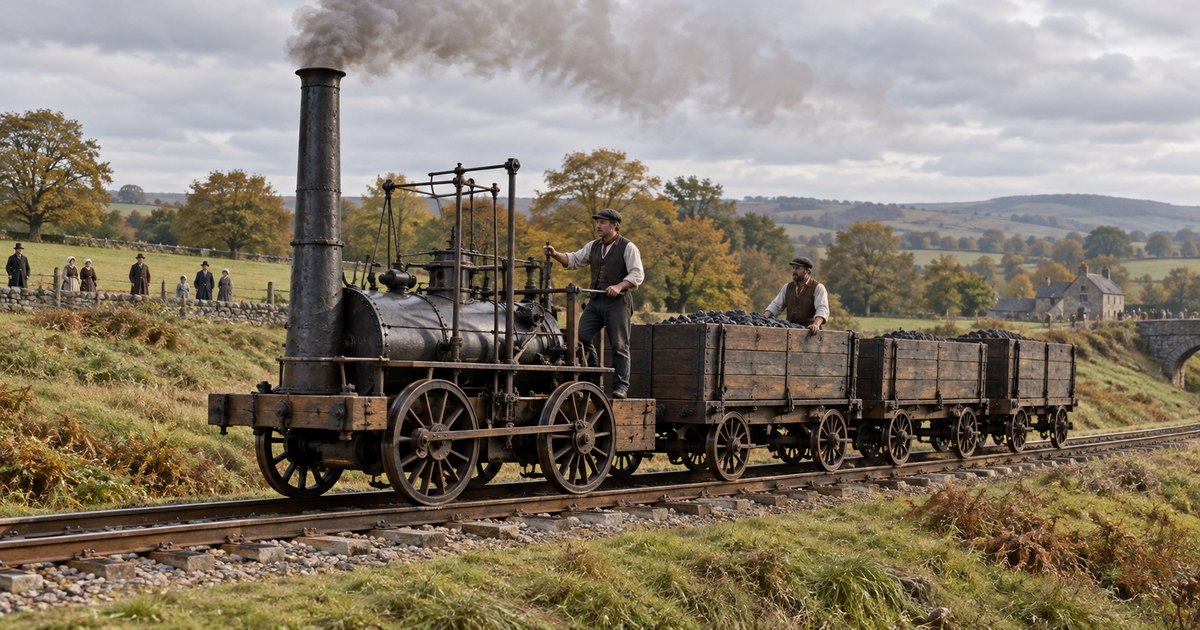
1863: London Opens the First Underground Railway
London's first underground railway opened in 1863. Its construction reveals a lasting urban dilemma: improving movement can first make a city harder to move through.
Estimated CEFR reading level: C1. Qualified historical interpretation, cause-and-effect reasoning and complex contrast clauses. This is an editorial estimate, not an official certification.
Five useful words
British English pronunciation (IPA). Audio uses an available English voice on your device.
infrastructure /ˈɪnfrəˌstrʌktʃə/
nounThe basic systems that allow a place to function.
Railways are part of urban infrastructure.
excavate /ˈekskəveɪt/
verbRemove earth to create a hole or trench.
Workers excavated below the street.
mobility /məʊˈbɪləti/
nounThe ability to move between places.
The new route improved mobility.
disruption /dɪsˈrʌpʃən/
nounAn interruption to normal activity.
Construction caused disruption above ground.
obscure /əbˈskjʊə/
verbMake something harder to see or understand.
A simple story can obscure later changes.
The story
A route beneath the streets
On 10 January 1863, the Metropolitan Railway opened to the public in London. Running between Paddington and Farringdon Street via King's Cross, it became the world's first underground passenger railway. The innovation was not simply a faster train. It was a new way of finding space for movement within an already crowded city.
Railways had brought passengers into London, but the major stations were not connected to one another. An underground route offered a connection without requiring every journey to continue along surface streets. What now seems an ordinary part of city life was, at the time, an ambitious reorganisation of urban space.
Improvement through disruption
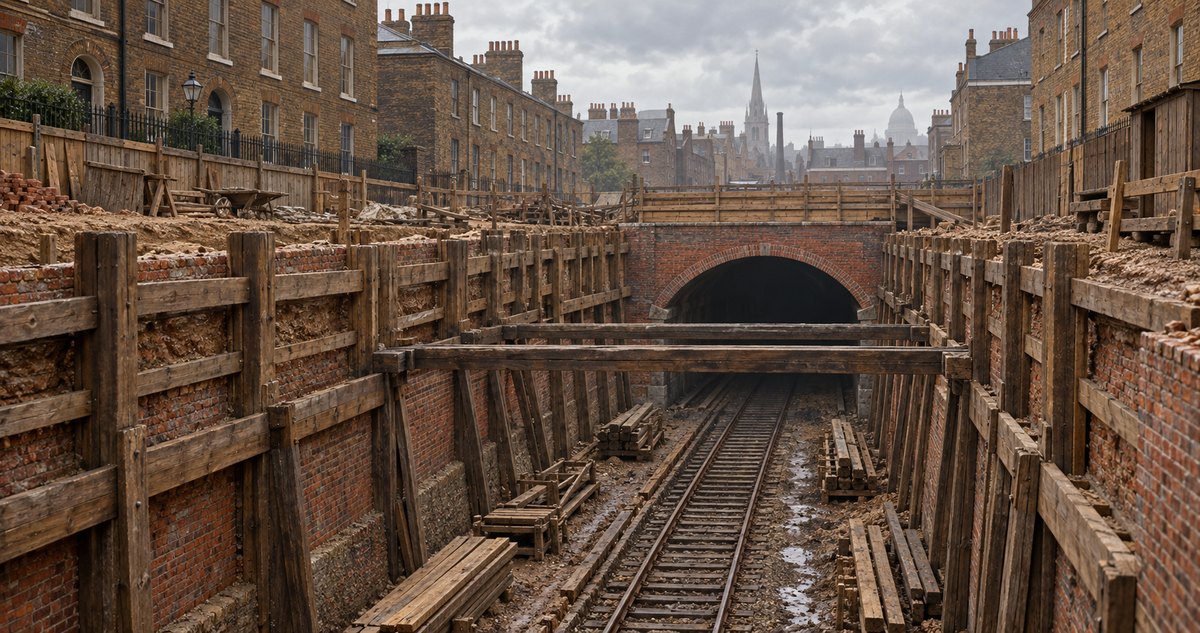
Much of the early line was built using cut-and-cover construction. Workers excavated a trench, built the railway below street level and covered it over. Unlike the later deep tunnels associated with the Tube, this method required workers to open up the streets above the route. Travelling underground therefore began with substantial work at the surface.
That method created a familiar infrastructure problem: construction disrupted the streets, although the completed railway could improve mobility. Building a route required decisions about land, buildings and access, as well as engineering. The people facing inconvenience during construction would not necessarily experience the same benefits once trains began running, so both stages needed consideration.
Nor should the original service be imagined as today's electric Underground. Steam locomotives pulled wooden carriages. The first deep-level tube railway, the City and South London Railway, opened in 1890. These developments belong to different moments, rather than to a single instant of invention.
A beginning, not a finished system
The 1863 opening began a process that continued through later lines, new technologies and additional connections. Successive generations expanded the network while adapting inherited routes to changing travel needs. Imagining a finished system in 1863 would obscure that development. The first railway was a starting point for London's modern Underground, rather than a finished version of the system passengers recognise today.
This history raises a question for cities planning new transport: who will experience the construction disruption, and who will benefit from the eventual connection? Considering those effects adds to our understanding of the engineering achievement. A successful railway needs to serve people as well as move trains, which makes infrastructure a social project as well as a technical one.
Three questions
Try answering before you open the answer. You can use your own words.
- What problem did the early route address?
Show answer
It helped connect major railway stations within London.
- Why is cut-and-cover different from deep tunnelling?
Show answer
It begins with an open trench at the surface that is later covered over.
- Why does the article describe infrastructure as social as well as technical?
Show answer
Construction and completed routes affect people differently through disruption, access and eventual benefits.
Let's talk about it
A few ideas to chat about - pick any that interest you.
- How much construction disruption would you put up with for better transport?
- If a new railway were planned near you, what would you want the planners to hear?
- What gradual change has most improved travel in your area?
- What would make you willing to leave your car behind and try a new railway?
- Would you want an old station to keep its original appearance or feel completely modern inside?
Practise a useful pattern
Use while to contrast benefits and costs: "The route improved travel, while construction disrupted the streets." Write a balanced sentence about a proposed improvement in your town.
Frequently asked questions
When did the first London underground railway open to passengers?
The Metropolitan Railway opened to the public on 10 January 1863.
Was the original railway the same as a modern deep Tube line?
No. Much of it used cut-and-cover construction, and its trains were steam-powered. The first deep tube railway opened in 1890.
Sources and editorial notes
Original learning article by Poly-Puff, written from the factual sources below. Sources checked on 11 October 2026. The artwork and learning activities were created for this article.
The opening date refers to public passenger service. Later deep-tube development is dated separately. Comments about unequal disruption and benefits are historical interpretation, not measurements of the 1863 passenger population. The reference construction photographs show the later District Railway, so the generated image is a generic reconstruction.