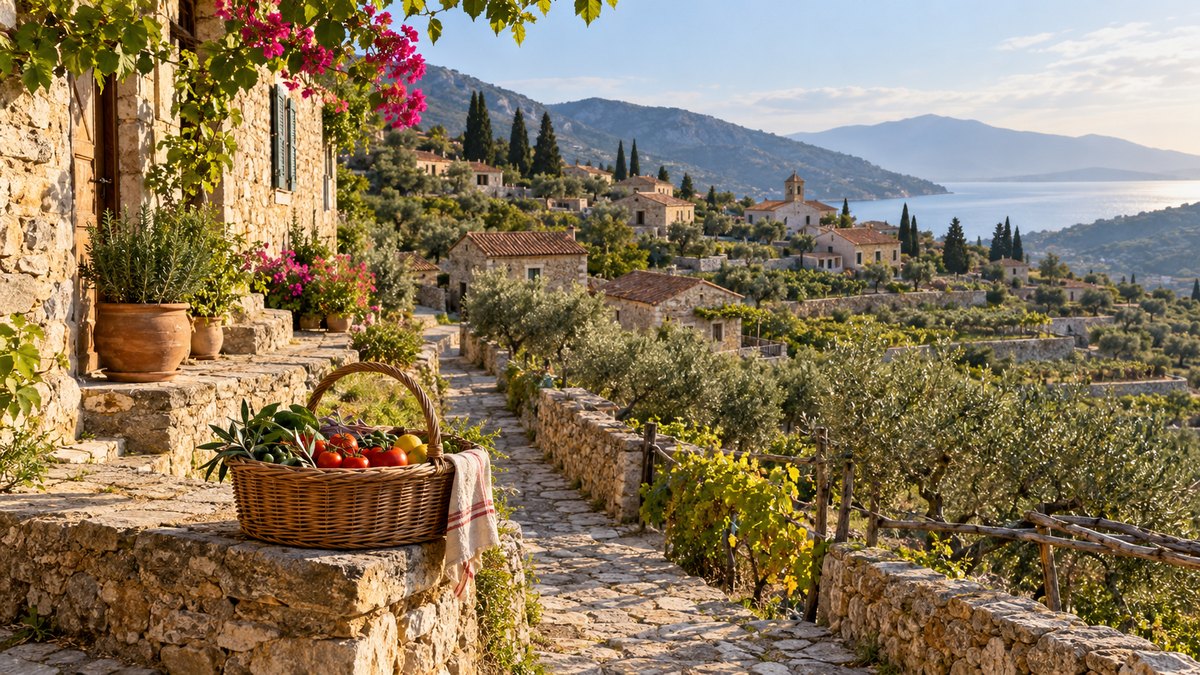
Italian Cooking Becomes Living Heritage
UNESCO recognises cooking traditions that connect people through skills, memories and shared meals.
Estimated CEFR reading level: B1. Connected cultural reporting with examples, explanations of an abstract idea and a distinction between recognition and ranking. This is an editorial estimate, not an official certification.
Five useful words
British English pronunciation (IPA). Audio uses an available English voice on your device.
heritage /ˈherɪtɪdʒ/
nounTraditions and knowledge passed down from earlier generations.
Songs can be part of a community's heritage.
ingredient /ɪnˈɡriːdiənt/
nounOne of the foods used to make a dish.
The main ingredient in this soup is tomato.
generation /ˌdʒenəˈreɪʃən/
nounPeople in a family or society who are born around the same time.
Three generations gathered for the celebration.
tradition /trəˈdɪʃən/
nounA way of doing something that a group passes on over time.
Sharing a meal on Sundays is a family tradition.
pass on /ˌpɑːs ˈɒn/
phrasal verbTo give knowledge or skills to another person.
My uncle will pass on his gardening skills.
The story
Italian cooking joined UNESCO's Representative List of the Intangible Cultural Heritage of Humanity on 10 December 2025. The decision was approved in New Delhi, India.
Intangible heritage means living practices and knowledge, not a physical monument. This recognition concerns cooking traditions and the social life around them. It is not a prize saying one country's food is better than another's.
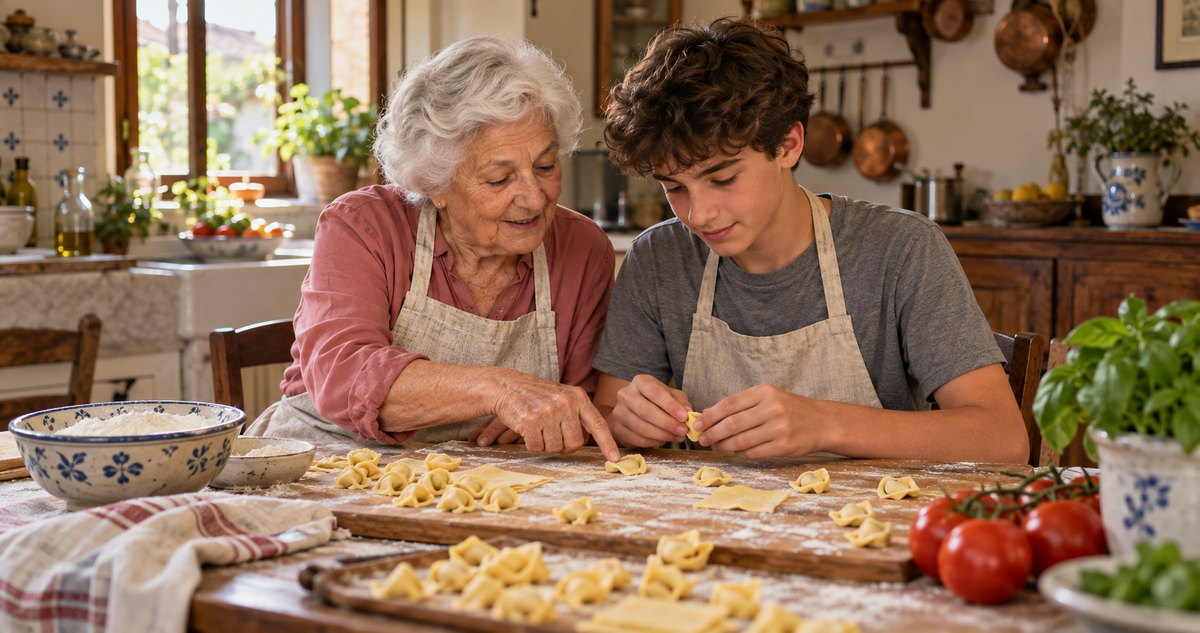
UNESCO highlights respect for ingredients, recipes that reduce waste and sharing time at the table. Cooking skills pass between generations in families. Schools and universities also teach this knowledge.
A written recipe tells only part of a dish's story. Watching someone cook can teach skills that are hard to write down, while family memories can explain when people share the food. Preserving a cooking tradition therefore involves passing on experiences as well as ingredients and instructions.
More than a written recipe
- Learn a skillWatch, practise and ask questions.
- Share a mealConnect the food with people and memories.
- Pass it onTeach the next person and keep the practice alive.
An original learning diagram about sharing traditions, not an official UNESCO evaluation process.
Three questions
Try answering before you open the answer. You can use your own words.
- Where was the inscription approved?
Show answer
At a meeting in New Delhi, India.
- Does intangible heritage mean a physical building?
Show answer
No. It concerns living practices and knowledge, such as cooking skills and shared traditions.
- Name two places where cooking knowledge can be passed on.
Show answer
Within families, and in schools or universities.
Let's talk about it
A few ideas to chat about - pick any that interest you.
- Which dish connects you with a person or place?
- What cooking skill would you rather learn by watching someone?
- Do you enjoy changing a traditional recipe, or keeping it as you learnt it?
- Would you rather learn a family recipe in a home kitchen or at a public cooking event?
- What would you want visitors to understand about the people behind a traditional dish?
Describing how knowledge is shared
Use the passive when the process matters: "Skills are passed on within families." The person sharing them can be added with by: "The recipe was taught by my grandfather." Describe a skill that was taught to you.
Sources and context
An original learning article by Poly-Puff, written from the factual sources below. Sources checked on 4 October 2026. The artwork and learning activities were created for this article.