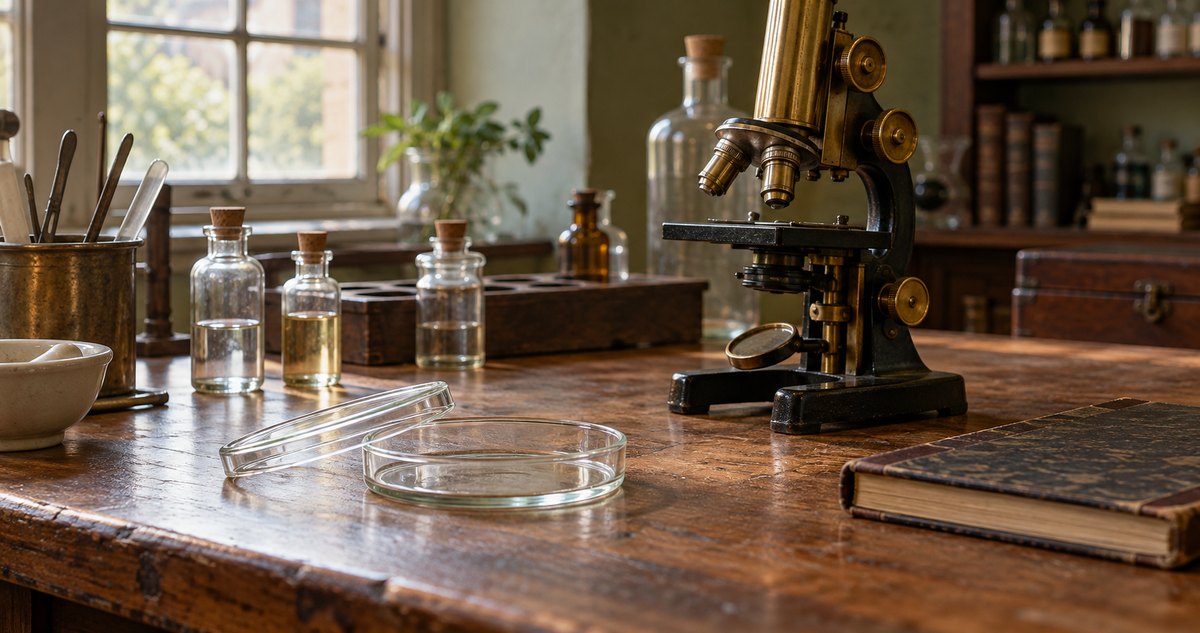
1967: Cape Town's Heart Transplant and the Work Beyond a First
A landmark operation proved a possibility, while its outcome showed how much work remained after the surgical breakthrough.
Estimated CEFR reading level: C2. A qualified historical argument distinguishes technical success, patient outcome and cumulative research, with carefully explained medical terms. This is an editorial estimate, not an official certification.
Five useful words
British English pronunciation (IPA). Audio uses an available English voice on your device.
recipient /rɪˈsɪpiənt/
nounA person who receives something; here, a donated organ.
The recipient needed care after the operation.
donor /ˈdəʊnə/
nounA person who provides something for another person.
The donor's contribution is central to the history.
feasibility /ˌfiːzəˈbɪləti/
nounWhether something can be done in practice.
The operation demonstrated technical feasibility.
rejection /rɪˈdʒekʃən/
nounAn immune response against a transplanted organ.
Researchers developed methods for detecting rejection.
cumulative /ˈkjuːmjələtɪv/
adjectiveGrowing through successive contributions over time.
The breakthrough depended on cumulative research.
The story
The operation and the people
On 3 December 1967, a team led by Christiaan Barnard at Groote Schuur Hospital in Cape Town performed the first human-to-human heart transplant. The recipient was Louis Washkansky; the donor was Denise Darvall, who had suffered fatal injuries in a road accident. Their names belong at the centre of the history, alongside the surgical team's achievement.
The transplanted heart functioned, but Washkansky died from pneumonia eighteen days later. The operation was therefore successful in one important sense: it showed that a human heart could function in another person. It did not yet demonstrate dependable long-term survival. Distinguishing technical feasibility from sustained patient benefit helps explain both why the event was a breakthrough and why its outcome remained so difficult.
A milestone built from earlier work
The Cape Town operation did not emerge from a single moment of inspiration. Researchers had spent years developing surgical methods and investigating the difficulties of replacing a heart. Stanford's historical account describes work by Norman Shumway and Richard Lower on transplantation in animals, including methods for preserving the donor heart. Such preparation made a dramatic first possible without making every remaining problem disappear.
One persistent difficulty was rejection: the recipient's immune system could attack the transplanted organ. Suppressing that response could help protect the heart, yet infection remained a serious concern. The challenge therefore extended beyond joining blood vessels. A surgical procedure had to be accompanied by ways of managing biological risks, identifying complications and supporting the patient afterwards.
The quieter history afterwards
Shumway performed the first adult heart transplant in the United States on 6 January 1968. That was a different milestone from Cape Town's first human-to-human transplant the previous month. Stanford's account also describes the difficult period that followed: many programmes stopped after poor early outcomes, while its team continued researching how transplantation could become more reliable.
Later improvements involved more than one invention. Researchers refined medicines that suppress immune responses, methods for detecting rejection, treatment of complications and criteria for selecting donors and recipients. Stanford highlights advances in the use of cyclosporine by 1980. These developments belong to the subsequent history; attributing them to the 1967 operation would erase the years of investigation that followed.
Remembering without simplifying
The Heart of Cape Town Museum preserves the operation's history at the hospital where it took place. A museum can make a milestone tangible, but the meaning of that milestone still depends on careful explanation. The donor's contribution, the recipient's limited survival and the work of a wider team challenge a story reduced to a celebrated surgeon and a single date.
The 1967 operation showed both what transplantation could achieve and what contemporary treatment could not yet provide. Its significance includes the possibility it opened, the recipient's limited survival and the investigation that followed. Placing the event within that longer history gives a fuller account than calling it simply a triumph or a failure. The extraordinary first needed continuing research before the procedure could offer more reliable care.
Three questions
Try answering before you open the answer. You can use your own words.
- Why is the word successful qualified in this reading?
Show answer
The transplanted heart functioned, but the recipient died eighteen days later; technical success did not establish dependable long-term survival.
- How do the Cape Town and Stanford milestones differ?
Show answer
Cape Town performed the first human-to-human heart transplant in December 1967; Stanford performed the first adult heart transplant in the United States in January 1968.
- Why should later drug advances not be attributed to the 1967 operation?
Show answer
They came after further years of research and were later developments, not achievements of that single operation.
Let's talk about it
A few ideas to chat about - pick any that interest you.
- How would you like a museum to tell the story of a breakthrough with such a difficult outcome?
- Why do you think famous firsts often attract more attention than later improvements?
- How does knowing the donor's and recipient's names change your reaction to the story?
- What would make a public account of medical innovation respectful to the families whose lives became part of it?
- How should a museum balance the drama of an operation with the less visible work of long-term patient care?
Practise a useful pattern
Use precise qualification: "The operation demonstrated feasibility, but it did not establish long-term reliability." Write a sentence distinguishing what an event showed from what it did not prove.
Frequently asked questions
How long did Louis Washkansky survive after the transplant?
Eighteen days. He died from pneumonia.
Did dependable heart transplantation result from the 1967 operation alone?
No. Later research improved the management of rejection, complications and other aspects of care.
Sources and editorial notes
Original learning article by Poly-Puff, written from the factual sources below. Sources checked on 13 October 2026. The artwork and learning activities were created for this article.
This is a historical reading, not medical guidance. It distinguishes human-to-human, adult and national firsts and does not quote historical survival rates as current outcomes. Later advances are dated separately. Interpretation of how to remember the milestone is editorial synthesis.