1928: Penicillin and the Work Beyond a Lucky Discovery
A contaminated dish gave Alexander Fleming an important clue in 1928. Turning that clue into a widely usable medicine required years of collective work.
Estimated CEFR reading level: C2. Evaluation of competing explanations, abstract vocabulary, qualification and extended causal reasoning. This is an editorial estimate, not an official certification.
Five useful words
British English pronunciation (IPA). Audio uses an available English voice on your device.
inhibit /ɪnˈhɪbɪt/
verbSlow down or prevent a process.
The substance inhibited bacterial growth.
purify /ˈpjʊərɪfaɪ/
verbRemove unwanted material from a substance.
Researchers needed to purify the compound.
therapeutic /ˌθerəˈpjuːtɪk/
adjectiveConnected with the treatment of illness.
The experiments suggested therapeutic potential.
reproducible /ˌriːprəˈdjuːsəbəl/
adjectiveAble to be repeated with consistent results.
A useful process must be reproducible.
attribution /ˌætrɪˈbjuːʃən/
nounThe assignment of credit or responsibility.
Historical attribution can overlook team members.
The story
An observation with unfinished implications
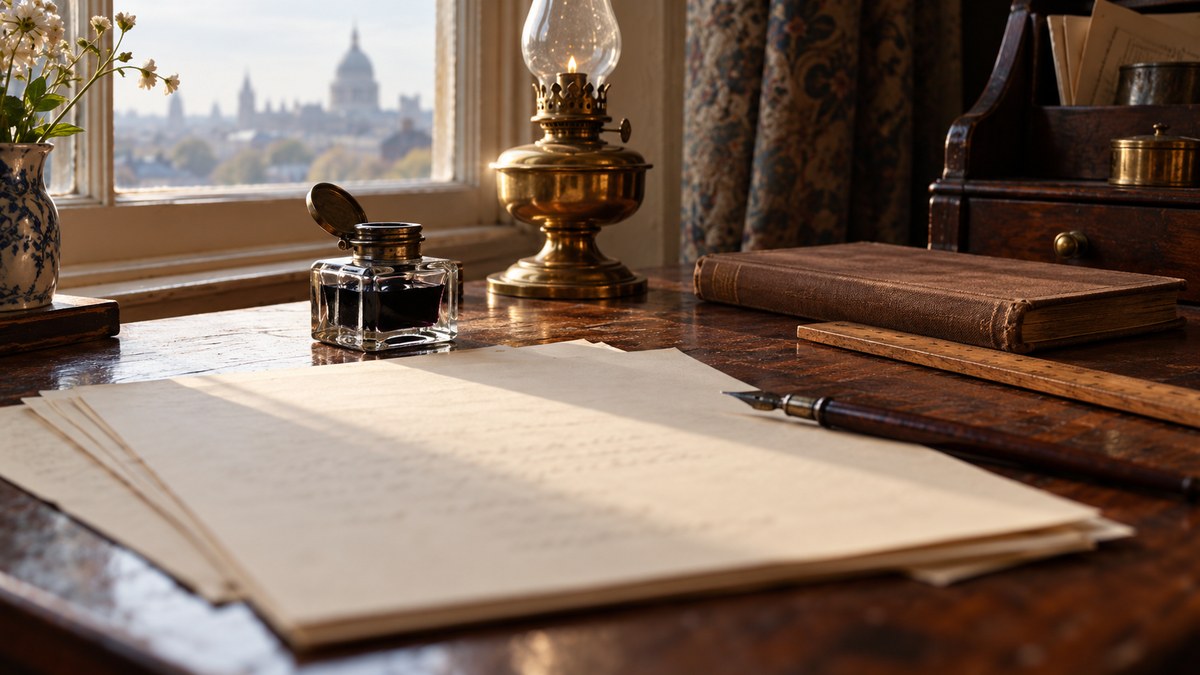
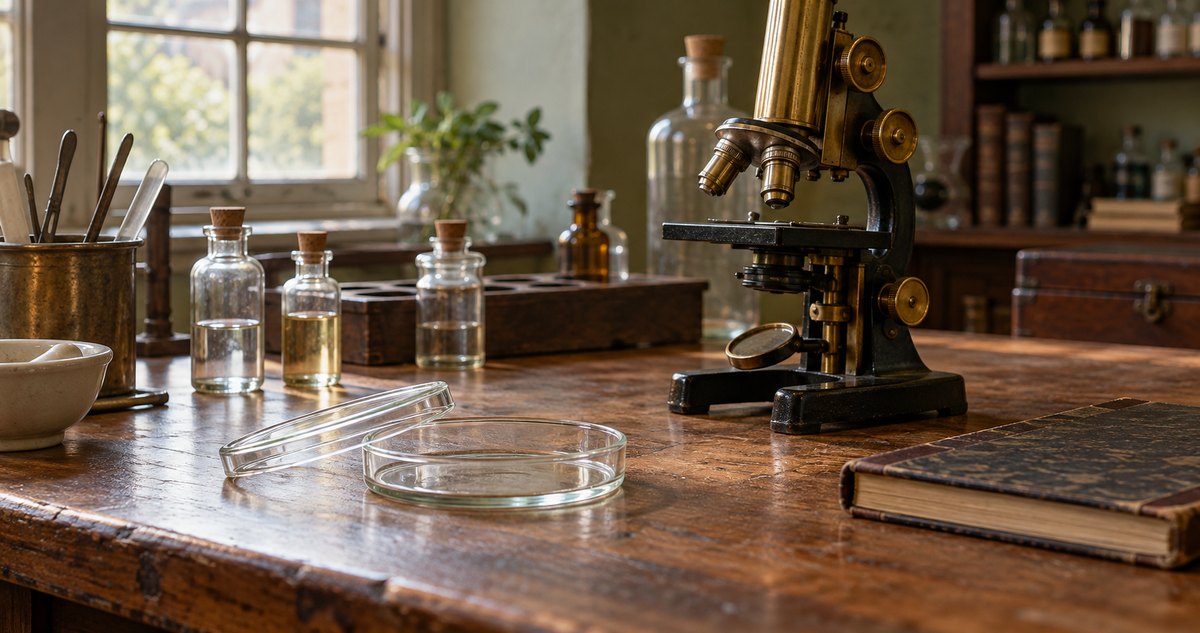
In 1928, Alexander Fleming noticed an unexpected pattern in a laboratory dish at St Mary's Hospital in London. Mould had contaminated a bacterial culture, and the surrounding area showed inhibited bacterial growth. The observation became the starting point for penicillin, but it did not immediately deliver a medicine that could be produced reliably and supplied to patients.
Fleming investigated the antibacterial effect and published his findings in 1929. Turning that effect into a useful medicine still required researchers to separate the substance, study it and produce enough for treatment. The accident supplied an important starting point, while the practical achievement depended on overcoming those further problems.
Making a possibility usable
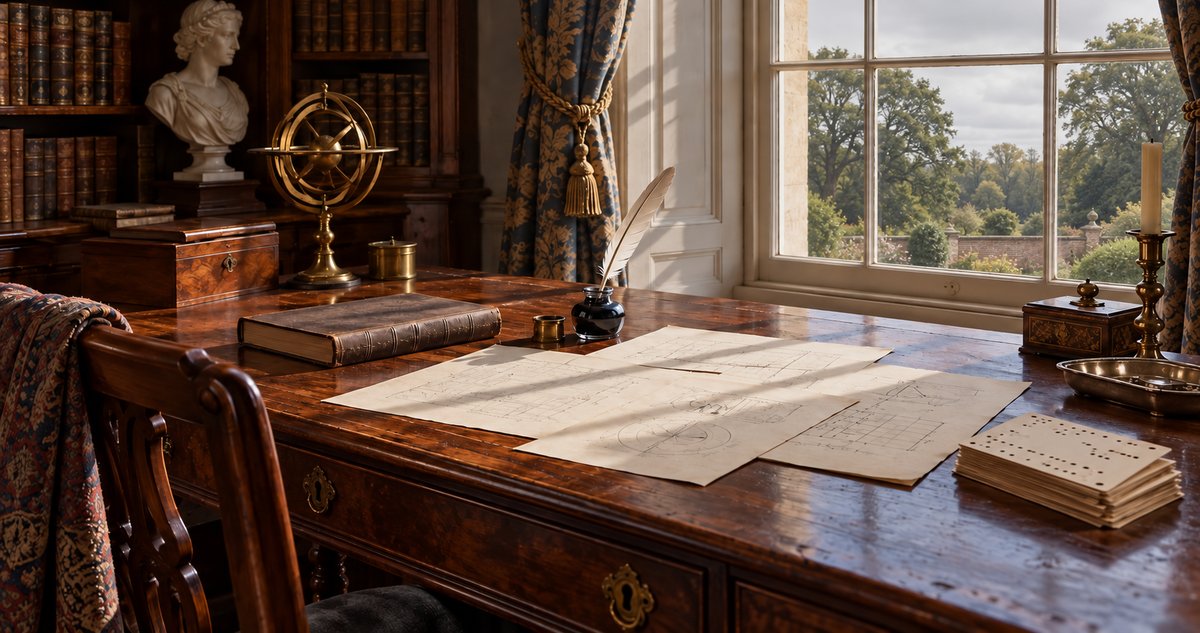
Years later, researchers at Oxford returned to the problem. Howard Florey and Ernst Chain were central to the effort, alongside colleagues including Norman Heatley. They worked on extracting and purifying penicillin and on establishing whether its promise could survive the move from laboratory observation to practical treatment.
Experiments in mice in 1940 provided important evidence. Human treatment followed in 1941, but supplies remained painfully limited. One early patient, Albert Alexander, initially improved; when available penicillin was exhausted, his infection returned and he died. The case makes the production problem impossible to dismiss as a merely secondary technical detail. A substance could show therapeutic potential and still be unavailable in the quantity needed.
Florey and Heatley travelled to the United States in 1941 to seek support for larger-scale production. Government researchers and pharmaceutical companies helped develop the processes that expanded supply during the Second World War. The achievement depended on biological research, chemical engineering and coordinated manufacturing, not simply on repeating the original observation.
Who receives the credit?
In 1945, Fleming, Florey and Chain shared the Nobel Prize in Physiology or Medicine. That recognition identified major contributions without capturing every person whose work made penicillin usable. Heatley's involvement, for example, reminds us that a short list of celebrated names is not a complete account of scientific labour.
Chance and organised research both contributed. The contaminated dish supplied an unexpected clue, which Fleming recognised and investigated. Later teams addressed purification, testing and supply. Asking whether luck or research mattered more can obscure how the stages depended on one another: a surprise had to be noticed, understood and made practically useful.
Discovery and delivery were therefore separate achievements within the same history. The dramatic laboratory moment is easy to retell, but it did not establish that a medicine would be reproducible and could be supplied beyond that setting. The less visible work determined whether penicillin's therapeutic potential could become useful to patients. Chance opened a possibility; further investigation and production made that possibility usable.
Read this way, the contaminated dish remains important, but no longer stands alone. It belongs within a longer chain of observation, investigation, testing and production. The historical question shifts from who first saw something unusual to how many different kinds of work were required to make that observation matter.
Three questions
Try answering before you open the answer. You can use your own words.
- Why was the 1928 observation not a complete medical breakthrough?
Show answer
Penicillin still needed investigation, purification, testing and sufficient production.
- What does the early patient's experience reveal?
Show answer
Evidence of potential benefit was not enough when the supply could not sustain treatment.
- How does the article challenge the choice between luck and organised research?
Show answer
It argues that chance supplied a clue while observation and collective research made that clue usable.
Let's talk about it
A few ideas to chat about - pick any that interest you.
- What draws you to a discovery story: the unexpected moment or the team effort afterwards?
- How would you like a prize to recognise people working on a large collaborative project?
- Have you come across an idea that sounded simple but was difficult to put into practice?
- Would you rather hear about a failed experiment that changed the research or a successful result that confirmed an idea?
- What might help the public appreciate the work of making a medicine practical as much as the moment of discovery?
Practise a useful pattern
Qualify a claim with rather than: "The accident supplied a starting point rather than a finished solution." Rewrite an exaggerated discovery headline as a balanced historical statement.
Frequently asked questions
Who discovered penicillin, and when?
Alexander Fleming identified its antibacterial effect in 1928 and published his findings in 1929.
Did Fleming develop penicillin for widespread use alone?
No. Oxford researchers, including Florey, Chain and Heatley, and later production teams were essential to its development.
Sources and editorial notes
Original learning article by Poly-Puff, written from the factual sources below. Sources checked on 11 October 2026. The artwork and learning activities were created for this article.
This is a history of scientific development, not treatment guidance. Discovery, publication, early experiments, clinical work and production are distinct stages. The discussion of credit and storytelling is Poly-Puff's interpretation of the documented sequence. The artwork contains no experimental culture.