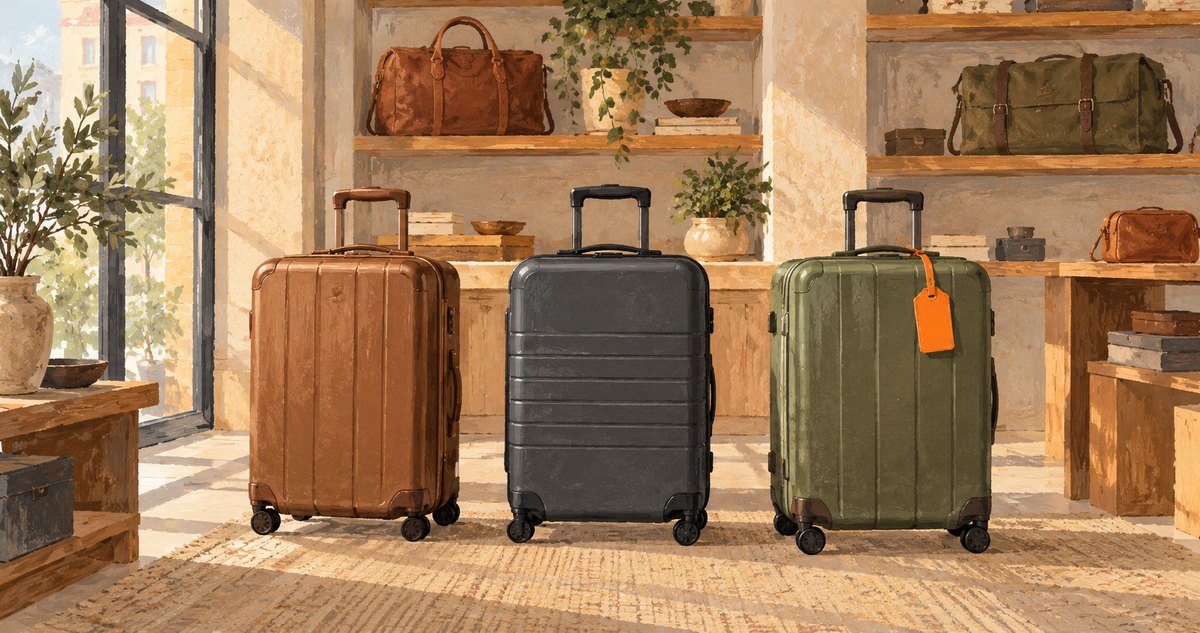
Comparative and Superlative Adjectives: A Practical Guide
Compare things with -er, -est, more and most, and avoid mistakes with spelling, irregular forms and as...as.
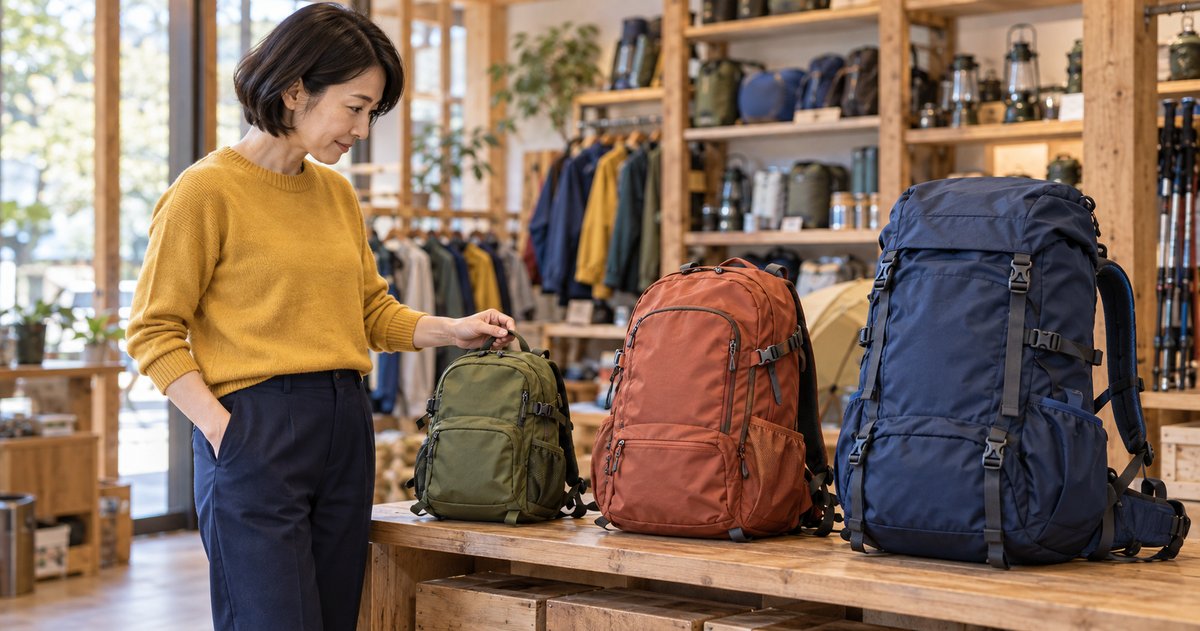
A comparative describes a difference: This bag is lighter than that one. A superlative places something at an extreme within a group: This is the lightest bag in the shop. Use -er/-est or more/most according to the adjective.
You are choosing a backpack. One is lighter, another is more comfortable, and a third is the cheapest of the three. Comparisons help you explain a choice rather than just name the objects. This A2-B1 guide gives you forms, useful sentence patterns and a small shopping task.
Comparative vs superlative: name the comparison
Comparative: The blue bag is smaller than the red bag.
Superlative: The olive bag is the smallest of the three.
Change: My old bag is getting heavier and heavier as I add books.
Use than when you state the other side of a comparison. A comparative can also make sense without it when the other option is understood: “I'll take the smaller one.” A superlative needs an understandable group: smallest in this shop, in this collection or among the bags we tried.
The common starting pattern compares one option with another, but a comparative can also compare an option with a whole set: “This bag is lighter than the others.” Avoid treating the number of objects as the only clue. Ask whether you are describing a difference or an extreme.
Short adjectives: -er and -est
Usually add -er / -est
light → lighter → lightest
old → older → oldest
Already ends in -e
large → larger → largest
nice → nicer → nicest
Short vowel + final consonant
big → bigger → biggest
hot → hotter → hottest
Consonant + -y
heavy → heavier → heaviest
easy → easier → easiest
Do not double every final consonant. The familiar one-syllable short-vowel pattern gives big/bigger, but new becomes newer and cheap becomes cheaper. Keeping the three forms together in your notes helps you notice the spelling.
Longer adjectives: more and most
With longer adjectives, put more or most before the unchanged adjective: comfortable → more comfortable → most comfortable; expensive → more expensive → most expensive. In a sentence: “This is the most comfortable backpack I tried.”
Two-syllable adjectives need some care. Many use more/most, and many ending in consonant + y use -ier/-iest. Some allow both patterns: simpler and more simple are both possible. A learner's dictionary can confirm unfamiliar cases; syllable count is a helpful starting point rather than a complete rule.
Choose one pattern, not two. Write “more comfortable,” not “more comfortabler,” and “lighter,” not “more lighter.” A degree word can still accompany a comparative: “much lighter” and “a little more comfortable” are useful combinations.
Irregular adjectives to keep together
Good
good → better → best
This zip is better than the broken one.
Bad
bad → worse → worst
This strap is worse than the other strap.
Far
far → farther/further → farthest/furthest
The second shop is farther away.
Less / least
less expensive → least expensive
Less and least can reverse the direction of the comparison.
Better and best already include the comparison. “More better” is not the standard form. Practise them in a useful sentence: “The blue bag is better for a short walk, but the red bag is best for carrying equipment.”
The, my and the group you mean
Before a superlative followed by a noun, the is the usual pattern: “the biggest pocket.” A possessive can take its place: “my biggest bag,” not “my the biggest bag.” Compare “It's the best choice” with “It's my best choice.”
Make the group clear with wording such as “in this shop” or “of the three bags.” If you say “the cheapest bag,” your listener needs to know which prices you compared. Everyday speech sometimes uses a superlative for a pair; for careful practice, “the cheaper of the two” is a useful clear pattern.
Equal and unequal: as...as
The blue bag is as comfortable as the red bag.
The olive bag is not as spacious as the navy bag.
The navy bag is less expensive than the red bag.
Between as and as, keep the ordinary adjective: as heavy as, not as heavier as. Not as...as often sounds natural when you want to explain a limitation. You can say “This bag is not as comfortable as the other one” without calling it a bad bag.
Keep your comparison fair
Compare the same feature on both sides. “The price of this bag is lower than the price of that one” is clear. “The price of this bag is lower than that bag” awkwardly compares a price with an object. You can simplify the sentence to “This bag is cheaper than that one.”
Use an imagined three-bag test: the olive bag costs R300 and weighs 400g; the red bag costs R450 and weighs 600g; the navy bag costs R600 and weighs 900g. Say which is cheaper, heavier and cheapest. These invented figures are language practice, not product recommendations.
A classroom or self-study task
Choose three everyday objects such as notebooks or water bottles. Write a factual comparison, then a preference with a reason: “This notebook is smaller, but the larger one is easier for my notes.” A partner checks whether your comparative matches what they can observe.
For a class, let learners choose objects rather than compare classmates' bodies, incomes or abilities. Ask them to make one comparative, one superlative and one as...as sentence. Save useful combinations in your vocabulary notes and reuse them the next day.
Comparisons that help a reader choose
Check the spelling change
This bag is heavier than that one changes heavy to heavier. It is the biggest pocket doubles the final g in big.
Use one comparative form
A more comfortable bag uses more with comfortable. The new zip is better uses the irregular comparative without adding more.
Name the comparison fairly
One bag is as comfortable as the other uses the ordinary adjective. The olive bag is the cheapest of the three, at R300, identifies both the group and the measure.
Related guides
Continue with English collocations and a, an and the.
Keep the group and the quality clear
Two-syllable adjective variation
Words such as heavy use heavier/heaviest, and some words allow both patterns. Check a learner's dictionary when the form is unfamiliar.
Determiners before superlatives
The is the usual choice before a superlative plus noun, but a possessive can replace it: my best friend. Other sentence patterns can also differ.
Better without more
In standard English, use better. More is used with adjectives that take the more pattern, such as more useful, rather than with an existing comparative.
Further reading
British Council: adjective comparisons; Cambridge: comparative and superlative adjectives; Cambridge: comparisons of equality; British Council Africa: teaching comparisons. References checked on 9 October 2026. The explanations, examples, prompt sets and practice on this page are original.
Use the pattern in your own sentences
Explore Grammar Practice, then save useful examples in your Word Vault for review.