1866: A Cable Carries Messages Across the Atlantic
An underwater telegraph cable made Atlantic messages much faster. The lasting success of 1866 followed years of setbacks and an earlier short-lived connection.
Estimated CEFR reading level: B2. A concise historical explanation with contrast, cause and effect, and a qualified account of technological success. This is an editorial estimate, not an official certification.
Five useful words
British English pronunciation (IPA). Audio uses an available English voice on your device.
dependable /dɪˈpendəbəl/
adjectiveReliable enough to be trusted.
Businesses needed a dependable cable service.
setback /ˈsetbæk/
nounA problem that delays progress.
The failed cable was a serious setback.
backer /ˈbækə/
nounA person or organisation providing support, often money.
Financial backers funded another attempt.
vessel /ˈvesəl/
nounA ship or large boat.
The vessel carried cable across the ocean.
telegram /ˈtelɪɡræm/
nounA written message sent using a telegraph system.
The diplomat wrote a brief telegram.
The story
Success after failure
Before underwater telegraph cables connected Europe and North America, messages crossed the Atlantic by ship. A reply could take days to arrive. An electrical connection promised a much faster exchange.
The first working Atlantic cable was laid in 1858, but it failed within weeks. That brief success showed what was possible without providing a dependable service. Further attempts required money, engineering improvements and difficult work at sea.
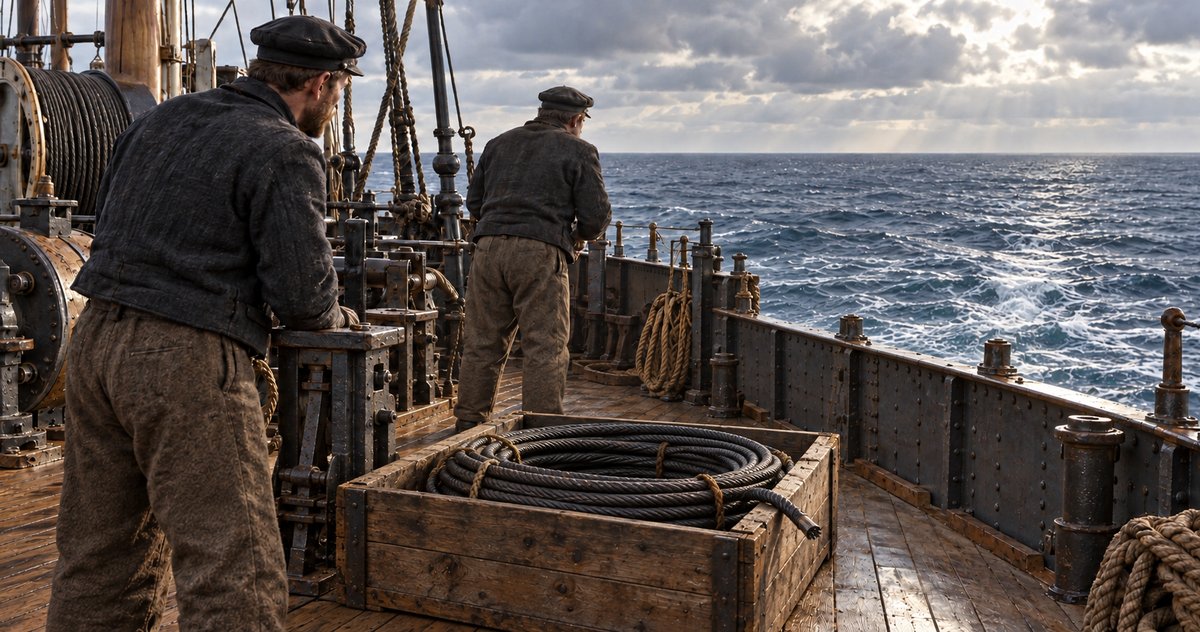
In 1866, the steamship Great Eastern helped establish a lasting connection between Ireland and Newfoundland. Engineers, technicians, sailors and financial backers all contributed. The achievement was a collective effort, rather than one person's sudden invention.
Faster messages, new limits
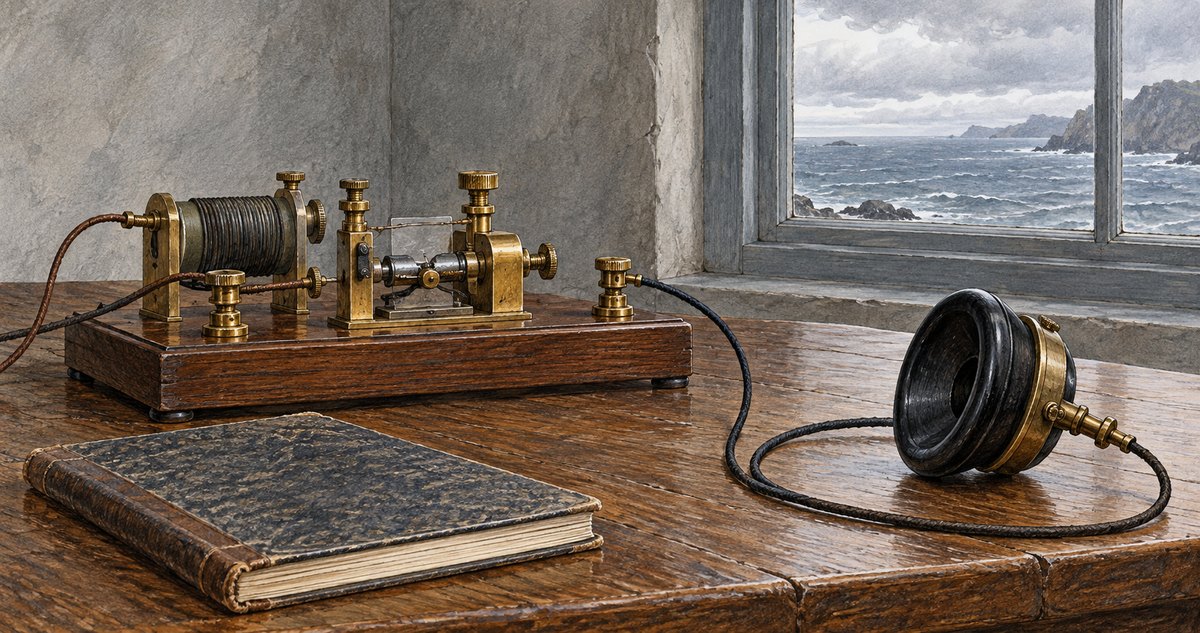
Telegraph cables carried electrical signals that represented words; they did not transport physical letters. Information could cross the ocean in minutes instead of travelling with a vessel.
However, sending a telegram still cost money. Diplomats learned to write shorter messages because charges typically rose with length. Faster communication changed their work, but it did not make every conversation free or private.
The 1858 cable demonstrated an Atlantic connection, but the 1866 cable made the service dependable. Showing that a technology is possible and keeping it working are separate achievements.
Two stages of a connection
- 1858The first working Atlantic cable fails within weeks.
- 1866Further efforts establish a lasting connection.
Source dates are historical milestones, separate from the learning article publication date.
Three questions
Try answering before you open the answer. You can use your own words.
- Why was the 1858 cable insufficient for a lasting service?
Show answer
It failed within weeks.
- What travelled along the cable?
Show answer
Electrical signals representing words, rather than physical letters.
- Why did diplomats learn to shorten telegrams?
Show answer
The cost typically increased with the length of the message.
Let's talk about it
A few ideas to chat about - pick any that interest you.
- What makes you trust a communication service to work when you need it?
- Do faster messages make conversations easier for you, or sometimes more stressful?
- If you had to pay for each word, how might your messages change?
- Would you enjoy reading ordinary people's first messages across a new cable?
- What would you want a communication company to do after a promising service failed?
Practise a useful pattern
Contrast a demonstration with a service using although and whereas: "Although the first cable worked briefly, it did not provide a dependable service." Write two sentences comparing an early attempt with a later improvement.
Frequently asked questions
Was 1866 the first time an Atlantic cable worked?
No. A working connection in 1858 lasted only a few weeks. The 1866 project established a lasting service.
Did the cable carry letters under the ocean?
No. It carried electrical telegraph signals that represented the message.
Sources and editorial notes
Original learning article by Poly-Puff, written from the factual sources below. Sources checked on 11 October 2026. The artwork and learning activities were created for this article.
The year labels a successful cable project, not a fabricated exact landing date. The account distinguishes the brief 1858 connection from the lasting 1866 service. It does not treat nineteenth-century electrical cables as modern fibre-optic cables.