NASA Space Apps 2026: You Do Not Have to Be a Programmer
A global weekend challenge invites designers, storytellers and science enthusiasts to work with open space data.
Estimated CEFR reading level: C1. Extended explanations connect open data, complementary skills and the limits of a prototype; conditional examples distinguish possible projects from proven mission tools. This is an editorial estimate, not an official certification.

Five useful words
British English pronunciation (IPA). Audio uses an available English voice on your device.
prototype /ˈprəʊtətaɪp/
nounAn early version used to explore or test an idea.
The team built a prototype before adding more features.
collaborative /kəˈlæbərətɪv/
adjectiveInvolving people working together.
The challenge is a collaborative project.
accessible /əkˈsesəbəl/
adjectiveEasy for people to reach, use or understand.
The diagram made the data more accessible.
assumption /əˈsʌmpʃən/
nounSomething accepted as true before it is checked.
The test challenged an assumption about the user.
complementary /ˌkɒmplɪˈmentəri/
adjectiveDifferent in ways that work well together.
The members brought complementary skills.
The story
An invitation beyond coding
A space challenge might sound like an invitation reserved for expert programmers. NASA's announcement on 15 October offers a broader welcome: its 2026 Space Apps Challenge is open to people of all ages and experience levels. The event is scheduled for 14-15 November, with teams using freely available NASA data to tackle problems connected with exploration and science.
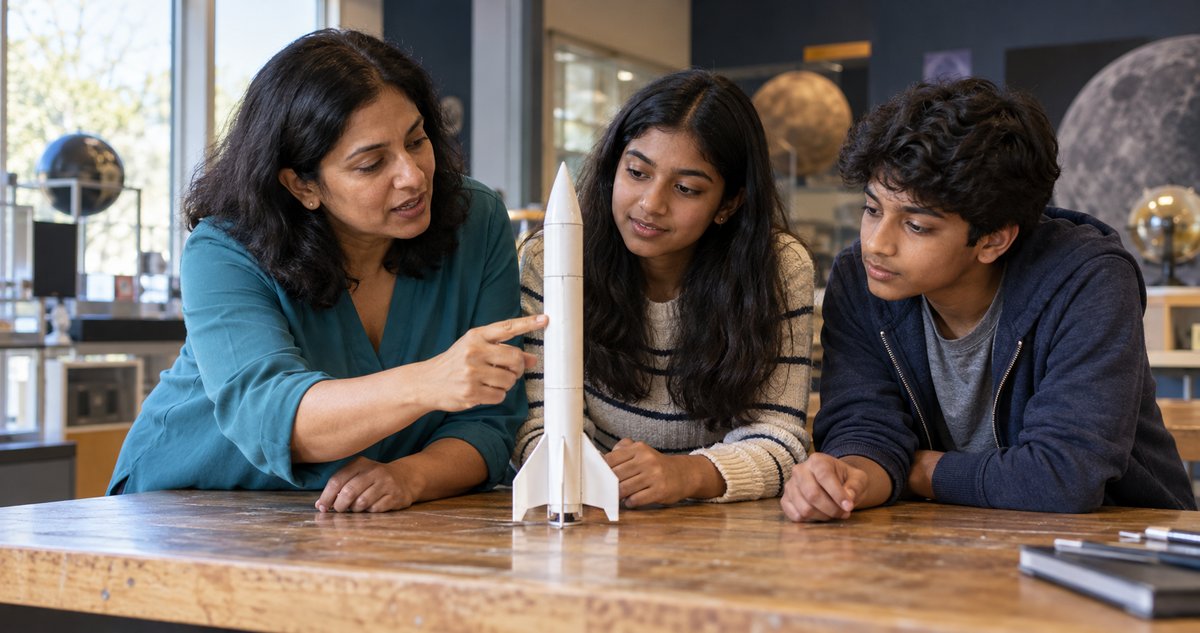
NASA describes opportunities for designers and storytellers alongside scientists and engineers. That combination matters because a technically impressive result can still be difficult to understand. A clear diagram, a thoughtful explanation or an accessible interface may help other people make sense of information that would otherwise remain unfamiliar.
A prototype with a purpose
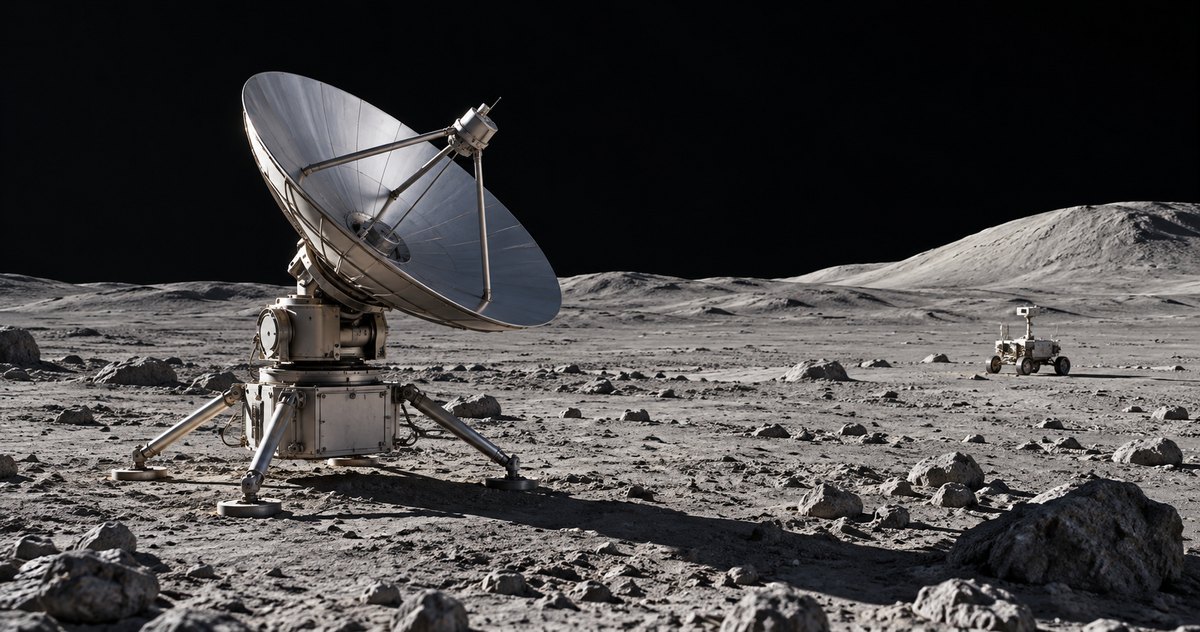
The agency identifies three broad areas: returning people to the Moon, preparing for more distant exploration and understanding the universe. Its announcement mentions challenges involving lunar operations and making astronomical data easier to explore. These are starting points for collaborative work, rather than promises that a weekend project will become part of a spacecraft.
Consider a hypothetical team exploring a Moon habitat. One member might examine data, another might sketch how a user would navigate a tool, and a third might explain the choices in ordinary language. A prototype could reveal a confusing assumption even if it does not provide a finished solution. This example illustrates how different contributions can fit together; it is not a description of an actual entry.
The event website lists local participation options, and NASA says people can join a team and choose a challenge. Anyone considering taking part should check the current registration details and the relevant local arrangements. The announcement establishes an invitation and planned dates, not the availability of every venue or the quality of any future submission.
What participation can offer
For an English learner, discussing a shared project also offers a useful communication situation. Team members need to clarify terms, ask what a proposed feature does and describe a limitation without dismissing an idea. Those are transferable language skills, whether the project concerns space or something much closer to home.
The appealing part of the invitation is the room it leaves for complementary strengths. Knowing how to ask a useful question can be the beginning of a contribution, even before anyone writes code.
Three questions
Try answering before you open the answer. You can use your own words.
- When is the challenge scheduled?
Show answer
14-15 November 2026.
- Why might a storyteller contribute?
Show answer
Clear explanations can help people understand technical information.
- Does a prototype guarantee a future spacecraft tool?
Show answer
No. It explores an idea and may reveal limitations; operational use is not promised.
Let's talk about it
A few ideas to chat about - pick any that interest you.
- Which part of a space project would you enjoy contributing to?
- What helps you feel welcome in a team with different skills?
- Would a tool or a story make space data more interesting to you?
- What local question would you be curious to explore using information collected from space?
- Would you rather leave a weekend challenge with a polished idea or an unfinished project and a new team?
Practise a useful pattern
Use might and could to discuss possibilities without promising results. Describe two ways a designer could help a science team, then add one limitation using although.
Frequently asked questions
Do participants have to be programmers?
No. NASA also invites designers, storytellers, science enthusiasts and people with other skills.
Is the event already finished?
No. As of 16 October 2026 it is scheduled for 14-15 November 2026.
Sources and editorial notes
Original learning article by Poly-Puff, written from the factual sources below. Sources checked on 16 October 2026. The artwork and learning activities were created for this article.
The NASA announcement was read directly; the event dates also appear in the indexed official event site. Participation arrangements can change. The Moon-habitat team is an explicitly hypothetical example. This story is separate from the existing university lunar-communications competition.