1876: Bell Sends a Clear Voice Down a Wire
A short message between Bell and Watson became an important step in the history of the telephone.
Estimated CEFR reading level: A2. Short past-tense sentences, familiar communication words and a simple sequence of dates. This is an editorial estimate, not an official certification.
Five useful words
British English pronunciation (IPA). Audio uses an available English voice on your device.
voice /vɔɪs/
nounThe sound made when a person speaks.
I could hear her voice.
wire /waɪə/
nounA thin piece of metal that carries electricity.
The equipment was connected by a wire.
receiver /rɪˈsiːvə/
nounThe part of a telephone used to hear a voice.
Watson listened through a receiver.
assistant /əˈsɪstənt/
nounSomeone who helps another person with their work.
His assistant checked the equipment.
patent /ˈpeɪtənt/
nounA legal right concerning an invention.
The inventor received a patent.
The story
A voice in another room
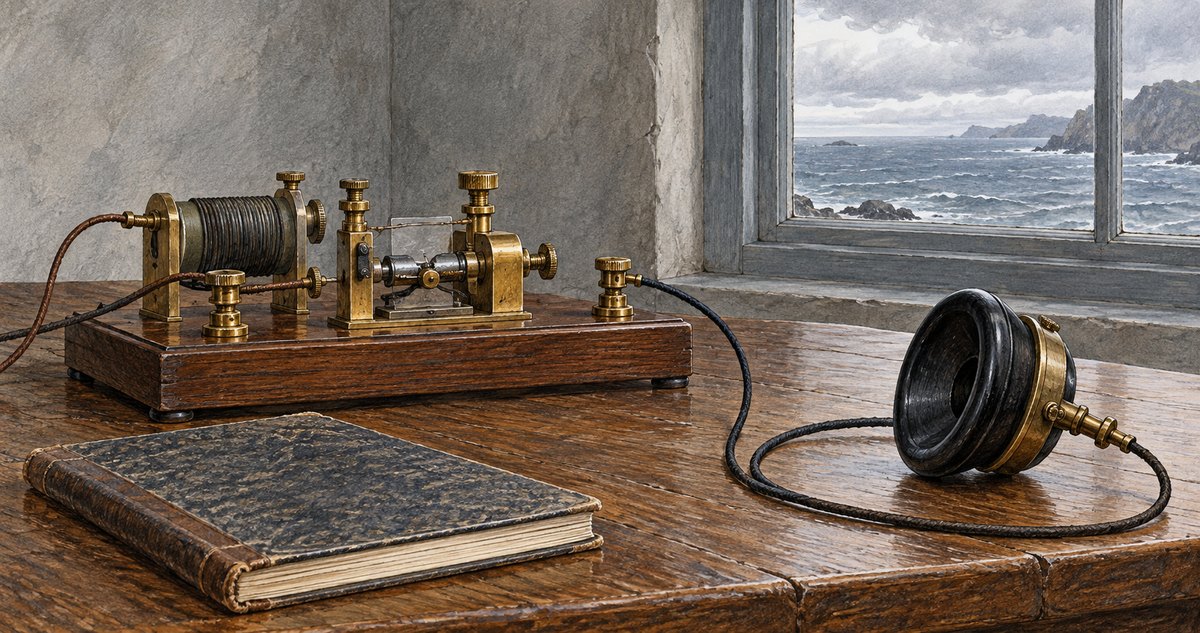
On 10 March 1876, Alexander Graham Bell sent a clear spoken message through an experimental telephone. He was in his laboratory. His assistant, Thomas Watson, listened to a receiver in another room.
Bell asked Watson to come to him. Watson arrived and said he had heard and understood Bell's words. The telephone had done more than send a sound: it had carried a clear message from one person to another.
Two different dates
Bell had received his telephone patent on 7 March, three days earlier. A patent records legal rights to an invention. It is different from a successful experiment.
Other inventors also worked on telephones. The new device did not reach every home at once. People still needed better equipment, wires and services to make everyday calls possible.
Three questions
Try answering before you open the answer. You can use your own words.
- Who heard Bell's message?
Show answer
His assistant, Thomas Watson.
- What made the message important?
Show answer
Watson could hear and understand the spoken words.
- Did the patent and the clear message happen on the same day?
Show answer
No. Bell received the patent on 7 March and sent the message on 10 March 1876.
Let's talk about it
Here are some ideas for a chat. Choose any you like.
- Who do you call most often?
- Do you prefer a phone call or a text message?
- Can you remember a call that was especially important to you?
- Would you like to try using a very old telephone?
- What would be difficult about a day without phones?
Practise a useful pattern
Use could to describe past ability: "Watson could understand the words." Write three sentences about things people could do before smartphones.
Frequently asked questions
When did Bell send this clear message?
He sent it on 10 March 1876.
Was Bell the only person working on telephones?
No. Other inventors were also investigating ways to send speech electrically.
Sources and editorial notes
Original learning article by Poly-Puff, written from the factual sources below. Sources checked on 12 October 2026. The artwork and learning activities were created for this article.
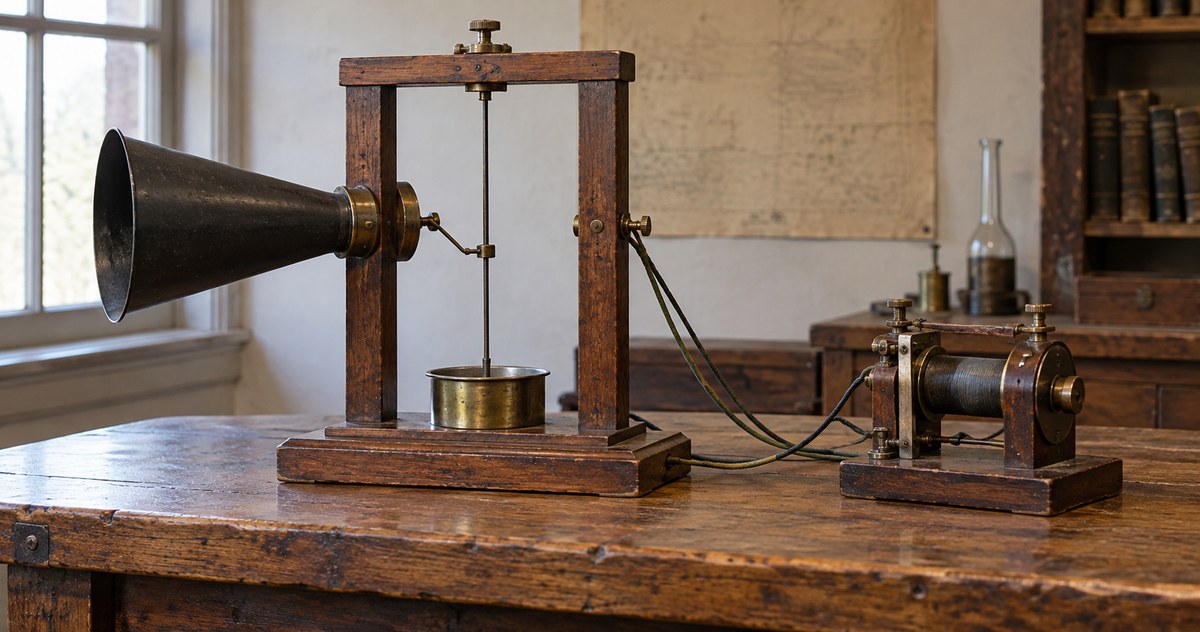
The article distinguishes the 7 March patent from the 10 March experiment and does not claim Bell was the only inventor. The generated apparatus is historically inspired, not an exact model of the surviving transmitter replica.